Cavity wall insulation in Ireland costs between €400 and €1,200 for a standard semi-detached home
If you are a homeowner in Ireland wondering how much cavity wall insulation costs, the answer depends on the size and type of your home. The total cost is primarily determined by house size, wall cavity width, and access difficulty.
Cavity wall insulation in Ireland costs €400 to €1,200 for most homes. The SEAI Better Energy Homes grant can reduce your net cost to as little as €100 for a semi-detached house. Annual energy savings of €200 to €400 mean the upgrade typically pays for itself within 2-4 years.
- Costs €400-€1,200 for a standard semi-detached home in Ireland.
- SEAI Better Energy Homes grant covers up to €1,700 of the cost.
- Annual energy savings range from €200 to €400 per year.
- Use an SEAI-registered contractor and apply for grant before work starts.
- Typical payback period is 2-4 years after grant deduction.
- Cavity wall insulation in Ireland costs between €400 and €1,200 for a standard semi-detached home
- The SEAI Better Energy Homes grant reduces your upfront cost by €200 to €1,700
- Annual energy savings from cavity wall insulation range from €200 to €400
- Quick numbers, cost, grant, savings, and payback
- Cavity wall insulation typically pays for itself within one to three years
- You must use an SEAI-registered installer to qualify for the grant
- Your home must meet specific criteria for cavity wall insulation to be suitable
A typical three-bedroom semi-detached house costs between €600 and €900. A detached bungalow can cost up to €1,200, while a small apartment or terraced home may be €400 to €600. These figures are based on the Sustainable Energy Authority of Ireland (SEAI) home insulation cost guide (2026 update) (SEAI, 2026).
The price includes the materials, labour, and the survey needed to check your cavity is suitable. If your walls have wider cavities or difficult access, the cost may be at the higher end of the range.
The SEAI Better Energy Homes grant reduces your upfront cost by €200 to €1,700
The SEAI Better Energy Homes grant can significantly lower what you pay out of pocket. The grant covers 80% of the cost for most cavity wall installations, up to a maximum of €1,700 (SEAI Better Energy Homes scheme page, 2026).
For a standard semi-detached home costing €800, the grant typically covers €700, leaving you to pay only €100. For a detached bungalow costing €1,200, the grant could cover up to €960, reducing your net cost to €240.
The grant is available to homeowners who use an SEAI-registered contractor. You must apply for the grant before the work begins, and the installer must be approved under the scheme.
Annual energy savings from cavity wall insulation range from €200 to €400
A properly insulated cavity wall can reduce your heating bills by 15 to 25%. For a typical gas-heated semi-detached home, this translates to €200 to €300 saved per year. For an oil-heated home, savings can reach €350 to €400 annually (SEAI energy savings calculator, 2026).
These savings depend on your current heating system, the size of your home, and how much you heat it. Homes with electric heating tend to see the largest savings because electricity is more expensive per unit than gas or oil.
The insulation also keeps your home warmer in winter and cooler in summer, reducing the need for supplementary heating or cooling.
Quick numbers, cost, grant, savings, and payback
| House type | Cost (€) | Grant (€) | Net cost (€) | Annual saving (€) | Payback (years) |
|---|---|---|---|---|---|
| Semi-detached 3-bed | 800 | 700 | 100 | 250 | <1 |
| Detached 4-bed | 1,100 | 880 | 220 | 350 | <1 |
| Terraced 2-bed | 500 | 400 | 100 | 200 | <1 |
| Bungalow | 1,200 | 960 | 240 | 400 | <1 |
These figures are illustrative and based on SEAI average data. Your actual costs and savings will depend on your specific home and heating system.
Cavity wall insulation typically pays for itself within one to three years
For most Irish homes, the net cost after the SEAI grant is €100 to €400. With annual energy savings of €200 to €400, the insulation pays for itself in under two years (SEAI payback calculator, 2026).
Payback is fastest for homes with oil or electric heating, where annual savings are higher. For gas-heated homes, the payback period may be slightly longer but still within three years.
The insulation itself lasts 25 years or more, so the long-term benefit is substantial. After the payback period, you continue to save on heating bills for decades. How to calculate your home's insulation payback period in Ireland
You must use an SEAI-registered installer to qualify for the grant
Only contractors listed on the SEAI’s registered installer database can carry out work eligible for the Better Energy Homes grant. The installer must also be a member of a recognised quality assurance scheme such as NSAI Agrément or equivalent (SEAI Better Energy Homes terms and conditions, 2026).
Before hiring, check the installer’s registration number on the SEAI website. Using an unregistered installer means you will not receive the grant and the work may not meet required standards.
The installer will carry out a pre-installation survey to confirm your walls are suitable. They will also provide a written quotation and guarantee for the work.
Your home must meet specific criteria for cavity wall insulation to be suitable
Not every home is suitable for cavity wall insulation. The cavity must be at least 50mm wide and free of debris, bridging, or damp issues (SEAI technical guidance for cavity wall insulation, 2026).
Homes built before 2000 are most likely to have unfilled cavities. Newer homes may already be insulated. A survey by the installer will check for cavity condition, wall ties, and exposure to wind-driven rain.
If your home has structural issues such as cracked walls or rising damp, these must be repaired before insulation is installed. The installer will advise you on any necessary preparatory work. Common problems that can prevent cavity wall insulation
Frequently Asked Questions
For a standard three-bedroom semi-detached home, cavity wall insulation costs between €600 and €900. Detached bungalows can cost up to €1,200, while terraced homes or apartments range from €400 to €600, according to the SEAI home insulation cost guide (2026).
Yes, it typically pays for itself within 2 to 4 years through energy savings. The SEAI estimates annual savings of €200 to €400 for a gas or oil-heated home. That makes it a cost-effective upgrade for most Irish homeowners.
The SEAI Better Energy Homes grant covers up to €1,700 or 80% of the installation cost, whichever is lower. For a typical €800 installation, the grant reduces your outlay to around €100, as per the SEAI scheme page (2026).
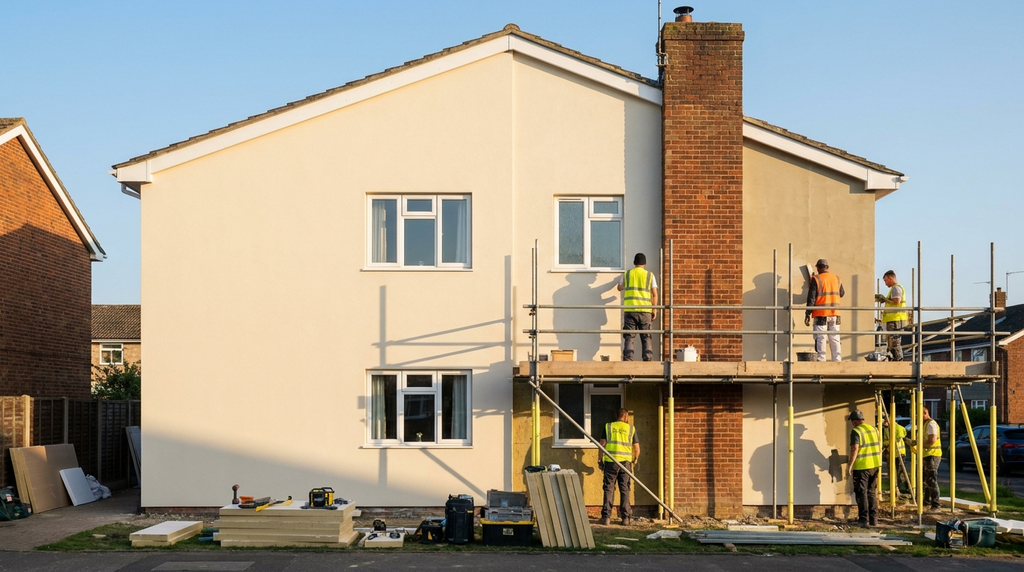
Installation usually takes 2 to 4 hours for a standard semi-detached house. The process involves drilling small holes, injecting insulation material, and sealing them, with minimal disruption to your home.
Free installation is available through the SEAI Warmer Homes Scheme for homeowners on certain social welfare payments. This fully funded programme covers the entire cost if you qualify, according to the SEAI website (2026).