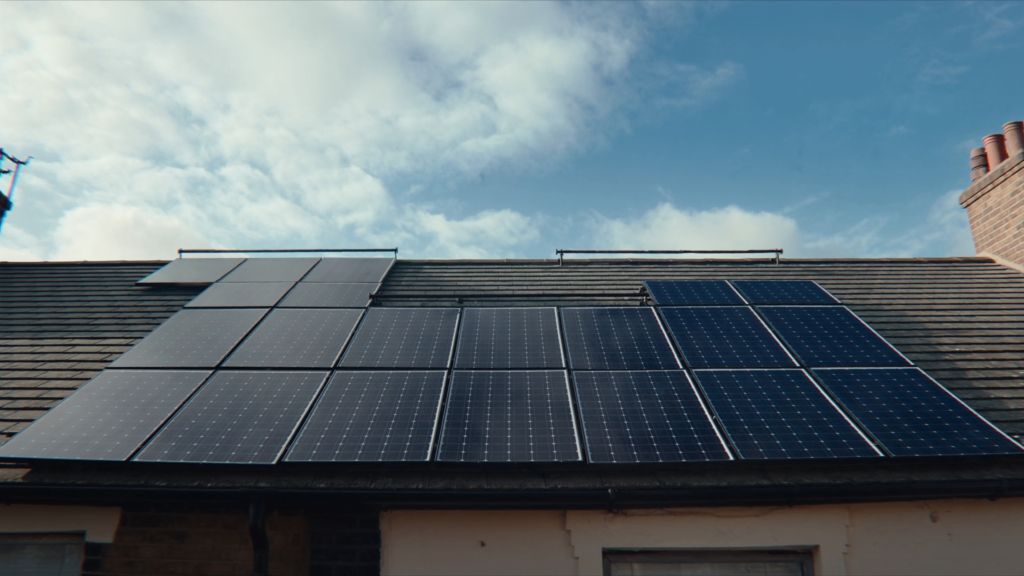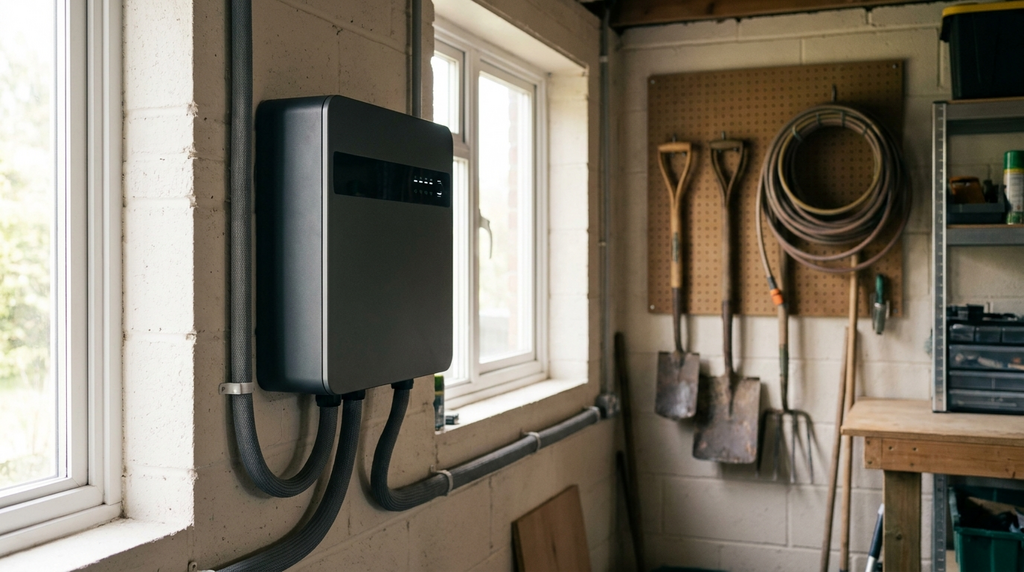
Solar panels are now installed on more than one million UK homes, and the number continues to rise as installation costs fall and energy bills remain high. Yet a surprising proportion of solar panel owners are still not registered for the Smart Export Guarantee, leaving money on the table every time their panels generate more electricity than their household needs.
To claim the Smart Export Guarantee, you need a solar panel system installed by an MCS-certified installer, a valid MCS certificate, and a compatible smart meter at your property. Once these are in place, you apply directly to a licensed electricity supplier of your choice and select their SEG tariff, with no requirement to use your existing energy supplier. In 2026, export rates range from around 1p to 15p per kWh, meaning a typical UK home with a 4kWp system could earn between £10 and £225 per year depending on the tariff chosen. Comparing tariffs across suppliers before registering is the single most effective way to maximise your SEG income.
- Check your solar panel system holds a valid MCS certificate before applying, as this is a mandatory requirement for any Smart Export Guarantee claim
- Ensure your property has a compatible smart meter installed, as suppliers cannot measure your exports without one and will not approve your application
- Compare SEG tariffs across multiple licensed suppliers before committing, since rates in 2026 range from roughly 1p to 15p per kWh and the difference adds up significantly over a year
- Apply directly to your chosen supplier's SEG tariff page with your MCS certificate number, MPAN, and smart meter details ready to hand
- You do not need to apply through your existing energy supplier, so shop around for the best export rate even if another supplier offers a higher tariff
- Track your export readings quarterly to spot any billing discrepancies and ensure your payments accurately reflect the electricity you are sending to the grid
- If your Feed-in Tariff expired or you missed it entirely, register for the SEG as soon as possible to start earning payments on surplus generation you may currently be giving away for free
- Understanding the Smart Export Guarantee and How It Works
- How Much You Can Actually Earn from the Smart Export Guarantee
- Who Is Eligible to Make a Smart Export Guarantee Claim
- What You Need Before You Start Your Smart Export Guarantee Claim
- A Step-by-Step Guide to Registering for the Smart Export Guarantee
- Comparing Smart Export Guarantee Tariffs from Major UK Suppliers
- How the SEG Interacts with Solar Grants and Other Incentives in 2026
- How to Choose the Right SEG Tariff for Your Household
- Verifying Your Installer's Credentials Before Making Your Claim
The Smart Export Guarantee, commonly referred to as the SEG, is a UK government-backed scheme that requires licensed electricity suppliers with 150,000 or more domestic customers to offer a payment tariff to homeowners who export surplus renewable electricity to the grid. In 2026, eligible households with solar panels can earn between approximately 1p and 15p per kilowatt-hour exported, depending on the supplier and tariff type chosen. Making a Smart Export Guarantee claim is open to any homeowner whose solar panel system was installed by a Microgeneration Certification Scheme (MCS) certified installer, holds a valid MCS certificate, and whose property has a compatible smart meter in place.
Understanding the Smart Export Guarantee and How It Works
The Smart Export Guarantee is the government framework that ensures small-scale renewable energy generators are paid fairly for the electricity they contribute to the National Grid. It replaced the Feed-in Tariff, which closed to new applications in January 2020, meaning any homeowner who installed solar panels after that date, or who missed the Feed-in Tariff window entirely, now accesses export payments through the SEG instead.
It is important to understand a key distinction that catches many homeowners off guard. The SEG does not pay you for every unit of electricity your solar panels generate, it only pays for the surplus electricity that your home does not consume and which is therefore exported back to the grid. If your household uses most of what your panels produce, your export volume (and therefore your SEG income) will be relatively modest. Conversely, if you are out during the day when your panels are generating most actively, a larger share of your generated electricity will flow to the grid, and your SEG payments will be higher.
Unlike the old Feed-in Tariff, where rates were set by the government and remained fixed for 20 years, SEG tariff rates are set entirely by individual energy suppliers. This means the rates on offer vary considerably across the market, and there is no single government-guaranteed rate. Ofgem oversees the scheme and publishes a list of all mandatory and voluntary SEG licensees, but the actual pence-per-kilowatt-hour figure is a commercial decision made by each supplier. This makes comparison shopping an essential part of the process, not an optional extra.
Practical tip: Before assuming your current energy supplier offers the best SEG rate, check the Ofgem SEG supplier list at ofgem.gov.uk and compare at least three or four competing offers before registering.
what are solar panels and how do they work
How Much You Can Actually Earn from the Smart Export Guarantee
In 2026, SEG tariffs from major UK suppliers typically range from around 1p to 15p per kilowatt-hour exported, with most mainstream fixed-rate offers sitting somewhere between 3p and 8p per kilowatt-hour. The variation is significant, and the difference between the lowest and highest rates can meaningfully change your annual earnings.
There are two main types of SEG tariff available, and understanding both will help you make a more informed choice.
- Fixed rate tariffs pay you the same pence per kilowatt-hour regardless of what time of day you export. These are simpler to understand and suit households that export electricity fairly evenly throughout the day without any means of controlling when they send power to the grid.
- Flexible or time-of-export tariffs pay higher rates during peak demand periods, typically between 4pm and 8pm in the evening, and lower rates at other times. These can be considerably more lucrative, but only if you are able to choose when your exports happen. In practice, this usually means having a solar battery storage system installed, which allows you to store energy generated during the day and export it selectively during high-rate periods.
To give a realistic picture of what SEG income might look like, consider a typical 4 kilowatt solar panel system installed on a south-facing roof in the UK. Based on Energy Saving Trust data, such a system might generate around 3,400 kilowatt-hours per year. A household that uses a reasonable proportion at home might export somewhere in the region of 1,000 to 1,500 kilowatt-hours annually. At 1p per kilowatt-hour, that translates to roughly £10 to £15 per year. At 15p per kilowatt-hour on a competitive flexible tariff, the same export volume could generate £150 to £225 annually. Neither figure will transform household finances on its own, but when combined with the savings from self-consumption (not buying that electricity from a supplier), the overall financial picture for solar panel owners is considerably more attractive.
Earnings will vary based on your household’s daytime electricity consumption habits, the orientation and pitch of your roof, any shading from nearby trees or buildings, and the time of year. A north-facing system with significant shading will generate less and export less than a south-facing system with a clear horizon.
Practical tip: Use your solar system’s monitoring app, or your smart meter’s in-home display, to track how many kilowatt-hours you are actually exporting each month before choosing between a fixed and flexible tariff.
Who Is Eligible to Make a Smart Export Guarantee Claim
Eligibility for the SEG is governed by a specific set of criteria, and it is worth confirming you meet all of them before beginning your application to avoid delays or rejection.
The scheme is open to owners of qualifying renewable energy technologies, which include solar photovoltaic (PV) panels, wind turbines, micro-hydro systems, anaerobic digestion, and micro-combined heat and power (micro-CHP) units. For solar PV, by far the most common technology among UK homeowners, the installed system must have a capacity of 5 megawatts or below, which encompasses virtually all domestic and small commercial installations.
The single most critical eligibility requirement is MCS certification. The Microgeneration Certification Scheme, known as MCS, is the industry-recognised quality standard for the installation of small-scale renewable energy systems in the UK. Your solar panel installation must have been carried out by an installer who held MCS certification at the time of the work, and your system must have a valid MCS installation certificate. Without this certificate, you cannot register for the SEG, regardless of how well your system performs or how long it has been operational. The MCS certificate should have been provided to you by your installer on completion of the job.
One practical point that surprises many homeowners is that you do not have to use the same energy supplier for both buying your electricity (your import tariff) and receiving SEG payments for your exports. These can be completely separate companies. This is genuinely useful because it means you can shop independently for the best import deal and the best SEG export rate without being locked into a single supplier relationship for both.
Properties in England, Scotland, and Wales are all eligible for the SEG. However, homeowners in Northern Ireland should be aware that a separate framework applies there, the Northern Ireland Renewables Obligation (NIIRO), and different eligibility rules and processes govern export payments in that region.
Practical tip: If you are unsure whether your installation has a valid MCS certificate, search your address or installer’s name on the certificate checker at mcscertified.com before doing anything else.
MCS certification explained for solar panels
What You Need Before You Start Your Smart Export Guarantee Claim
Gathering the right documents and confirming you have the necessary equipment in place before you start your application will make the process significantly smoother. Most applications can be completed online in under 30 minutes once everything is ready.
A Compatible Smart Meter
The vast majority of SEG suppliers now require you to have a smart meter, or at minimum a meter capable of providing half-hourly export readings, as a condition of registration. A smart meter is an electricity meter that automatically sends usage and export data to your supplier at regular intervals, removing the need for manual meter readings and allowing precise calculation of how many units you have actually exported. Without half-hourly export data, suppliers would have to use estimated or deemed export figures, which are less accurate and less favourable to you. If you do not yet have a smart meter, contact your current electricity supplier to arrange a free installation before submitting your SEG application.
Your MCS Installation Certificate
Your MCS installation certificate is the document that proves your system was installed to the required standard by a certified professional. It will have been issued by your installer at the point of completion and should include a unique certificate reference number. If you cannot locate your paper copy, this number can also be searched and verified through the MCS certificate database at mcscertified.com. Keep this number to hand, as every SEG application will ask for it.
Details of Your Solar Panel System
You will need to provide the total installed capacity of your system (measured in kilowatts), the date the installation was completed, and the full address of the property where the panels are located. This information will also appear on your MCS certificate, so having that document in front of you when applying covers most of what you need.
Your Existing Electricity Account Information
Most suppliers ask for proof of your supply address and your existing electricity account details as part of the application. Having a recent energy bill to hand will speed up this part of the process considerably.
Practical tip: Photograph or scan your MCS certificate and save it securely in cloud storage so you always have it accessible, whether applying for the SEG now or switching suppliers in the future.
A Step-by-Step Guide to Registering for the Smart Export Guarantee
Following these steps in order will give you the clearest path from solar panel owner to registered SEG claimant, with the best chance of securing a competitive rate from the outset.
- Check your MCS certificate is valid, log on to the MCS certificate checker at mcscertified.com and confirm that your installation is registered and that the certificate is current. If there are any discrepancies, contact your original installer in the first instance.
- Confirm you have a smart meter, check your electricity meter at home or contact your current energy supplier if you are unsure what type of meter you have. If you do not have a smart meter capable of half-hourly export readings, request a free installation from your supplier before proceeding. This step alone can delay applications by several weeks if left until the last minute.
- Compare SEG tariffs across eligible suppliers, visit the Ofgem website to access the current list of mandatory and voluntary SEG licensees, and compare the rates, tariff types, and any conditions attached to each offer. Do not simply default to your existing energy supplier without checking what competitors are offering. An independent comparison tool can also be useful here.
- Apply to your chosen SEG supplier, most applications are handled through the supplier’s website. You will typically be asked to upload or provide your MCS certificate reference number, confirm your system’s installed capacity and installation date, verify your smart meter status, and provide your supply address and account details. The process is usually straightforward and takes around 20 to 30 minutes.
- Await approval and confirmation, once your application is submitted, the supplier is legally required to respond within a defined period. If approved, you will receive written confirmation of your export tariff rate and the date from which payments will begin. Keep this confirmation in a safe place.
- Track your exports and check payments, once registered, keep a regular record of your smart meter export readings and cross-check these against the statements or credits your SEG supplier provides. If readings or payment amounts appear incorrect, raise this with your supplier promptly. Errors do occur, and you are entitled to accurate payment for every unit you export.
Practical tip: Set a recurring reminder in your calendar every six months to review your SEG tariff and compare it against current market rates, the market moves regularly and staying loyal to one supplier without checking can cost you meaningful income over time.
best solar panel batteries for UK homes
Comparing Smart Export Guarantee Tariffs from Major UK Suppliers
Rates change regularly in the SEG market, so the table below reflects indicative figures for 2026. Always verify current rates directly with each supplier and via the Ofgem SEG tariff list before making a final decision.
| Supplier | Tariff Name | Indicative Rate (p/kWh) | Tariff Type | Smart Meter Required | Key Conditions |
|---|---|---|---|---|---|
| Octopus Energy | Outgoing Octopus Fixed | Around 5.5p | Fixed | Yes | Available to all eligible customers |
| Octopus Energy | Outgoing Octopus Agile | Variable (up to 15p+ at peak) | Flexible | Yes (half-hourly capable) | Rates track wholesale market prices |
| British Gas | Solar Export Tariff | Around 5p | Fixed | Yes | Best rates for existing customers |
| E.ON Next | Next Export Exclusive | Around 4p to 5.5p | Fixed | Yes | Must hold E.ON Next import tariff |
| EDF Energy | SEG Tariff | Around 3p to 4p | Fixed | Yes | Open to all eligible applicants |
| OVO Energy | Drive + Export | Around 4p | Fixed | Yes | Available to OVO electricity customers |
Several important points are worth drawing out from this comparison. First, some suppliers tie their best SEG rates to customers who also hold an import tariff with them, so it is always worth comparing the combined cost of both the import and export arrangements rather than looking at the SEG rate in isolation. A slightly lower SEG rate from a supplier who also offers you a significantly cheaper import deal could leave you better off overall.
Second, flexible or time-of-export tariffs have the potential to pay considerably more per kilowatt-hour during peak demand hours in the evening. However, to take full advantage of this, you would need to either be exporting during those peak hours naturally, unlikely for most households unless they are away during the day, or to have battery storage that allows you to bank solar energy and release it to the grid at the optimal time.
Third, voluntary SEG providers, those suppliers with fewer than 150,000 domestic customers who are not legally mandated to offer the SEG but choose to do so, can sometimes offer highly competitive rates and should not be excluded from your comparison simply because they are less well-known.
Practical tip: Check the Ofgem SEG supplier database directly at ofgem.gov.uk before applying, as rates listed on supplier websites and comparison tools can lag behind the most current offers.
How the SEG Interacts with Solar Grants and Other Incentives in 2026
One of the most common questions from homeowners considering solar installation is whether the SEG can be combined with other government incentive schemes. The short answer is yes, in most cases, but the specifics depend on which schemes are relevant to your situation.
The Great British Insulation Scheme closed on 31 March 2026. It funded insulation measures only and never covered windows or glazing. However, both schemes focus primarily on insulation measures such as loft insulation, cavity wall insulation, and solid wall insulation, along with some heating upgrades. Neither scheme directly funds solar PV installation for most homeowners, though ECO4 can include solar panels in specific circumstances for eligible low-income or fuel-poor households. If you receive support through either scheme for insulation work, this does not affect your ability to also register for and earn income through the SEG.
The Boiler Upgrade Scheme (BUS) is worth mentioning here because a growing number of homeowners are combining solar panels with air source heat pumps. As of 2026, the Boiler Upgrade Scheme offers £7,500 towards the cost of an air source heat pump. The BUS applies to the heat pump installation, not to the solar panels, but if you install both, you can simultaneously claim BUS funding for your heat pump and register your solar panels for the SEG. These are entirely separate schemes and do not conflict with one another.
On the subject of upfront costs, That VAT on residential solar panel installations remains at 0% in 2026, as confirmed by HMRC policy. This zero-rate VAT treatment significantly reduces the upfront cost of installing solar and improves the overall payback calculation. A system that might otherwise have attracted 20% VAT on materials and labour benefits considerably from this policy, and homeowners should ensure any installer quotes they receive reflect the correct zero-rate VAT position.
For the most current information on any local authority solar grant funding available in your area, schemes can vary by region and change throughout the year, the Energy Saving Trust website at energysavingtrust.org.uk and the GOV.UK grants finder are the most reliable and up-to-date sources.
Practical tip: When getting quotes for solar panel installation, ask each installer to confirm the zero-rate VAT status in writing and ensure it is reflected in the final quoted price, not added on afterwards.
boiler upgrade scheme explained for homeowners
How to Choose the Right SEG Tariff for Your Household
Not every SEG tariff will suit every household equally. These steps will help you match your choice of tariff to your actual circumstances rather than simply defaulting to the most prominently advertised option.
- Calculate your typical export volume, before comparing tariffs, spend a few weeks monitoring your smart meter’s in-home display or your solar system’s app to understand how many kilowatt-hours you are actually exporting each day and at what times. This baseline data is more valuable than any estimate and will directly inform whether a fixed or flexible rate suits you better.
- Assess whether you have battery storage or plan to install it, if you have a solar battery or are seriously considering one, a flexible time-of-export tariff is worth prioritising. A solar battery storage system is a device that stores surplus electricity generated by your solar panels during the day so it can be used, or exported, at a more convenient and potentially more profitable time. Without storage, you have limited control over when you export, making a fixed tariff more straightforward.
- Check whether the SEG supplier requires you to be their import customer, if a supplier ties their best SEG rate to existing customers, factor the full picture into your decision. Compare their import tariff alongside the export rate and calculate your net annual position across both, rather than optimising for the export rate alone.
- Review the contract terms carefully, check whether the rate is fixed for a defined term or variable, what the notice period is if you want to switch to a different SEG supplier, and how and when payments are made. Some suppliers pay monthly, others quarterly, and some offer annual credits against your bill. Monthly payment tends to be preferable for cash flow management.
- Revisit your choice at least once a year, the SEG market continues to evolve, and the tariff that was competitive when you first registered may no longer represent the best available option twelve months later. Setting an annual review into your calendar takes only a few minutes and can result in meaningfully better rates over the lifetime of your solar installation.
Practical tip: There is no penalty for switching SEG suppliers, and you are not obligated to stay with your chosen supplier for any minimum period beyond the notice terms in your agreement. Switching when a better rate is available is entirely legitimate.
Verifying Your Installer’s Credentials Before Making Your Claim
The requirement for MCS certification is not a bureaucratic formality, it is the mechanism by which the scheme ensures that solar installations connected to the grid meet minimum safety and performance standards. If your installer was not MCS-certified at the time they carried out your installation, your system will not qualify for the SEG, regardless of how well it performs. This is a point worth emphasising because there have been instances of homeowners discovering after the fact that their installer did not hold valid MCS certification, leaving them unable to access export payments.
MCS certification means that an installer has been assessed against the Microgeneration Certification Scheme’s standards for both the products they install and the quality of their workmanship. It is a UK-wide standard overseen by an independent certification body and is a non-negotiable requirement for SEG eligibility.
To verify an installer’s MCS certification before agreeing to any work, or to check the status of an existing installation, search the installer’s name or company on the MCS Find a Certified Installer tool at mcscertified.com. This database is publicly accessible and free to use. The listing will confirm whether the company holds current MCS certification and which technologies they are certified to install. If an installer cannot be found on this database, or if their certification has lapsed, do not proceed until this is resolved.
In addition to MCS certification, the TrustMark quality mark is worth looking for when selecting an installer. TrustMark is the government-endorsed quality scheme for tradespeople working in the home, and an installer who holds both MCS and TrustMark accreditation has passed additional checks relating to trading standards, customer service, and financial probity. For any green home improvement, including solar panel installation, choosing a TrustMark-registered business provides an additional layer of consumer protection. You can verify TrustMark registration at trustmark.org.uk.
The combination of MCS and TrustMark registration represents the gold standard for solar installation in the UK in 2026. Always get at least three quotes from different MCS-certified installers before committing, and do not be rushed into a decision by any installer who suggests that a deal is only available for a limited time.
| Accreditation | What it covers | Why it matters for the SEG | Where to verify |
|---|---|---|---|
| MCS (Microgeneration Certification Scheme) | Installation quality and product standards for solar PV and other renewables | Required without exception for SEG eligibility | mcscertified.com |
| TrustMark | Overall trading standards, customer service, and business conduct | Provides additional consumer protection and is recommended for all green home improvements | trustmark.org.uk |
| NICEIC or NAPIT | Electrical installation work | Solar installation involves electrical work and should be carried out by a qualified electrician; MCS-certified solar installers will typically hold this too | niceic.com or napit.org.uk |
Practical tip: Never pay a deposit to a solar installer without first confirming their MCS certification is current and valid on the official MCS database. If a company is reluctant to provide their MCS registration details, treat that as a significant warning sign.
how to get solar panels installed in the UK
is solar battery storage worth it in 2026
Frequently Asked Questions
SEG tariff rates in 2026 range from approximately 1p to 15p per kilowatt-hour exported, depending on your chosen supplier and tariff type. A typical 4kWp solar system on an average UK home might export around 1,000 to 1,500 kWh per year, generating between £10 and £225 annually at those rates. Choosing a higher-paying tariff makes a meaningful difference, so comparing offers before registering is strongly recommended.
Yes, a compatible smart meter is a mandatory requirement for all Smart Export Guarantee applications in the UK. Your supplier needs the meter to measure exactly how much electricity your system exports to the grid, and half-hourly or smart readings are required for most tariffs. If your property does not yet have a smart meter, you can request a free installation from your energy supplier under the government's smart meter rollout programme.
An MCS certificate is issued by a Microgeneration Certification Scheme accredited installer and confirms that your solar panel system meets the quality and safety standards required for government-backed export schemes. Your installer should have provided this document after completing the installation, and it typically includes a unique certificate number linked to your property. If you cannot locate your certificate, you can search the MCS database at mcscertified.com using your postcode.
Yes, you can switch your SEG supplier at any time if you find a better export tariff elsewhere, and there is no penalty for doing so. Your new supplier will ask for the same documentation, including your MCS certificate number and smart meter MPAN. It is worth reviewing available tariffs at least once a year, as rates change and some suppliers offer higher payments to attract new customers.
Under UK government rules, any licensed electricity supplier with 150,000 or more domestic customers is legally required to offer at least one SEG tariff, though they set their own rates. Major suppliers including Octopus Energy, British Gas, E.ON, EDF, and Scottish Power all offer SEG tariffs, though rates vary considerably between them. Smaller suppliers are not obligated to participate but some choose to offer competitive export tariffs voluntarily.