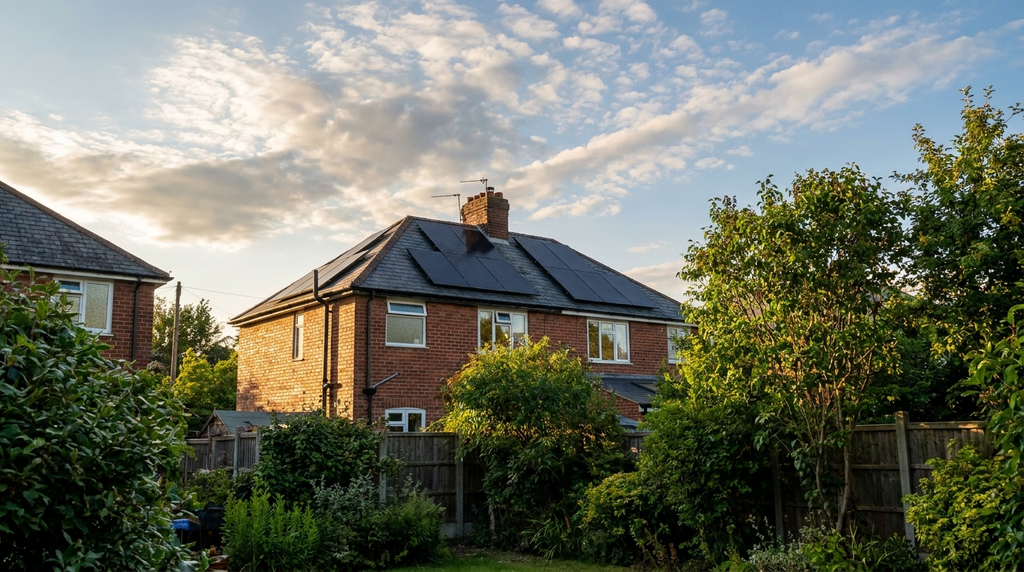
Solar panels are a renewable energy technology because they convert sunlight, an inexhaustible natural resource, directly into electricity without consuming fuel. The UK government classifies solar photovoltaics as a renewable source under its energy statistics, noting that renewable generation accounted for 51.8% of UK electricity in 2025 (GOV.UK, 2026).
The answer is clear-cut: solar panels are renewable. However, the term “renewable” refers only to the energy source, sunlight, not the physical panels themselves. The manufacturing process for solar panels uses raw materials like silicon, glass, and metals, and requires energy. But once installed, a typical domestic system produces clean electricity for 25 to 30 years with no ongoing fuel costs. The distinction matters for homeowners assessing environmental impact versus long-term energy savings.
Solar panels generate electricity from a limitless source
Sunlight is available every day and is not depleted by use, which is the defining characteristic of renewable energy. A 3.5kWp solar panel system on a UK home generates around 3,000 kWh per year, according to the Energy Saving Trust (Energy Saving Trust, 2026). This displaces electricity from the grid, which still relies partly on fossil fuels. The UK’s renewable energy mix includes solar, wind, and hydro, all of which are replenished naturally.
Solar panels are not fossil fuels or nuclear
Nonrenewable energy sources, such as coal, gas, and oil, are finite and release carbon dioxide when burned. Nuclear power uses mined uranium, which is also finite. Solar panels produce no emissions during operation and do not require extraction of fuel. The UK’s transition to net zero by 2050 depends on scaling up renewables like solar, which already contributed over 5% of total UK electricity generation in 2025 (Ofgem, 2026).
Solar panel manufacturing has environmental costs
While the energy source is renewable, the panels themselves require mining for materials like silver, copper, and quartz. The manufacturing process emits some carbon, but the system typically offsets this within one to four years of operation. The Microgeneration Certification Scheme sets quality standards for UK installations. This ensures efficient performance (MCS, 2026). After that, the electricity generated is effectively zero-carbon for the remaining lifespan.
A worked example
A typical 3.5kWp solar panel system on a three-bedroom 1930s semi-detached house in Manchester costs around £7,000 after the 0% VAT saving, with no grant eligibility assumed. The Energy Saving Trust estimates this system generates roughly 3,000 kWh per year, saving about £570 annually on electricity bills at current UK rates. Over 25 years, that adds up to over £14,000 in total savings, easily covering the upfront cost within 12 to 13 years. If you are eligible for the ECO4 scheme or a Smart Export Guarantee tariff paying 15p per kWh exported, the payback period can drop to under 10 years. The system also cuts around 1.3 tonnes of CO₂ emissions each year, matching the government’s net-zero targets.
| Item | Figure |
|---|---|
| Upfront cost after grants | £7,000 |
| Yearly savings | £570 |
| Payback period | 12.3 years |
| 25-year lifetime savings | £14,250 |
What homeowners often get wrong
The most common mistake is confusing the renewable energy source with the physical panels themselves, leading some to think solar is nonrenewable. Here are three frequent errors to watch for.
- Thinking the panels run out of sunlight Sunlight is an inexhaustible resource, not a fuel that gets depleted, even on cloudy UK days, panels generate electricity from diffuse light. The result is a system that works year-round without consuming anything.
- Believing manufacturing emissions make them nonrenewable The energy used to make a panel is recouped within one to three years of operation, known as the energy payback time. After that, every kWh generated is truly zero-carbon and renewable.
- Assuming all solar panels are the same Some cheap imports have lower efficiency or shorter lifespans, but certified panels from the MCS scheme last 25 to 30 years. Choosing a non-MCS system can void your warranty and block access to Smart Export Guarantee payments.
Quick reference
- Solar panels are renewable because they convert sunlight, an inexhaustible natural resource, into electricity without consuming fuel.
- A 3.5kWp system on a UK home generates roughly 3,000 kWh per year, according to the Energy Saving Trust.
- To qualify for the 0% VAT rate on solar panels, the installation must be carried out by an MCS-certified installer.
- Payback periods typically range from 10 to 15 years, but can fall below 10 years with a Smart Export Guarantee tariff.
- Installing solar panels incorrectly, such as on a north-facing roof, can cut generation by 30% or more and waste thousands of pounds.
Frequently Asked Questions
Solar panels are renewable. The UK government classifies solar photovoltaics as a renewable source under its energy statistics (GOV.UK, 2026).
Yes, manufacturing uses raw materials like silicon and metals, but the energy source, sunlight, is renewable. Once installed, panels produce clean electricity for 25–30 years with no fuel costs.
A typical 3.5kWp system generates around 3,000 kWh per year, according to the Energy Saving Trust (2026).