The draught you notice at three in the morning
It arrives as a stripe of cold across the floorboards, a stripe so precise you could trace it with your finger. Or the curtain that stirs when no window is open, a slow, ghostly pulse. The hiss from a sash window that sounds less like a fault and more like the house breathing in its sleep. You notice it at three in the morning, when the radiator has clicked off and the silence has settled, and your toes find the one patch of floor that feels like January.
Draughtproofing a period home is not a technical fix. It is a quiet negotiation with the building’s age. This house has always breathed this way, through gaps that were left deliberately, before central heating, before double glazing, before anyone expected a room to hold its temperature like a thermos. You are not sealing it shut. You are asking it to breathe a little more gently. The goal is a home that feels settled and still, not one that fights the weather through every crack.
Start with the window that rattles
The sash window is the first character in this story. It is the one that sticks in summer and gaps in winter, the one you wrestle with when the humidity shifts. It is also the window that defines the room’s proportions, its light, its era. You do not want to replace it. You want to teach it a new trick.
Brush pile strips and silicone seals are the invisible intervention you are looking for. They sit in the frame’s existing grooves, unseen, a thin whisper of material that closes the gap without adding bulk. The pleasure of a window that slides smoothly again, sealed but still operable, is disproportionate to the effort. The room’s temperature lifts by a degree or two. The hiss stops. The face of the window does not change. sash window repair basics
Let your front door do the heavy lifting
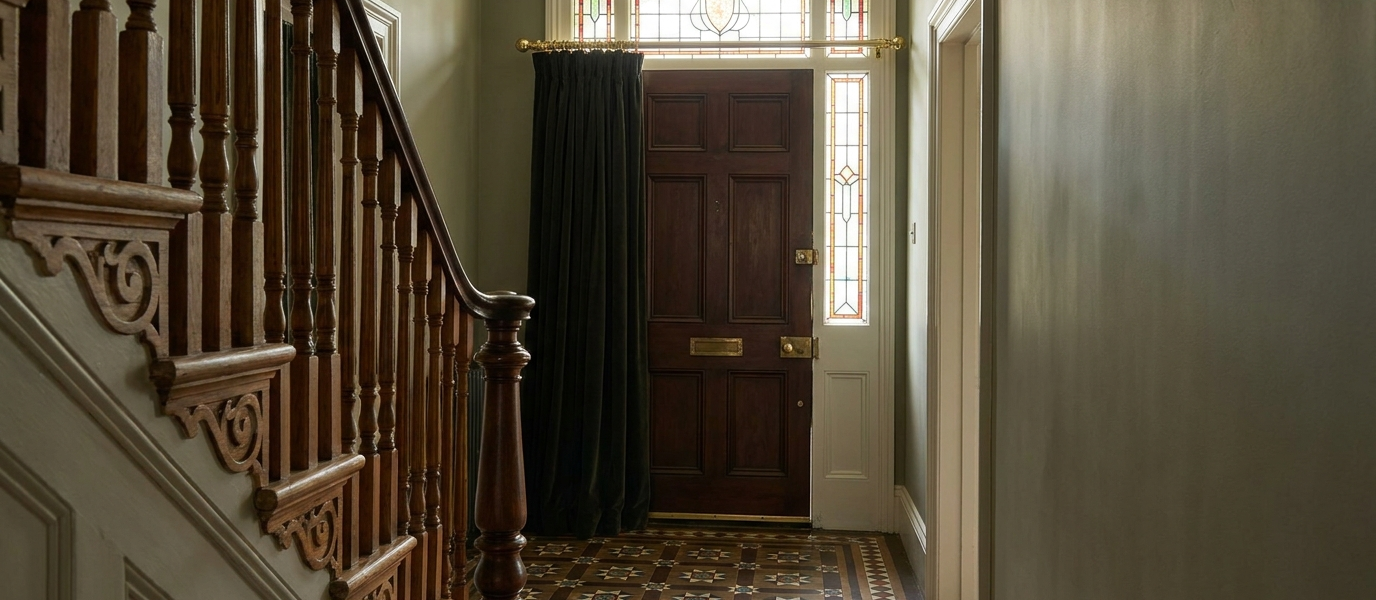
The front door is the largest single point of heat loss in any period home, but it is also the most visually defining feature. A Victorian six-panel in dark green. A Georgian fanlight with a brass knob. You do not want to deface it with a strip of rubber that looks like it belongs on a garage.
The art is in the details. A weighted, felt-lined letterbox flap that drops with a soft thud instead of a clatter. A brass keyhole cover the size of a ten-pence piece, unobtrusive, nearly invisible. A threshold strip in a wood tone that matches the door, not a black rubber bar you trip over. When you close a properly draught-excluding door, it lands with a satisfying weight. That weight signals arrival. It tells you the house is buttoned up, and you are home.
Why texture matters more than colour
Draughtproofing a period home often means adding material, felt, wool, foam, to the edges of the room. The skirting. The floorboards. The chimney breast. These are the places where the cold enters, and they are also the places where the room’s tactile character lives.
You want the added material to feel like it belongs. A wool snake at the base of a door, soft and heavy, not a plastic tube that squeaks against the floor. A felt strip along the skirting that is barely visible but changes the way the room holds its warmth. The gain is tactile: a room that feels finished, where every edge is soft and deliberate, not cold and sharp. Colour is secondary. Texture is everything.
Eight ways to soften a tall sash window
A tall sash window is a draught’s best friend and a homeowner’s quiet challenge. Here are eight ways to meet it, each a choice rather than a prescription:
- Brush seals, fitted into the frame’s existing channels, invisible when the window is closed.
- Secondary glazing film, magnetic, not sticky. It comes off in spring without residue.
- Lined curtains with header tape, the weight of the lining pulls the fabric flat against the wall, cutting the draught at the edges.
- Pull-down cellular blinds, in a neutral linen, they trap air in their honeycomb cells and sit flush against the frame.
- Draught-excluding pelmets, a padded box at the top of the curtain rail that stops the chimney effect of rising cold air.
- Weighted bottom seals, a slim metal bar sewn into the curtain hem that holds it against the sill.
- Wooden dowels, cut to length and wedged into the gap between the two sashes, a low-tech fix that costs pennies.
- A thick roman blind, in a complementary tone, it folds away cleanly during the day and drops a solid layer of fabric at night.
You decide how much character you want to trade for warmth. Most of these options trade nothing at all. choosing curtain linings
The chimney that remembers the fire
An open fireplace is the most romantic and the most wasteful feature of a period home. It is a hole in the wall that leads directly to the sky. The cold pours down it, and the warm air pours up. But you do not want to brick it up. You want it to still look like a fireplace, ready for a log fire on Christmas Eve.
A chimney balloon is the temporary answer. Inflate it, push it up the flue, and it plugs the gap invisibly. Take it out when you want a real fire. For a more permanent solution, a bespoke wooden board painted to match the surround, with a small vent for airflow, seals the opening while keeping the hearth intact. The change is not just thermal. Sealing the chimney alters the room’s acoustic. Less echo. More hush. That quiet feels like a small luxury, one you did not know you were missing.
What the floorboards are telling you
The gaps between floorboards are where the cold rises, but they are also where the house’s history lives. A sliver of light from the room below. The smell of old timber and dust. You do not want to fill every gap with a modern sealant that looks like toothpaste.
Use oakum, hemp fibre soaked in pine tar, for the larger gaps. It is traditional, breathable, and it belongs in a period home. For the smaller gaps, a flexible wood filler that moves with the boards as they expand and contract. Then lay a wool rug over the main traffic area. The rug absorbs sound and warmth while the repair below is invisible. The reward is a floor that still creaks in the right places but no longer whistles. It is still an old floor. It just behaves itself now. wool rugs for insulation