You are standing in the doorway at 7:15 on a Tuesday morning in January. The rest of the house is a comfortable, yawning warmth, the kind that makes you slow down with your tea and lean against the kitchen counter a little longer. But here, in this room, something is wrong. Your ankles are cold. Not your hands, not your face, just that precise band of air around your shins, as though the room has exhaled a long, slow chill across the floor. You touch the radiator. It is hot. The boiler is fine. The windows are shut. And yet the room refuses to hold heat.
This is the quiet frustration that makes you doubt your own judgment. You check the weather. You check the thermostat. You wonder if you are imagining it. But you are not. The real culprit is invisible, structural, and far more interesting than a faulty valve. It is the room itself, how it was built, what it is made of, and the silent, steady way it lets heat escape without a sound.
The room that felt wrong no matter what I did
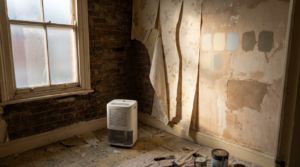
The room in question was a Victorian extension with a flat roof. It looked fine. The walls were freshly plastered, the floorboards sanded and sealed, the window a handsome double-glazed sash. But it behaved differently from every other room in the house, colder by three or four degrees, damp to the touch on the north-facing wall after rain. You could run the radiator for hours and the room would still feel like it was waiting for something, never quite settling into comfort.
The realisation that the boiler is not the problem is a small but powerful shift in thinking. The problem is how the room was built, what it is made of, and where the heat is escaping without a sound. Once you stop blaming the heating system, you start looking at the room as a system of its own, and that is where the real answers live.
Why the walls were lying to me
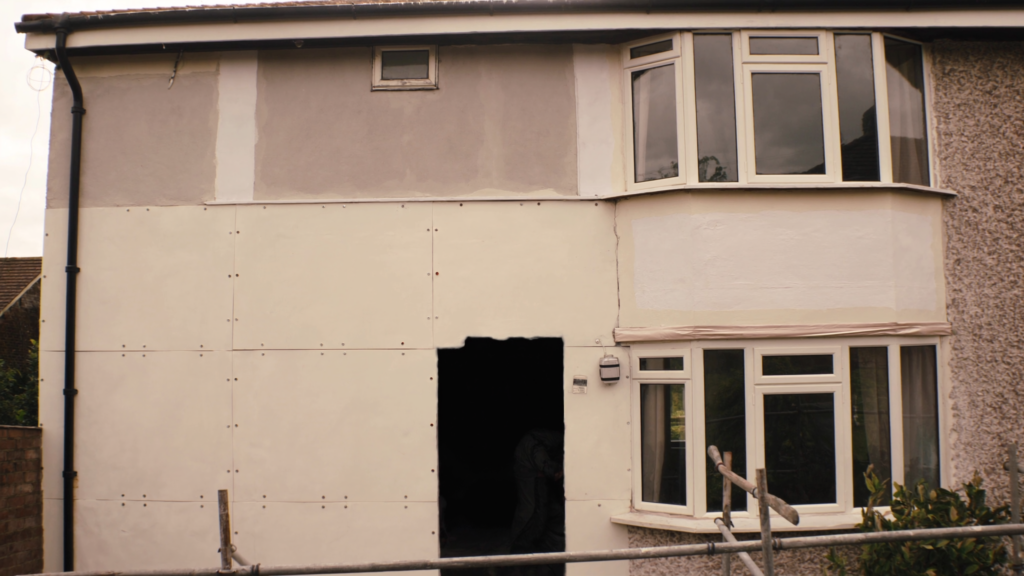
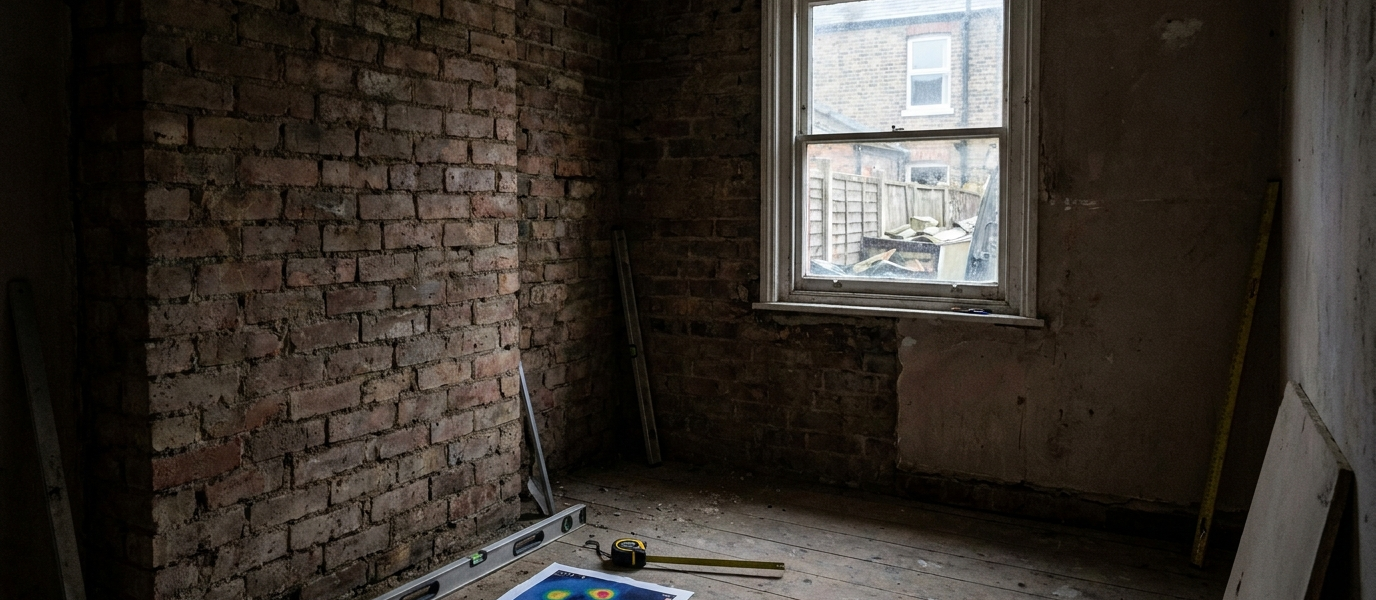
The key discovery, when I finally stopped pacing and started paying attention, was this: the walls were solid. No cavity. No insulation. Just brick and plaster, with the cold passing through as though the wall were a sieve. Heat moves in a straight line, from warm air to cold surface, and in this room, the cold surface was everywhere. The internal wall on one side of the house was noticeably colder to the touch than the internal wall on the other side. The lesson was simple: a room can look sealed but feel open.
If you have a room that never warms up, put your hand on the walls on a cold day. The temperature difference between one side of the house and the other will tell you more than any heating engineer ever could. The problem is not the radiator. The problem is the building fabric.
The floor that was colder than the garden
Then there was the floor. Suspended timber floors are a common culprit in older homes, and this one was a textbook case. Walking across it felt like walking across a surface that was breathing cold air up from below, a faint, steady draught that seemed to come from nowhere. I checked the skirting boards. I checked the gaps between the boards. The cold was coming from underneath, where the void beneath the floor was open to the outside air.
The fix is not glamorous, but it is transformative: draught-proofing the floorboards, insulating the void with mineral wool between the joists, or even just laying a thick wool rug over the coldest patch. The point is that a room’s coldest surface is often the one you stand on. Stop blaming the radiator. Start treating the room as a system, floors, walls, windows, roof, all connected, and the room will start to behave differently.
Eight ways to soften a tall sash window
Tall sash windows are beautiful, but they are also the single biggest source of heat loss in a room that feels wrong. You do not need to replace them. You just need to work with them, one winter at a time.
- Heavy curtains with a thermal lining, floor-length, pooling slightly on the floor, closed the moment the sun goes down. The difference is immediate, like putting a coat on the window.
- A window snake for the sill gap, that thin strip of cold air that curls in at the bottom of the frame. A fabric tube filled with rice or sand, placed along the sill, stops the draught without damaging the paintwork.
- Secondary glazing film, barely visible when applied carefully, but it creates a still layer of air between the film and the glass. It is cheap, temporary, and surprisingly effective.
- Plant a shrub outside, a dense evergreen like holly or yew, placed close to the window, breaks the wind before it hits the glass. It is a slow fix, but it works.
- Check the sash cords for gaps, the channels that hold the cords are often open to the outside. A small brush strip or a bead of clear sealant can close them in minutes.
- Add a pelmet, that fabric-covered box above the curtain. It is not decorative fluff. It stops the warm air from rising up and over the curtain, trapping it in the room instead.
- Use a roller blind behind the curtain, a tight-fitting cellular blind creates a second layer of still air between the blind and the glass, while the curtain handles the draught.
- Seal the frame with a brush strip, the kind you fit to the bottom of a door, but applied to the sash frame where it meets the sill. It is invisible when the window is closed, and it stops the draught that you thought was coming from the glass.
For more ideas on how to approach your home’s colour and character alongside these practical fixes, see our guide on door colour ideas, the same thinking applies to windows.
The roof that was never meant to hold heat
Rooms under pitched roofs or flat roofs have a particular problem. Heat rises, hits the cold surface of the roof, and falls back down as a draught. The room feels cold because the ceiling is cold, not because the air is cold, but because the surface above you is radiating cold downward. It is a subtle, persistent discomfort that no amount of radiator heat can fix.
The subtle fix is to insulate the roof slope from inside, or to add a reflective layer behind the plasterboard that bounces the heat back into the room. But the real lesson is this: some rooms were designed for storage, not for living. A converted loft or a Victorian extension with a flat roof was never intended to be a bedroom or a study. Treating it like one requires a different kind of thinking, one that respects the room’s original character while quietly, patiently, making it fit for purpose.
Why this matters the room you stop avoiding
You stop tiptoeing past that corner of the house, and the whole floor plan opens up.
The emotional payoff is real. A room that was always cold becomes a room you want to sit in. The house feels bigger, quieter, more complete. The boiler stays the same, but the room changes. And when a room changes, the way you live in it changes too. That is the point of all this: not to make the house more efficient on paper, but to make it feel like home in every corner, on every cold morning, without having to run the heating any harder than you already do.
If you are still wondering why some rooms are always cold, start with the room itself. Touch the walls. Check the floor. Look up at the ceiling. The answer is not in the boiler cupboard. It is in the building, and it is waiting for you to find it.
For more on how to bring warmth back into a home that feels out of balance, explore our home insulation guide, it covers the practical steps that follow the diagnosis.