The brush pile that whispers rather than screeches
You know the noise before you feel the cold. That soft, insistent rattle when the wind picks up, the way the curtains shiver even when they are closed. The sash window is the soul of a period room, its proportions, its light, its particular way of framing the garden, but its soul comes with a draught. The temptation is to seal it shut, to caulk the frame, to lose the very thing that makes it beautiful. This is for the person who wants the warmth without the compromise.
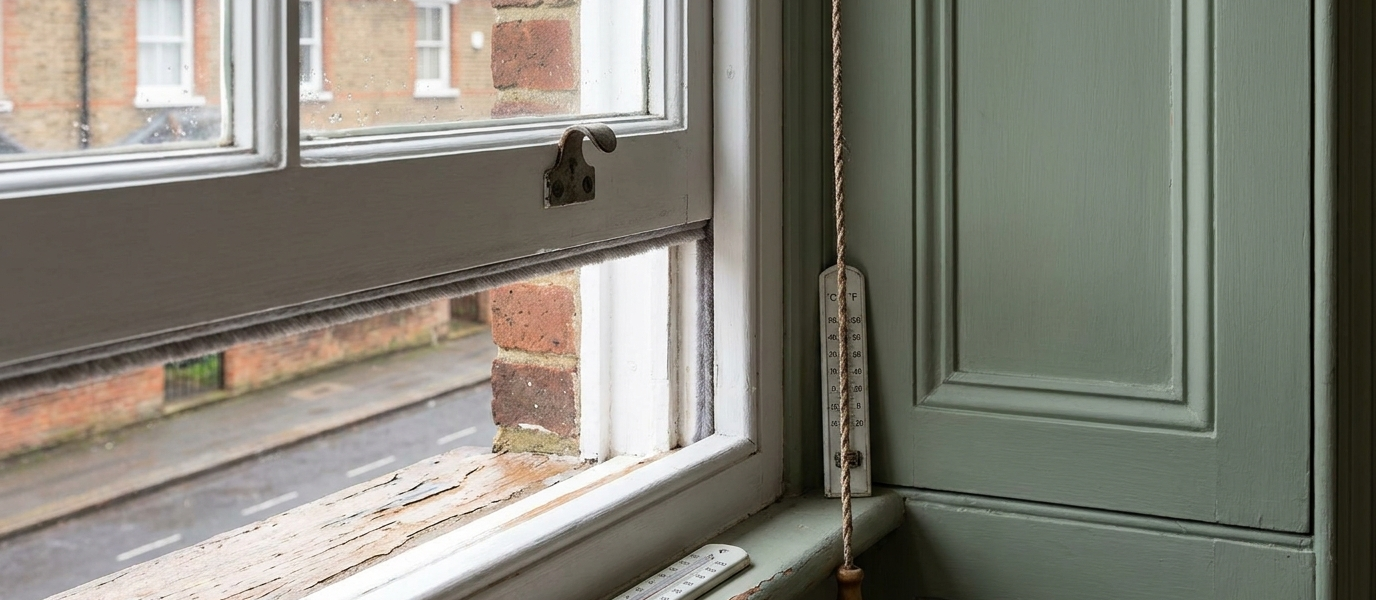
The quietest fix in the trade is the modern brush-pile strip. It slides into the existing channel of the sash, between the timber and the staff bead, with no screws, no adhesive, no contact with the frame itself. The brush fibres are so fine they catch the draught without catching the paint. You get the seal of a new window, but the window still moves the way it was built to move, up, down, and silent. A good set costs around £30 to £60 for a standard sash, and you can fit it in an afternoon with nothing more than a pair of scissors and a steady hand. The frame stays untouched. The paint stays original. The rattle stops.
A weighted curtain that works like a second sash
The cold air that falls from the bottom of a sash window is not a draught in the usual sense. It is a column of chilled air, dense and patient, that pools around your ankles until the room feels damp even when the radiators are on. A thermal curtain can stop it, but only if it does three things: it must be heavy, it must be floor-length, and it must hang from a track mounted to the window board, not the frame.
Think wool or brushed cotton, never a synthetic sheer, never a flimsy lining. The fabric should have the weight of a blanket, the kind that folds into deep, sculptural pleats when you draw it. A concealed track fixed to the window board keeps the curtain away from the sash, so the window still opens and closes freely. The curtain becomes an architectural feature, not a dressing. It mimics the thermal mass of a secondary glazing panel without the glass. Expect to pay £200 to £600 for a made-to-measure wool curtain and track, depending on width and lining.
The internal storm panel that clips, not sticks
For the coldest months, nothing beats a still-air gap. The trick is to create one without drilling into the frame or leaving adhesive residue that turns yellow after a single winter. A removable acrylic or low-iron glass panel held by magnetic clips or spring-loaded pins does exactly that. The clips attach to the inner reveal, the brick or plaster surround, and the panel sits in front of the sash, untouched, unmarked.
Low-iron glass is worth the extra cost if you care about clarity. Acrylic can scratch and fog over time, and it is prone to condensation where it meets the reveal. Glass stays clear, stays clean, and lasts. A custom panel with magnetic fixings runs around £100 to £300 per window, depending on size. It comes out in spring and stores flat behind a wardrobe. The original sash never knows it was there.
Four ways to soften a tall sash window
Sometimes you want a solution that is not permanent, not visible, and not expensive. Here are four that work:
- A wool-stuffed draught snake that sits in the bottom sash channel. It catches the falling cold air and absorbs the rattle. Removable in spring, washable in winter. Cost: £15 to £30, or ten minutes with a sewing machine.
- A felt strip tucked behind the parting bead. The parting bead is the vertical strip that separates the two sashes. A thin strip of undyed felt pushed behind it seals the side gap without glue or screws. Invisible. Silent. Cost: £5 for a roll.
- A weighted roller blind with thermal lining, mounted from a ceiling track that bypasses the frame entirely. The blind drops in front of the window, not inside it. The thermal lining adds a full R-value layer. Cost: £80 to £200.
- A secondary timber frame on felt pads. A simple wooden frame that sits inside the reveal, held in place by friction and felt. No fixings, no marks, removable in minutes. It looks like a picture frame around the window. Cost: £150 to £400 if made by a local joiner.
The corner that everyone forgets, the meeting rail seal
The horizontal gap where the two sashes meet is often the biggest leak in the entire window. It is also the one that most draught-proofing kits ignore, because it is awkward to reach and hard to seal without interfering with the sash movement. But that one two-foot seam can lose more heat than a cracked pipe. Fix it, and the room stops being a wind tunnel.
The solution is a thin, clear silicone strip that sits on the top edge of the lower sash. When you close the window, the weight of the upper sash presses down on the strip, creating a seal that is tight enough to stop a candle flickering. The silicone is almost invisible. It touches only the sash, never the frame. It costs about £10 and takes five minutes to fit. It is the single most effective draught fix you can do without touching the frame, and almost nobody does it.
Why texture matters more than colour when you cannot paint the frame
If you refuse to paint original timber, and you should, the draught fix must be tactile and unobtrusive. A shiny plastic strip or a bright white brush seal will catch the eye and ruin the illusion. Natural felt, undyed and matte, disappears against weathered wood. Dark bronze brush seals do the same, their colour absorbed by the shadows of the sash channel.
There is a psychological effect here that is rarely discussed. A seal that feels soft and warm to the touch, not cold and mechanical, changes how you perceive the room’s comfort. You stop noticing the draught because you stop looking for it. The felt becomes part of the window’s texture, like the grain of the timber or the patina of the brass catch.
The seasonal swap, a draught fix that comes out in May
Not every fix needs to be permanent. In fact, the best ones are often built to be removed. A felt-and-beeswax strip, pressed into the gap between the sash and the frame, works beautifully through the winter and lifts out cleanly in spring. The beeswax softens the felt and helps it hold its shape. The strip leaves no residue, no marks, no sticky ghosts.
The trick is to mark each strip with a simple notch system, one notch for the left side, two for the right, a diagonal cut for the bottom, so they slide in and out without measuring each time. You store them in a drawer with the Christmas decorations. When October comes, you slide them back in, and the window tightens like a handshake. In summer, the window breathes. In winter, it holds tight. And it still looks like it did in 1880. sash window draught fix