Why Inverness Homeowners Are Turning to Solar Right Now
There’s something quietly significant happening on the rooftops of Inverness. From the stone-built semis of Merkinch to the newer detached homes out in Culloden and Balloch, more and more homeowners are asking the same question, can solar panels actually work this far north?
The honest answer is yes, and arguably the case for going solar in Inverness is stronger right now than it’s ever been. Your average household here uses around 14,500 kWh of gas per year, that’s well above the Scottish average, and with electricity prices still elevated, every unit of free energy from your roof makes a real dent in bills that Inverness residents know all too well.
The Highland Council has been pushing hard on its net-zero commitments, and the Scottish Government’s Heat in Buildings Strategy means the pressure to reduce fossil fuel dependency is only going one direction. Combine that with improved battery storage technology and better-performing panels in low-light conditions, and solar has moved from “nice idea” to genuinely practical for Inverness homes.
There’s also a financial urgency that’s very specific to this part of Scotland. Heating degree days in Inverness exceed 2,200 per year, meaning your home needs more energy to stay warm than almost anywhere in England. Offsetting your electricity demand with solar frees up more of your budget for heating, and if you’re planning a heat pump installation down the line, having solar already in place makes the economics work far better.
What Solar Panel Installation Actually Looks Like for an Inverness Home
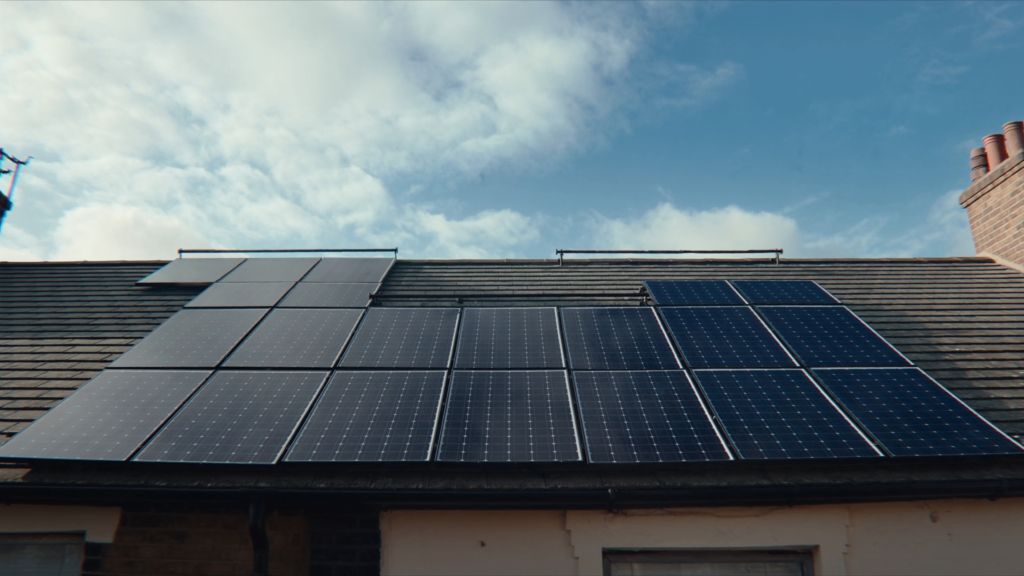
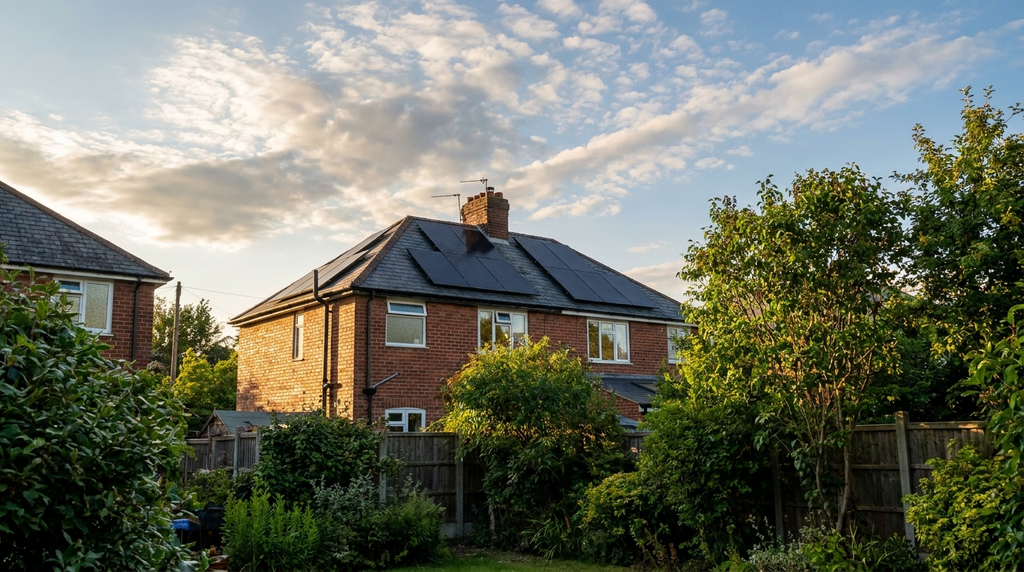
Most homes in Inverness are either semi-detached or detached, with a significant proportion built between the 1930s and 1980s, think solid stone construction or brick-built council-era properties, particularly around the Dalneigh, Hilton, and Crown areas. These homes tend to have pitched roofs with decent south-facing aspects, which is exactly what solar installers want to see.
Even so, there are some Inverness-specific practicalities worth knowing about before you call anyone.
- Roof pitch and orientation, A roof pitched between 30 and 40 degrees facing south, southeast, or southwest will generate the most. Many of the detached homes in Scorguie and Inshes have ideal geometry. North-facing roof slopes are largely wasted for solar.
- Snow loading, Inverness gets proper snow in winter, and installers need to account for additional load on older roof structures. Don’t skip the structural check, especially on pre-1970s properties.
- Chimneys and dormers, Older Inverness properties often have multiple chimney stacks and dormer windows that reduce available roof space and can cause shading. A good installer will use shading analysis software before quoting.
- Access and scaffolding, Narrow driveways and terraced gardens on some of the older streets near the city centre can make scaffold erection trickier and more expensive than in newer estates.
- Roof condition, Stone-built homes with original slate roofing may need some remedial work before panels go on. Factor in £300–£800 for any necessary re-slating around mounting brackets.
Newer estates such as those around Milton of Leys and Westhill tend to be much more straightforward installations, modern trussed roofs, clear access, and consistent orientations mean the job goes smoothly and costs come in at the lower end.
How Much Solar Panels Cost in Inverness and the Wider Highland Area in 2026
Let’s get into the numbers. Prices in Inverness tend to run around 8–12% higher than the central Scotland average, largely because the installer base is smaller and travel time from equipment suppliers adds to overheads. Even so, competition has improved as national companies extend their coverage into the Highlands.
| System Size | Typical Property | Panels | Inverness Cost (Installed) | Scotland Average | Annual Generation (Est.) |
|---|---|---|---|---|---|
| 3 kWp | Small semi-detached | 7–8 panels | £5,800–£7,200 | £5,200–£6,500 | 2,100–2,400 kWh |
| 4 kWp | Mid-size semi / detached | 10 panels | £7,500–£9,000 | £6,800–£8,200 | 2,800–3,200 kWh |
| 6 kWp | Larger detached | 14–15 panels | £10,500–£13,000 | £9,500–£11,500 | 4,100–4,700 kWh |
| 4 kWp + 5 kWh Battery | Mid-size with storage | 10 panels | £11,500–£14,000 | £10,500–£13,000 | 2,800–3,200 kWh + stored |
| 6 kWp + 10 kWh Battery | Larger detached with storage | 14–15 panels | £16,000–£20,000 | £14,500–£18,000 | 4,100–4,700 kWh + stored |
Installers covering Inverness typically also serve Dingwall, Nairn, and Forres, and some quote a single “Highland rate” across that cluster. If you’re in Nairn, you may actually find prices slightly lower simply because it’s easier to access from the A96 corridor.
Battery storage is increasingly worth considering in Inverness specifically, more on that below, but it does add substantially to upfront cost. The good news is that Scotland’s interest-free loan scheme can cover the full system cost.
How Inverness’s Climate and Geography Shape Your Solar Decision
This is where being honest really matters, because the sunshine hours picture in Inverness is genuinely different from, say, Edinburgh or Aberdeen. You’re looking at roughly 700–900 hours of usable sunshine per year, compared to around 1,400 in southern England. That’s a real difference.
But here’s what the headline figure misses. From May through August, Inverness benefits from extraordinarily long days, sometimes 17–18 hours of daylight. During those months, a well-oriented solar array can generate as much in a single day as it does in several winter days combined. Systems sized correctly for Highland conditions front-load their generation heavily into the spring and summer months.
The practical implications for your setup choices are significant.
- Battery storage earns its cost here, Those long summer days generate far more electricity than you can use in real time. Without storage, excess goes to the grid via the Smart Export Guarantee at around 15p per kWh. With a battery, you keep it and use it after dark, which is worth more like 28–32p per kWh in avoided import costs.
- Panel cleaning is more important than in drier areas, Inverness receives 1,000–1,500mm of rainfall annually, and while rain does help self-clean panels, the combination of lichen, moss spores from surrounding hillsides, and mineral deposits from hard water can reduce output by 5–15% if panels aren’t checked annually.
- Wind loading matters for mounting, Prevailing westerlies coming off the Moray Firth and the surrounding hills mean roof-mounted systems need to use solid mounting hardware rated for higher wind speeds. Don’t accept a quote that doesn’t specify the wind loading specification for your postcode.
- Snow can temporarily reduce output to near zero, A few days each winter, your panels will be snow-covered. Modern panels shed snow relatively quickly once temperatures rise slightly, but it’s worth factoring this into your realistic annual generation estimate.
The bottom line is that solar in Inverness works, but it works differently to the south of England. Your payback period will be a little longer on generation alone, which is exactly why battery storage and smart diversion to hot water cylinders (via devices like an Eddi diverter) make such a difference to the economics here.
The Products and Specifications That Actually Perform in Highland Conditions
Not all solar panels are equal for low-light performance, and in Inverness this distinction genuinely matters. Here’s what to look for and what to avoid.
Panel Technology
Monocrystalline panels with high efficiency ratings (20–23%) perform better in diffuse light conditions than cheaper polycrystalline alternatives. Brands like Panasonic HIT, SunPower Maxeon, and REC Alpha all have strong low-irradiance performance data. For Inverness, favour panels with a temperature coefficient of around -0.26% per degree Celsius or better, this matters less in the cold, actually, because cold temperatures slightly improve panel efficiency.
Half-cut cell technology is worth specifying. It reduces energy loss from partial shading, relevant if your roof has chimney stacks or nearby trees casting intermittent shadows.
Inverters
String inverters from established brands such as SolarEdge or Fronius are the workhorses of the industry and work perfectly well in Inverness conditions. If shading is a concern on your particular roof, consider either microinverters (fitted per panel) or a SolarEdge system with power optimisers, these minimise the impact of one shaded panel dragging down the whole array’s output.
Battery Storage
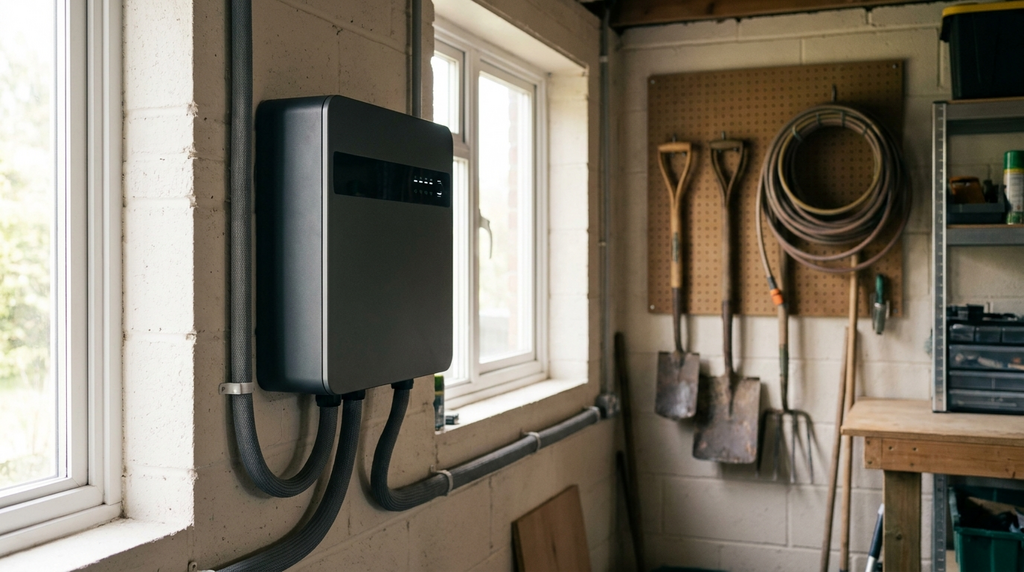
For Inverness homes with the long-day summer profile, a battery in the 5–10 kWh range gives the best return on investment. The Tesla Powerwall 3, GivEnergy 9.5 kWh, and SolarEdge Home Battery are all regularly installed in Highland properties and have good cold-weather performance ratings. Make sure any battery is installed in a frost-free space, an uninsulated garage in Inverness can see temperatures that affect battery longevity.
Hot Water Diversion
Given that Inverness homes average 14,500 kWh of gas use annually, a solar PV diverter (such as an Eddi or iBoost) that redirects surplus electricity to heat your hot water is a highly cost-effective addition at around £400–£600 installed. In summer months, you can reasonably expect to eliminate gas use for hot water almost entirely.
Finding a Trustworthy Solar Installer Near Inverness
The installer landscape in Inverness is smaller than in major cities, which means doing your homework matters more. Here’s what to look for.
Essential Certifications
- MCS (Microgeneration Certification Scheme), This is non-negotiable. Only MCS-certified installers and MCS-certified products make you eligible for the Smart Export Guarantee. Without MCS certification, you cannot legally export to the grid and claim payments. Ask for the installer’s MCS certificate number and check it on the MCS website before signing anything.
- TrustMark registration, This adds an additional layer of consumer protection and is increasingly required for grant-funded work.
- HIES or RECC membership, These are consumer protection schemes specific to home energy products. Members must follow a code of practice and offer dispute resolution.
Questions to Ask Before Committing
- Can you provide a shading analysis for my specific roof using satellite or on-site assessment?
- What wind loading specification will the mounting system be rated to?
- Have you installed systems on properties of similar age and construction in the Inverness area?
- What is your process if the roof structure needs remedial work before installation?
- What monitoring system comes with the installation and can I view generation data remotely?
- Who handles the DNO (Distribution Network Operator) notification, you or me?
Red Flags to Watch For
- Quotes given without a site visit or roof assessment
- Pressure to sign on the day
- No mention of the DNO application process
- Vague or missing product specifications
- Cash-only payment requests
Several solid installers based in Inverness also regularly cover Dingwall, Nairn, and Forres. Lead times in 2026 are running at around 6–14 weeks for residential installations in the Highland area, longer than central Scotland, so plan ahead if you want panels generating by summer.
Grants and Funding Available to Inverness Residents in 2026
Scotland’s funding landscape for solar is genuinely better than England’s in several respects, and Inverness residents should take full advantage of what’s on offer.
Home Energy Scotland Loan
This is the headline scheme and it’s excellent. Home Energy Scotland, funded by the Scottish Government, offers interest-free loans of up to £15,000 for energy efficiency and renewables, including solar panels and battery storage. There’s no income eligibility threshold, any homeowner in Scotland can apply. The loan is repaid over up to 12 years with zero interest. That makes it genuinely valuable. Applications go through Energy Saving Trust’s Home Energy Scotland service and you can call their dedicated advice line for Highland residents.
Warmer Homes Scotland
If you’re on certain means-tested benefits or a low income, Warmer Homes Scotland can fund a range of improvements. Solar PV can be included as part of a whole-house package depending on current scheme criteria, it’s worth checking eligibility even if you’ve been turned down for other schemes in the past, as the programme has evolved.
ECO4 (Energy Company Obligation)
This UK-wide scheme, administered through the major energy suppliers, funds energy improvements for lower-income and vulnerable households. Solar panels can be included under ECO4 in combination with other measures. Your energy supplier is the starting point, or you can check eligibility through the government’s ECO4 checker online.
Smart Export Guarantee (SEG)
Not a grant, but a guaranteed income stream. Once your MCS-certified system is registered, energy suppliers are required to pay you for electricity you export to the grid. Rates vary by supplier, shop around, as they range from around 12p to 20p per kWh in 2026. This adds up to £150–£400 per year depending on your system size and how much you export.
VAT Relief
Solar panels, battery storage, and qualifying ancillary equipment installed in homes currently benefit from 0% VAT. This is a meaningful saving, on a £12,000 system it’s worth £2,400 compared to the standard rate. Confirm your installer is applying this correctly on the quote.
Planning Permission and Highland Council Regulations
For most Inverness homeowners, solar panels fall under Permitted Development Rights