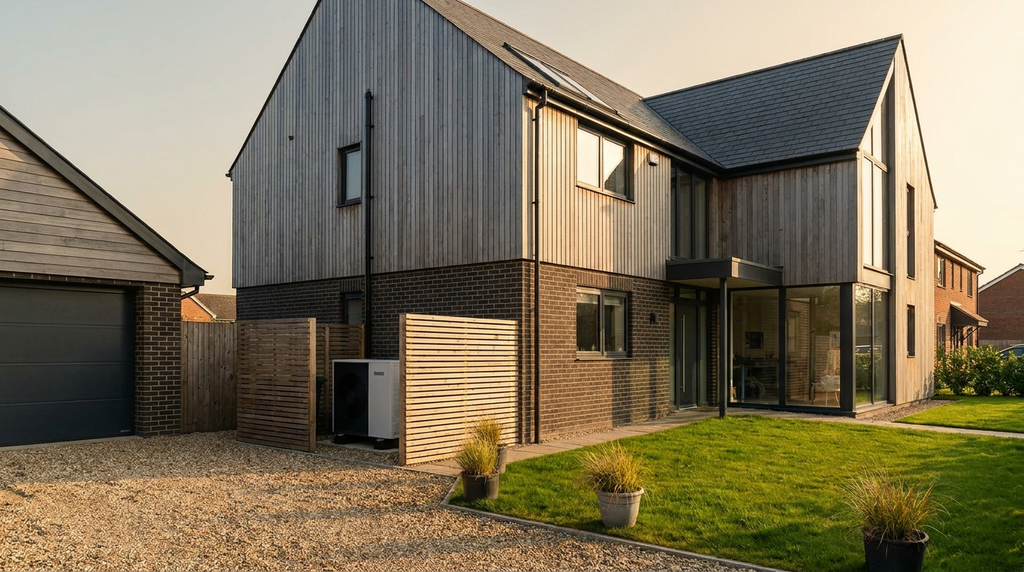
Planning permission is rarely needed for an air source heat pump in a UK flat, but leasehold flats face extra rules
If you live in a flat, the first question is usually whether you can legally install an air source heat pump at all. The answer depends on where you live and whether you own the freehold or hold a lease.
An air source heat pump for a UK flat costs £7,000–£14,000 installed, with a £7,500 BUS grant reducing net cost to £0–£6,500. Leasehold flats need freeholder permission; freehold flats in England usually qualify as permitted development.
- Check if your flat is freehold or leasehold before installing
- Permitted development applies unless in a conservation area
- Leasehold flats require written freeholder permission
- Installed cost is £7,000–£14,000 for a 5–8 kW unit
- Boiler Upgrade Scheme offers £7,500 grant in England and Wales
- Planning permission is rarely needed for an air source heat pump in a UK flat, but leasehold flats face extra rules
- Air source heat pump flat cost ranges from £7,000 to £14,000 installed, with a £7,500 grant available
- Running costs for an air source heat pump in a flat are typically 10–30% lower than a gas boiler, but savings depend on the flat’s insulation
- Quick numbers cost, savings, and payback for a typical flat
- The direct answer yes, an air source heat pump can work in a UK flat, but only if the flat has enough outdoor space, good insulation, and a suitable heating system
- Eligibility and installer certification you must use an MCS-certified installer to get the BUS grant and ensure quality
- The payback period for an air source heat pump in a flat ranges from 0 to 25 years, depending on the net cost after grant and the flat’s energy savings
In England, air source heat pumps are classified as permitted development under the Town and Country Planning (General Permitted Development) (England) Order 2015, provided the outdoor unit is no larger than 1 cubic metre and does not exceed 42 dB(A) at 1 metre from the nearest neighbour’s window or boundary (GOV.UK, 2026). Flats in conservation areas or listed buildings do not qualify for permitted development and require full planning permission from the local authority.
Leasehold flats introduce a second layer of approval. You must obtain written permission from the freeholder or managing agent before any installation. The lease may already restrict external alterations, and the freeholder can require a building survey at your cost (GOV.UK, 2026). In Scotland, Wales, and Northern Ireland, each nation has its own permitted development rules, so you should check the relevant planning portal before proceeding (Scottish Government Planning, Welsh Government Planning, Northern Ireland Planning Portal).
Air source heat pump flat cost ranges from £7,000 to £14,000 installed, with a £7,500 grant available
The installed cost for a small-capacity air source heat pump (5–8 kW) suitable for a typical flat is £7,000 to £14,000, depending on the property’s heat demand, existing pipework, and whether a hot water cylinder is needed (Energy Saving Trust, 2026). The Boiler Upgrade Scheme (BUS) offers a £7,500 grant for air source heat pumps in England and Wales, applied directly by the installer; the homeowner must redeem the grant before installation (GOV.UK, 2026).
After the grant, the net cost to the homeowner is typically £0 to £6,500. Some flats may need additional work such as new radiators or pipework upgrades, adding £1,000–£3,000 to the total (Energy Saving Trust, 2026). For flats in Scotland, the Home Energy Scotland loan and grant scheme offers up to £7,500 (or more for rural areas) with no upfront cost; check Home Energy Scotland’s website for current terms.
Running costs for an air source heat pump in a flat are typically 10–30% lower than a gas boiler, but savings depend on the flat’s insulation
A well-insulated flat with an air source heat pump (Seasonal Coefficient of Performance, or SCOP, of 3.0–3.5) will use roughly 3,000–5,000 kWh of electricity per year for heating and hot water, compared to 8,000–12,000 kWh of gas for a gas boiler (Energy Saving Trust, 2026). At 2026 electricity prices under the Ofgem price cap (24.5p/kWh for electricity, 6.0p/kWh for gas), the annual running cost is approximately £735–£1,225 for the heat pump versus £480–£720 for a gas boiler, a 10–30% saving in energy cost, not including the gas standing charge.
For flats with poor insulation, the heat pump will run longer and may not save money. The Energy Saving Trust advises that a minimum EPC rating of D (or C for some grants) is needed for good performance. The heat pump’s efficiency depends on the flow temperature; lower flow temperatures (35–45°C) are more efficient but require larger radiators or underfloor heating, flats with small radiators may need upgrades (Energy Saving Trust, 2026).
Quick numbers cost, savings, and payback for a typical flat
| Item | Typical value for a 2-bed flat (2026) | Source |
|---|---|---|
| Installed cost (before grant) | £7,000–£14,000 | Energy Saving Trust |
| BUS grant (England & Wales) | £7,500 | GOV.UK |
| Net cost after grant | £0–£6,500 | Calculated from above |
| Annual electricity use (heat pump) | 3,000–5,000 kWh | Energy Saving Trust |
| Annual gas use (boiler) | 8,000–12,000 kWh | Energy Saving Trust |
| Annual running cost (heat pump) | £735–£1,225 | Ofgem price cap (24.5p/kWh) |
| Annual running cost (gas boiler) | £480–£720 | Ofgem price cap (6.0p/kWh) |
| Annual saving | £255–£505 | Calculated from above |
| Payback period (net cost / annual saving) | 0–25 years | Depends on net cost and savings |
| Heat pump lifespan | 15–20 years | Energy Saving Trust |
| Gas boiler lifespan | 10–15 years | Energy Saving Trust |
The direct answer yes, an air source heat pump can work in a UK flat, but only if the flat has enough outdoor space, good insulation, and a suitable heating system
An air source heat pump needs an outdoor unit (roughly the size of a suitcase) mounted on an external wall or balcony, with at least 1 metre of clearance around it for airflow. Flats with no balcony or external wall access may not be suitable (Energy Saving Trust, 2026). The flat must have a heat demand low enough for the heat pump to meet it efficiently; a standard heat loss calculation (MCS 005) is required, and flats with single glazing or poor insulation will need upgrades first (MCS, 2026).
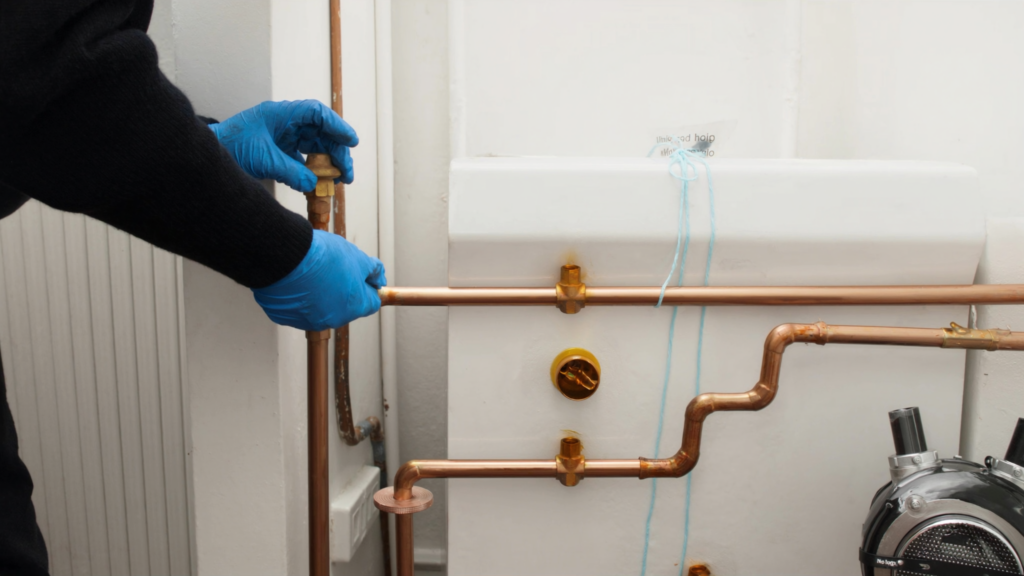
For flats with a combi boiler, installing a heat pump usually requires a hot water cylinder, which needs space (typically 60–90 cm tall). Flats with no airing cupboard or utility room may need a slimline or unvented cylinder (Energy Saving Trust, 2026). Flats with existing radiators designed for high-temperature gas boilers (60–70°C flow) will need larger radiators or underfloor heating to work efficiently with a heat pump (35–45°C flow); this can add £1,000–£3,000 to the installation cost.
Heat pump vs gas boiler running costs
Eligibility and installer certification you must use an MCS-certified installer to get the BUS grant and ensure quality
The Boiler Upgrade Scheme requires the installer to be registered with the Microgeneration Certification Scheme (MCS) or equivalent. The homeowner must use an MCS-certified installer to claim the £7,500 grant (GOV.UK, 2026). MCS certification covers the design and installation of the heat pump system, including a heat loss calculation and a system performance guarantee (MCS, 2026).
For flats, the installer must also check that the outdoor unit complies with the permitted development noise limit (42 dB(A) at 1 metre); the installer should provide a noise assessment (MCS, 2026). TrustMark registration is also recommended, as it covers customer protection and workmanship standards; the BUS grant requires the installer to be registered with TrustMark or a similar scheme (GOV.UK, 2026). For leasehold flats, the installer should provide written confirmation that the installation meets the freeholder’s requirements, and the homeowner should keep a copy of the lease and the freeholder’s permission letter.
The payback period for an air source heat pump in a flat ranges from 0 to 25 years, depending on the net cost after grant and the flat’s energy savings
Payback is calculated as the net cost after the BUS grant divided by the annual energy saving. For a flat with a net cost of £5,000 and annual savings of £500, the payback is 10 years (calculated from Energy Saving Trust cost and savings data). Flats with very low heat demand (e.g., a well-insulated new-build flat) may have a net cost of £0 after the grant, giving an immediate payback of 0 years.
Flats with high heat demand (e.g., a poorly insulated Victorian flat) may have a net cost of £6,500 and savings of only £200 per year, giving a payback of 32.5 years, likely not worth it without insulation upgrades. The heat pump’s lifespan of 15–20 years means a payback of 10 years or less is generally considered good value; a payback over 20 years may not be worthwhile unless the homeowner plans to stay long-term. The payback calculation does not include the cost of upgrading radiators or pipework, which can add 2–5 years to the payback period.
Best heat pump brands for flats
Frequently Asked Questions
Yes, but it depends on your tenure and location. Freehold flats in England can use permitted development if the unit is under 1m³ and under 42 dB(A). Leasehold flats need freeholder permission. Check with your local planning portal first (GOV.UK, 2026).
Rarely, unless you live in a conservation area or listed building. In England, air source heat pumps are permitted development for most flats. In Scotland, Wales, and Northern Ireland, rules differ (Scottish Government Planning, 2026).
Installed cost is £7,000 to £14,000 for a typical 5–8 kW unit. After the £7,500 Boiler Upgrade Scheme grant, net cost is £0 to £6,500 (Energy Saving Trust, 2026).
Yes, but you need written permission from the freeholder or managing agent. The lease may restrict external changes, and the freeholder can require a survey at your cost (GOV.UK, 2026).
The Boiler Upgrade Scheme offers £7,500 for air source heat pumps in England and Wales. The installer applies the grant, and the homeowner must redeem it before installation (GOV.UK, 2026).