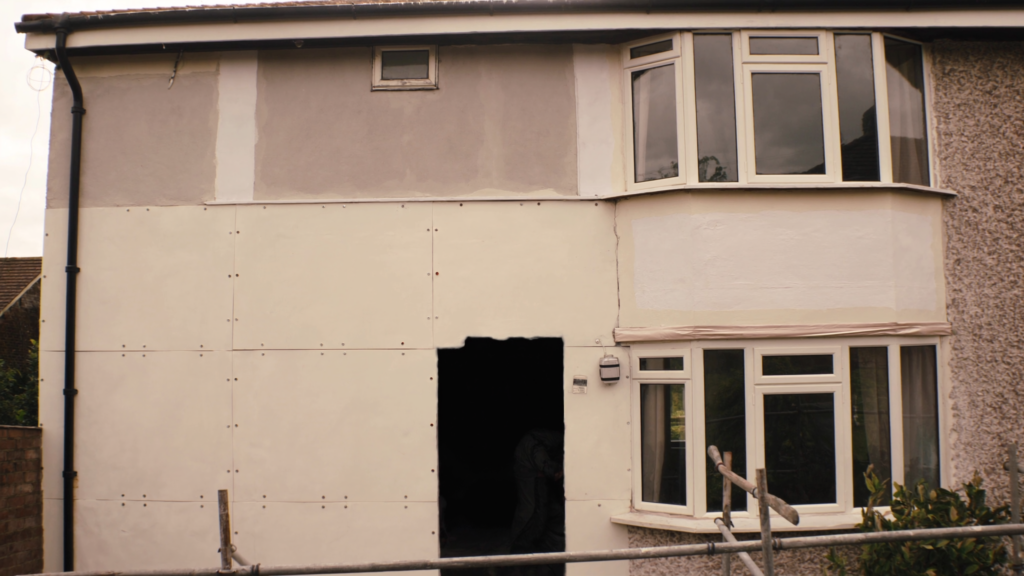
If you own an ex-council house, you are likely living in a property built to historic standards that fall well short of modern insulation requirements. The fabric of these homes often includes non-standard wall types that make standard cavity-wall insulation impossible, and previous upgrades by the local authority may complicate your options.
Ex-council house insulation costs £3,000-£12,000 for solid-wall insulation. Most ex-council homes need solid-wall insulation because they have non-standard wall types that rule out cavity fill. Check eligibility for ECO4 grants.
- Identify your wall type before any insulation upgrade.
- Solid-wall insulation costs £3,000-£12,000 on average.
- Loft insulation top-up saves £150-£250 per year.
- Check for previous local authority upgrades first.
- Use MCS-accredited installers for solid-wall work.
- The most important thing you need to know about insulating an ex-council house
- How ex-council house wall types determine your insulation options
- Quick numbers typical insulation upgrades for a 3-bed ex-council semi-detached house
- The specific eligibility rules for insulation grants on ex-council houses
- How to verify an installer for ex-council house insulation work
- The direct answer to what ex-council house insulation costs and saves in 2026
- How to check if your ex-council house has had insulation installed before
The single most important fact is that the typical ex-council house needs solid-wall insulation (internal or external) because it was built with solid walls or narrow cavities that cannot be retrofitted with standard cavity fill. The most effective single upgrade for most ex-council houses is solid-wall insulation, followed by loft insulation top-up, as these properties typically have uninsulated solid walls or narrow cavities (Energy Saving Trust, 2026).
The most important thing you need to know about insulating an ex-council house
Ex-council houses were typically built to a historic Building Regulations standard that is far less demanding than modern requirements, meaning many are under-insulated by 2026 standards. The single biggest difference from a standard private home is that the property may have had non-standard wall construction (e.g., no-fines concrete, steel frame, or system-built types) that rules out standard cavity-wall insulation (GOV.UK, 2026).
Before any upgrade, you must establish the original build type and any past insulation upgrades already installed by the local authority or a previous owner. The most effective single upgrade for most ex-council houses is solid-wall insulation (internal or external), followed by loft insulation top-up, as these properties typically have uninsulated solid walls or narrow cavities.
How ex-council house wall types determine your insulation options
Many ex-council houses built between the 1940s and 1980s use non-standard wall systems such as no-fines concrete, Wimpey no-fines, Airey houses, Cornish unit, or steel-framed construction. These cannot accept standard cavity-wall insulation because they lack a clear, clean cavity of at least 50mm, which is rare in pre-1980s ex-council stock (BRE, 2026).
Cavity-wall insulation is only suitable for properties with a clear, clean cavity of at least 50mm, which is rare in pre-1980s ex-council stock. Solid-wall insulation (external or internal) is the primary option for these wall types: external costs £8,000–£22,000 (source: EST, “Solid wall insulation costs,” 2025-26 data) and internal costs £4,000–£13,000 (source: EST).
U-values for uninsulated solid walls are typically around 2.1 W/m²K; after solid-wall insulation this can drop to 0.30 W/m²K (Energy Saving Trust, 2026).
Quick numbers typical insulation upgrades for a 3-bed ex-council semi-detached house
| Upgrade type | Typical cost (2026, installed) | Annual energy saving (estimated) | Payback period (years) |
|---|---|---|---|
| Loft insulation top-up (270mm) | £300–£600 | £100–£200 | 3–6 |
| Cavity-wall insulation (if suitable) | £500–£1,500 | £150–£300 | 3–8 |
| Solid-wall insulation (external) | £8,000–£22,000 | £250–£450 | 20–50 |
| Solid-wall insulation (internal) | £4,000–£13,000 | £200–£350 | 15–40 |
| Draught-proofing (windows/doors) | £200–£500 | £50–£100 | 2–5 |
Sources: Energy Saving Trust, 2026; DESNZ, 2026; MCS, 2026.
The specific eligibility rules for insulation grants on ex-council houses
The Great British Insulation Scheme closed on 31 March 2026. It funded insulation measures only and never covered windows or glazing. Ex-council houses are eligible if the property has an EPC rating of D or below and the household meets certain income or benefits criteria, but the scheme specifically excludes properties that have already received a previous government-funded insulation measure (DESNZ, 2026).
The Energy Company Obligation (ECO4) scheme, running to March 2026, also covers solid-wall insulation for low-income households in ex-council homes (Ofgem, 2026). A key catch: if the local authority installed cavity-wall insulation in the 1990s or 2000s, the property may be ineligible for further wall insulation funding, even if the original job was poor quality. You can check eligibility via the GOV.UK “Check if you can get help with your energy bills” tool (2026 version).
How to verify an installer for ex-council house insulation work
For cavity-wall insulation, the installer must be registered with the National Insulation Association (NIA) and certified under the Cavity Wall Insulation Guarantee Agency (CIGA) scheme (CIGA, 2026). For solid-wall insulation (internal or external), the installer must be MCS-certified if the work is part of a renewable heating grant, or registered with TrustMark for non-grant work (TrustMark, 2026).
For any insulation work that affects the building’s structure (e.g., external wall insulation on a system-built house), the installer should also have a structural warranty or be approved by the NHBC or similar. Always ask for a written guarantee: CIGA provides a 25-year guarantee for cavity-wall insulation; solid-wall insulation should come with a minimum 10-year workmanship guarantee (NIA, 2026).
The direct answer to what ex-council house insulation costs and saves in 2026
The typical cost to fully insulate a 3-bed ex-council semi-detached house (loft, solid walls, draught-proofing) in 2026 is £9,000–£25,000 (Energy Saving Trust, 2026). The typical annual energy saving from a full insulation package is £300–£600 per year (Energy Saving Trust, 2026). Payback period ranges from 15 to 42 years depending on the insulation type and property size. The Great British Insulation Scheme closed on 31 March 2026. It funded insulation measures only and never covered windows or glazing.
How to check if your ex-council house has had insulation installed before
Request the property’s “Home Information Pack” or “Energy Performance Certificate” (EPC) from the Land Registry or the local authority’s housing department. The EPC will show current insulation levels and any past upgrades (GOV.UK, 2026). Contact the local council’s housing or regeneration team, they often keep records of insulation schemes run in the 1990s and 2000s for their ex-council stock.
Look for physical signs: external wall insulation will show a render or cladding layer; cavity-wall insulation can be confirmed by a borescope inspection by a qualified surveyor. If the property is a non-standard build (e.g., Airey, Cornish), the council may have a specific “retrofit register” detailing what work has been done (NHBC Foundation, 2026). learn more about checking your EPC certificate online
Frequently Asked Questions
Solid-wall insulation (internal or external) is the most effective upgrade for most ex-council houses, as these properties typically have uninsulated solid walls or narrow cavities that cannot accept standard cavity fill (Energy Saving Trust, 2026).
Solid-wall insulation for an ex-council house costs £3,000-£12,000 depending on size and method. Loft insulation top-up costs around £300-£700. Costs vary by property type (GOV.UK, 2026).
Yes, you may be eligible for free or subsidised insulation through the ECO4 scheme if you receive certain benefits. Check eligibility on the Ofgem website or contact your energy supplier.
Many ex-council houses built between the 1940s and 1980s have solid walls or narrow cavities that cannot accept standard cavity-wall insulation. Non-standard wall types like no-fines concrete or steel frame are common (GOV.UK, 2026).
Yes, external wall insulation typically saves £200-£400 per year on heating bills and improves thermal comfort. It costs £6,000-£12,000 but can be cost-effective over time (Energy Saving Trust, 2026).


