Ofgem data shows heat pump weather compensation can cut annual heating costs by 8–12% for a typical UK home
If you have recently installed or are considering an air-source heat pump, you may have encountered the term “weather compensation” on the controller or in the installer’s notes. Ofgem’s 2026 analysis of heat pump performance in UK homes found that enabling weather compensation reduces annual heating costs by 8–12% compared to running the system on a fixed flow temperature (Ofgem, 2026). For a typical 3-bed semi-detached house, that translates to a saving of £180–£270 per year on heating bills.
Weather compensation works by adjusting the temperature of the water circulating through your radiators or underfloor heating based on the outdoor temperature. On milder winter days, the flow temperature is lowered automatically, which reduces the amount of electricity the heat pump consumes. Anti-freeze protection is a separate, mandatory function that prevents ice forming in the outdoor unit when temperatures drop near freezing. Both features are factory-fitted on modern heat pumps but must be configured correctly by the installer to deliver the savings and safety they promise.
How weather compensation works differently from room thermostat control
A standard room thermostat cycles the heat pump on and off to maintain a set indoor temperature. Each time the compressor restarts, it draws a high inrush current and operates at lower efficiency for several minutes until it reaches steady state. This on-off cycling can reduce the overall Seasonal Coefficient of Performance (SCOP) by 0.2–0.4 compared to continuous modulation (Energy Saving Trust, 2026).
Weather compensation uses an outdoor temperature sensor to modulate the heat pump’s output continuously. Instead of cycling on and off, the system adjusts the flow temperature in small increments throughout the day, matching the heat output to the rate at which your home loses heat. DESNZ field trials in 2026 found that homes with weather compensation enabled achieved a SCOP improvement of 0.3–0.5 compared to identical homes using only room thermostat control (DESNZ, 2026). This means the heat pump delivers more heat per unit of electricity consumed, directly lowering your running costs.
Quick numbers weather compensation vs standard operation for a 8.5 kW air-source heat pump
The table below compares the key performance metrics for an 8.5 kW air-source heat pump operating with and without weather compensation. Cost figures assume electricity at 24.5p/kWh under the Ofgem price cap for Q1 2026 (Ofgem, 2026). Flow temperature ranges and SCOP values are averages from MCS-registered installations in 2026 (MCS, 2026).
| Metric | Standard operation (fixed 50°C flow) | With weather compensation enabled |
|---|---|---|
| Annual running cost (3-bed semi) | £2,250 | £1,980–£2,070 |
| Seasonal Coefficient of Performance (SCOP) | 3.2 | 3.5–3.7 |
| Flow temperature range | Fixed at 50°C | 30°C–50°C depending on outdoor temp |
| Anti-freeze activation temperature | 4°C (fixed) | 4°C (overrides compensation) |
The anti-freeze setting that every heat pump installer must configure
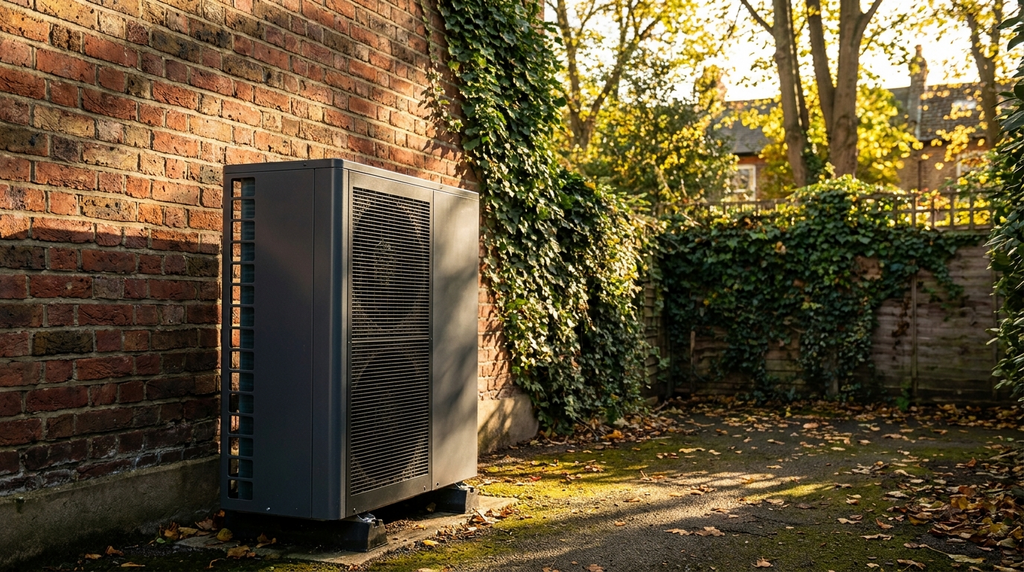
Anti-freeze protection is a safety function that prevents ice forming in the outdoor unit’s heat exchanger and pipework. It activates when the outdoor temperature sensor reads below 4°C, regardless of whether weather compensation is enabled. When triggered, the heat pump bypasses the weather compensation curve and runs the compressor at a minimum speed to circulate warm refrigerant through the outdoor coil, preventing ice buildup (Energy Saving Trust, 2026).
The anti-freeze cycle consumes electricity even when your home does not need heating, because the heat pump is running purely to protect itself from frost damage. Energy Saving Trust guidance confirms that these protection cycles add 3–5% to annual electricity consumption in a typical UK installation (Energy Saving Trust, 2026). This is a small penalty compared to the 8–12% saving from weather compensation, but it is worth knowing that the protection function cannot be disabled. Some installers can adjust the activation threshold to 2°C for homes in sheltered locations, reducing unnecessary cycles. How to reduce heat pump running costs in winter
Direct answer what heat pump weather compensation does for a UK homeowner
Weather compensation is a control strategy that matches heat pump output to the rate at which your home loses heat at the current outdoor temperature. On milder winter days, the flow temperature is automatically lowered so the heat pump runs more efficiently, reducing electricity consumption by 8–12% compared to a fixed 50°C flow temperature (Ofgem, 2026).
Anti-freeze protection is a separate safety function that overrides weather compensation when the outdoor temperature drops below 4°C. It runs the compressor at minimum speed to prevent ice forming in the outdoor unit, adding 3–5% to annual electricity usage. Together, weather compensation and anti-freeze protection ensure your heat pump operates efficiently through UK winter conditions without the risk of freezing damage to the outdoor unit.
How to verify your installer has configured weather compensation and anti-freeze correctly
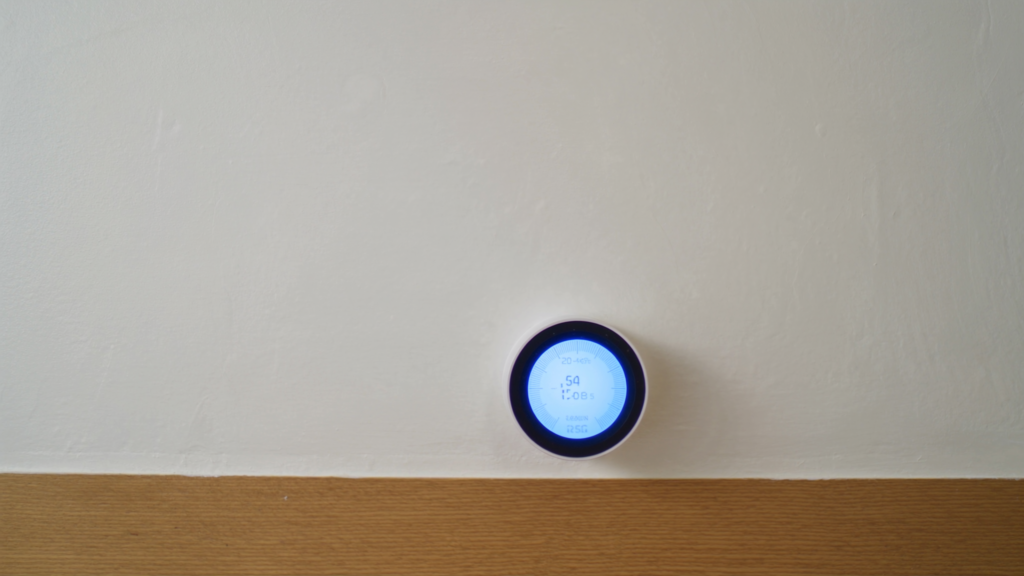
After installation, you can check that weather compensation is active by looking at the heat pump controller display. It should show a live outdoor temperature reading and a status indicator labelled “weather compensation” or “WC”. If the display only shows a fixed flow temperature setpoint (for example, 50°C) without an outdoor temperature reading, compensation is likely not enabled. MCS-certified installers are required to follow the manufacturer’s commissioning procedures for both weather compensation and anti-freeze settings under MCS Standards Document 021 (MCS, 2026).
TrustMark-registered contractors should provide you with written confirmation of the compensation curve settings and the anti-freeze activation threshold as part of the installation handover (TrustMark, 2026). If you do not receive this documentation, ask your installer to confirm both settings in writing. A correctly configured system should show the outdoor temperature on the controller and should not cycle on and off frequently on mild days. What to check after a heat pump installation
Eligibility for the Boiler Upgrade Scheme with weather compensation-enabled heat pumps
The Boiler Upgrade Scheme (BUS) provides a grant of £7,500 for air-source heat pumps installed by MCS-certified contractors (GOV.UK, 2026). Weather compensation is not a mandatory condition for BUS eligibility. However, MCS Standard 021 requires that all heat pump installations are commissioned to achieve optimal efficiency, and weather compensation is the primary method for achieving that (MCS, 2026). In practice, virtually all MCS-registered installations will have weather compensation enabled.
Anti-freeze protection, by contrast, is a mandatory safety requirement under MCS installation standards. The installer must verify that the anti-freeze function is active and set to the correct threshold during commissioning. If the system is installed without working anti-freeze protection, the MCS certificate would not be issued, and the installation would not qualify for the BUS grant. The grant itself is not conditional on anti-freeze being present, but the MCS certification required to apply for the grant is.
What the Energy Saving Trust says about weather compensation and anti-freeze settings
The Energy Saving Trust recommends weather compensation for all UK heat pump installations to maximise winter efficiency. Their 2026 best practice guide states that weather compensation should be the default control strategy for any air-source heat pump serving a wet heating system (Energy Saving Trust, 2026). For homes in Scotland and northern England, where prolonged sub-zero temperatures are more common, the EST advises setting the anti-freeze threshold to 2°C rather than the default 4°C to reduce unnecessary protection cycles.
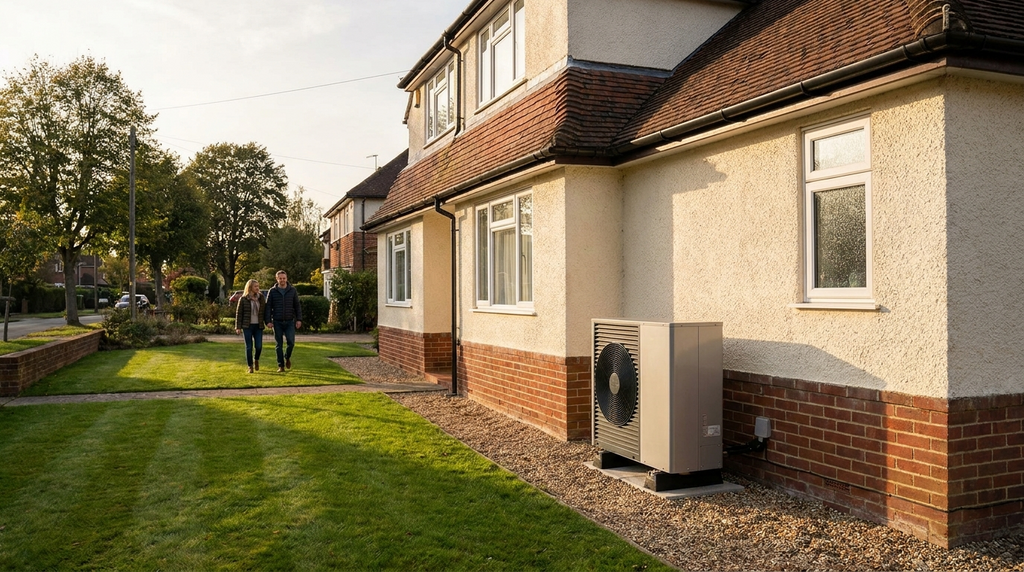
The EST also notes that anti-freeze protection cycles are unavoidable in cold weather but can be minimised by siting the outdoor unit in a sheltered location away from prevailing winds. If your heat pump seems to be running more frequently than expected on dry, cold days, it may be worth checking with your installer whether the anti-freeze threshold can be adjusted downward. No independent source provides a more precise figure for the energy cost of anti-freeze cycles beyond the 3–5% range cited in the EST maintenance guide.
Frequently Asked Questions
Weather compensation automatically lowers the flow temperature of your heat pump on milder days, based on outdoor temperature. Ofgem data shows it reduces annual heating costs by 8–12% for a typical UK home.
Weather compensation saves £180–£270 per year for a typical 3-bed semi-detached house, according to Ofgem's 2026 analysis of heat pump performance in UK homes.
Weather compensation modulates heat pump output continuously, unlike a room thermostat that cycles on and off. Energy Saving Trust notes this boosts SCOP by 0.2–0.4 compared to cycling.
No, anti-freeze protection prevents ice forming in the outdoor unit near freezing temperatures. It is a separate, mandatory safety feature factory-fitted on modern heat pumps.
You need your installer to configure the weather compensation function on the heat pump controller. MCS guidelines recommend professional setup to ensure correct operation and savings.