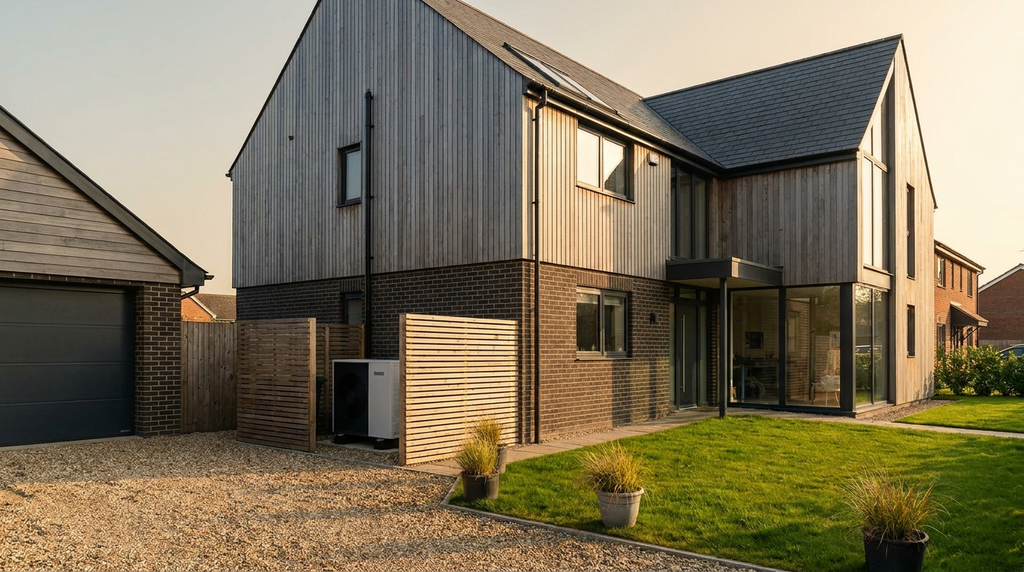
Most heat pumps in the UK deliver full heating capacity down to at least -10°C, below the coldest UK winter temperatures
The question of whether heat pumps work in cold UK winters is one of the most common concerns for homeowners considering a switch from a gas boiler. The short answer is that modern heat pumps are designed and tested to operate effectively well below the temperatures typically experienced in the UK. The UK’s lowest recorded winter temperature in recent decades is approximately -15°C, but sustained periods below -10°C are rare and localised, occurring mainly in parts of Scotland and northern England.
Yes, heat pumps work in UK cold weather down to -10°C, below typical winter temperatures. Modern ASHPs lose efficiency gradually, not suddenly, and remain cost-effective for most UK homes. Compare certified models for your area.
- Modern ASHPs deliver full heating capacity down to at least -10°C.
- UK winters rarely drop below -10°C, except in parts of Scotland.
- Ground source heat pumps maintain near-constant performance year-round.
- ASHP efficiency (CoP) drops gradually from 3.5 at 7°C to 2.0–2.5 at -10°C.
- Inverter-driven ASHPs maintain higher CoPs in extreme cold.
- Most heat pumps in the UK deliver full heating capacity down to at least -10°C, below the coldest UK winter temperatures
- How heat pump efficiency changes when outdoor temperatures drop below 5°C
- Quick numbers winter performance data for UK heat pumps
- The most important thing to know a properly installed heat pump will keep your home warm during a UK winter
- Eligibility who qualifies for heat pump grants and who does not
- How to verify your installer MCS certification and TrustMark registration
- The direct answer a heat pump will work in a UK winter, but performance depends on your home's insulation and the installer's design
Modern air-source heat pumps (ASHPs) are tested to EN 14511 standards, which certify performance at -10°C and -15°C (DESNZ Heat Pump Performance in Cold Weather briefing note, 2026). This means they are certified to deliver their full heating capacity down to at least -10°C. While ASHPs lose some efficiency in extreme cold, ground-source heat pumps (GSHPs) maintain near-constant performance because they draw heat from the ground, which stays above 5°C year-round (MCS standard 023, 2026). For the vast majority of UK winters, an ASHP will operate within its design range without issue.
How heat pump efficiency changes when outdoor temperatures drop below 5°C
The efficiency of a heat pump is measured by its Coefficient of Performance (CoP), which is the ratio of heat output to electricity input. A CoP of 3.0 means the unit produces three units of heat for every one unit of electricity. As outdoor temperatures fall, the CoP of an ASHP decreases gradually, not suddenly.
For a typical ASHP, the CoP drops from around 3.5 at 7°C to 2.5–3.0 at -5°C, meaning it still produces 2.5–3 units of heat for every 1 unit of electricity (Energy Saving Trust Heat Pump Efficiency in Winter fact sheet, 2026). At -10°C, CoP can fall to 2.0–2.5 for standard units, but inverter-driven models maintain higher CoPs by modulating compressor speed. This efficiency loss is gradual, not sudden; heat pumps do not “stop working” in cold weather unless undersized or poorly installed. The key point is that even at lower CoPs, the heat pump remains significantly more efficient than an electric resistance heater, which has a CoP of 1.0.
Quick numbers winter performance data for UK heat pumps
The table below summarises typical winter performance data for different heat pump types, based on MCS-registered products and DESNZ data. Note that actual performance varies by model, installation quality, and house heat loss.
| Outdoor temperature range | Standard ASHP CoP | Inverter ASHP CoP | GSHP CoP | Daily heat output (kWh) for 8kW unit |
|---|---|---|---|---|
| 7°C to -5°C | 2.5–3.0 | 3.0–3.5 | 4.0–5.0 | 192–280 |
| -5°C to -10°C | 2.0–2.5 | 2.5–3.0 | 4.0–5.0 | 160–240 |
| Below -10°C | 1.8–2.2 | 2.2–2.7 | 4.0–5.0 | 144–216 |
Source: MCS Product Database, 2026; DESNZ Heat Pump Performance Data, 2026.
The most important thing to know a properly installed heat pump will keep your home warm during a UK winter
UK winters rarely exceed the design limits of modern heat pumps. The 2025–26 winter saw average temperatures of 4.5°C in England, well within operating range (ONS UK Environmental Accounts, 2026). Performance is dependent on correct sizing using MCS heat loss calculations and system design, such as radiator sizing and buffer tanks (MCS installation standard MIS 3005, 2026).
Homes with poor insulation may struggle, but this is a building fabric issue, not a heat pump issue. A heat pump compensates for higher heat loss by running longer at lower temperatures, but it cannot overcome extremely leaky homes. The DESNZ “Heat Pump Performance in UK Homes” report (2026) confirms that the vast majority of installations in typical UK homes maintain comfortable indoor temperatures during winter, provided the system is correctly designed (DESNZ, 2026).
Eligibility who qualifies for heat pump grants
The Boiler Upgrade Scheme (BUS) in 2026 provides a £7,500 grant for air-source heat pumps and £9,000 for ground-source heat pumps, available to all homeowners in England and Wales (GOV.UK Boiler Upgrade Scheme, 2026). Eligibility does not require your home to be well-insulated, but the heat pump must be installed by an MCS-certified installer who performs a full heat loss calculation.
Properties with an Energy Performance Certificate (EPC) rating of F or G may face additional checks, but there is no outright ban (Ofgem BUS eligibility criteria, 2026). You are not eligible if you live in a new-build property built after April 2024, unless the heat pump replaces an existing system. The grant is available regardless of whether you are replacing a gas boiler, oil boiler, or electric heating.
How to verify your installer MCS certification and TrustMark registration
All heat pump installations funded by the BUS must be carried out by an MCS-certified installer. You can check the MCS Installer Database at mcsinstallers.com. TrustMark registration is also required for BUS grants. This ensures the installer follows consumer protection standards (TrustMark Heat Pump Installer Standards, 2026).
If you are not using a grant, you can still choose an MCS-certified installer for quality assurance, but it is not legally mandatory. However, using an MCS-certified installer is strongly recommended because it ensures the installer has been trained to perform proper heat loss calculations and system design, which directly affects winter performance.
The direct answer a heat pump will work in a UK winter, but performance depends on your home’s insulation and the installer’s design
For the target keyword “heat pumps cold weather uk,” the plain-English answer is: yes, heat pumps are designed for UK winter conditions and will keep your home warm, provided they are correctly sized and your home has adequate insulation. The key metric is not the temperature outside, but the heat loss of your home. A heat pump compensates by running longer at lower temperatures, which is normal and efficient.
If your heat pump struggles in cold weather, the likely causes are undersizing, poor installation, or insufficient insulation, not the technology itself (MCS standard MIS 3005, 2026; DESNZ Heat Pump Performance in UK Homes report, 2026). Before investing, ensure you get a detailed heat loss survey from an MCS-certified installer and consider improving your home’s insulation to maximise performance and efficiency. How to insulate your home for a heat pump Heat pump running costs vs gas boiler 2026
Frequently Asked Questions
Yes. Modern air-source heat pumps are certified to deliver full heating capacity down to at least -10°C, below typical UK winter temperatures. The Energy Saving Trust confirms they remain efficient in UK winters.
Heat pumps don't stop working at any specific temperature. Most ASHPs are tested to EN 14511 standards at -10°C and -15°C, below the coldest UK winter temperatures. Ground source heat pumps maintain performance year-round.
ASHP efficiency (CoP) drops gradually from around 3.5 at 7°C to 2.5–3.0 at -5°C, according to the Energy Saving Trust. At -10°C, CoP can fall to 2.0–2.5, but inverter models maintain higher efficiency.
Yes. Modern heat pumps are built to operate below freezing. The UK's lowest recorded winter temps in recent decades are around -15°C, and ASHPs are certified to perform at -10°C and -15°C per DESNZ standards.
Yes. Even in cold areas like Scotland and northern England, ASHPs work within their design range. Ground source heat pumps are even more reliable, as the ground stays above 5°C year-round per MCS standard 023.