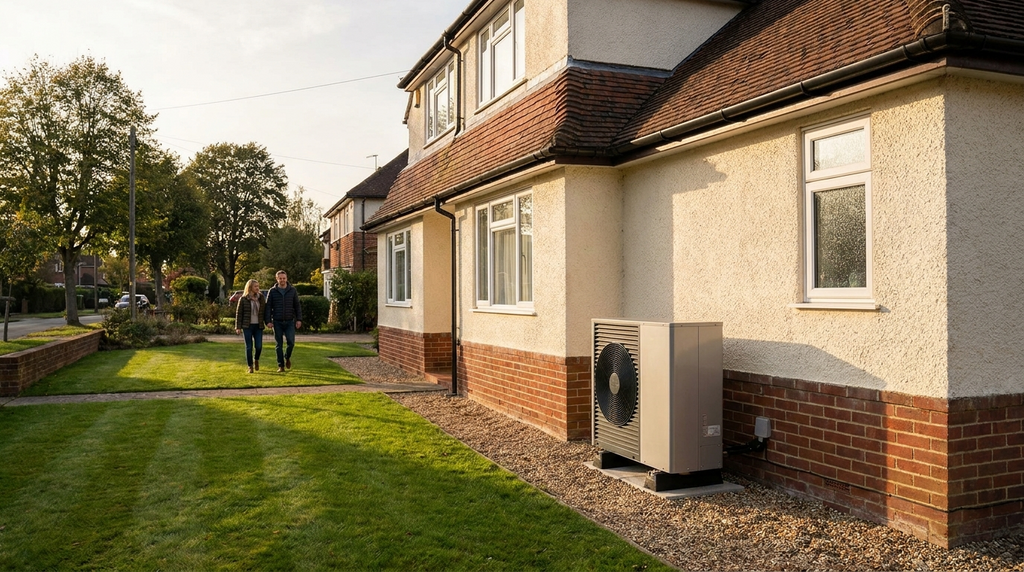
Heat pumps move heat rather than burn fuel, here is how that works
Most UK homes heat their water and rooms by burning gas or oil inside a boiler. A heat pump does something fundamentally different. It uses electricity to transfer heat from the outside air, the ground, or a water source into your home, rather than generating heat by combustion.
The UK Government’s 2026 Heat and Buildings Strategy (DESNZ) states that heat pumps can deliver 3–4 units of heat for every 1 unit of electricity used, achieving efficiencies over 300% (DESNZ, 2026). This is far higher than a modern gas boiler, which reaches 90–95% efficiency because it creates heat rather than moving it.
The key principle is that moving existing heat requires much less energy than creating it from scratch. Even when outside temperatures drop below freezing, there is still enough thermal energy in the air or ground for a heat pump to extract and concentrate indoors.
Quick numbers, key efficiency and cost figures for UK heat pumps in 2026
| Heat pump type | Typical COP range | Average annual running cost (3-bed semi) | Estimated installation cost range |
|---|---|---|---|
| Air source heat pump (ASHP) | 2.5–4.0 | £900–£1,200 | £7,000–£13,000 |
| Ground source heat pump (GSHP) | 3.0–4.5 | £750–£1,000 | £15,000–£25,000 |
| Hybrid heat pump | 2.0–3.5 (heat pump mode) | £800–£1,100 | £9,000–£15,000 |
COP stands for Coefficient of Performance, which measures how many units of heat the system delivers for each unit of electricity it consumes. A COP of 3.0 means 3 kW of heat for every 1 kW of electricity. Cost and COP data come from the Energy Saving Trust’s 2026 running cost guide and MCS installer data (Energy Saving Trust, 2026; MCS, 2026).
The key components of a heat pump system and how they create heat
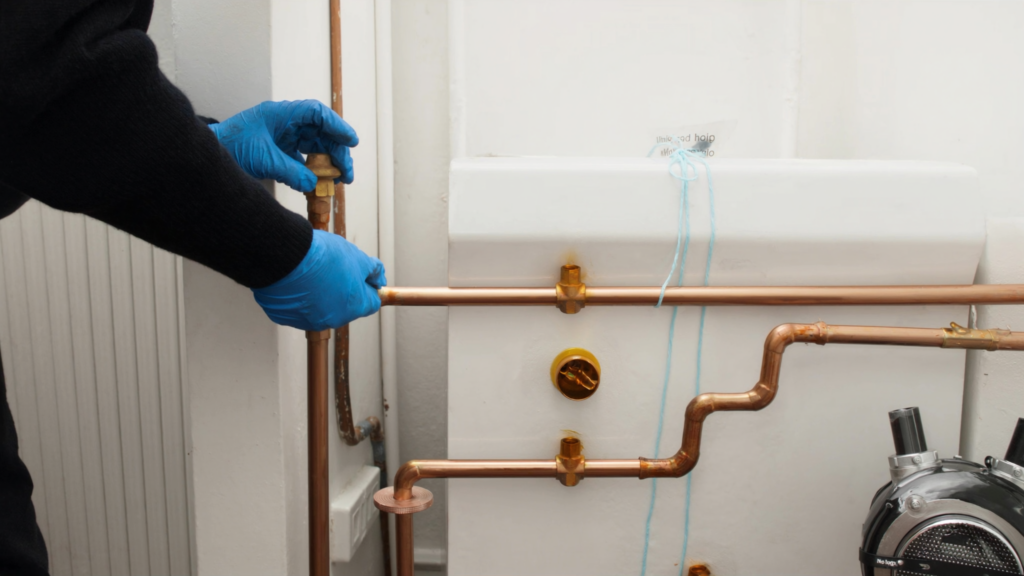
A heat pump system has three main parts: an outdoor unit (with a fan for air source, or buried pipe loops for ground source), an indoor unit containing a heat exchanger, and a sealed refrigerant loop connecting them.
The refrigerant absorbs heat from the outside air or ground, even when temperatures drop below zero. A compressor then raises the pressure of the refrigerant, which increases its temperature significantly. This hot refrigerant passes through the indoor heat exchanger, releasing heat into your home’s heating system (Energy Saving Trust, 2026).
Many models include a reversing valve that allows the system to run in reverse. This provides cooling in summer by moving heat from inside to outside. This is the same vapour-compression refrigeration cycle used in fridges and air conditioners.
Who qualifies for the 2026 Boiler Upgrade Scheme grant
The Boiler Upgrade Scheme (BUS) offers a £7,500 grant for air source heat pumps and £7,500 for ground source heat pumps in England and Wales, as of 2026 (GOV.UK, 2026).
You must own your home or have written permission from your landlord to apply. Your property must have a valid Energy Performance Certificate (EPC) with no outstanding recommendations for loft or cavity wall insulation. If your EPC shows that insulation work is recommended and not yet done, you must complete that work first or the grant will not be approved.
The grant is only available for existing properties, not new builds. You also cannot receive the grant if you have already started installation work before your application is approved.
How to verify your installer is qualified for UK heat pump grants
To qualify for the BUS grant, your installer must be registered with the Microgeneration Certification Scheme (MCS) or hold an equivalent certification recognised by the scheme. You can check the MCS installer database at mcsinstallers.com to confirm a local installer is certified (MCS, 2026).
TrustMark registration is also required for government-backed schemes. You can verify an installer’s TrustMark status at trustmark.org.uk (GOV.UK, 2026).
Using an uncertified installer means you will not receive the grant, and your installation may not comply with Building Regulations. Always ask for both MCS and TrustMark accreditation before signing a contract.
The direct answer to “how heat pumps work uk” for 2026
A heat pump works by using electricity to run a compressor that circulates refrigerant through a sealed loop. The refrigerant absorbs heat from outside air, even at temperatures as low as -15°C, and releases it inside your home via a heat exchanger (Energy Saving Trust, 2026).
This process is called a vapour-compression refrigeration cycle, the same principle used in fridges and air conditioners. The system delivers heat at lower temperatures than gas boilers (35–45°C compared to 60–80°C), so it works best with underfloor heating or larger radiators designed for lower flow temperatures (DESNZ, 2026).
Because the heat is delivered at lower temperatures, your home needs to be well insulated. If your property has poor insulation or single glazing, a heat pump will struggle to keep rooms warm and will cost more to run.
The three types of heat pump available in the UK and their suitability
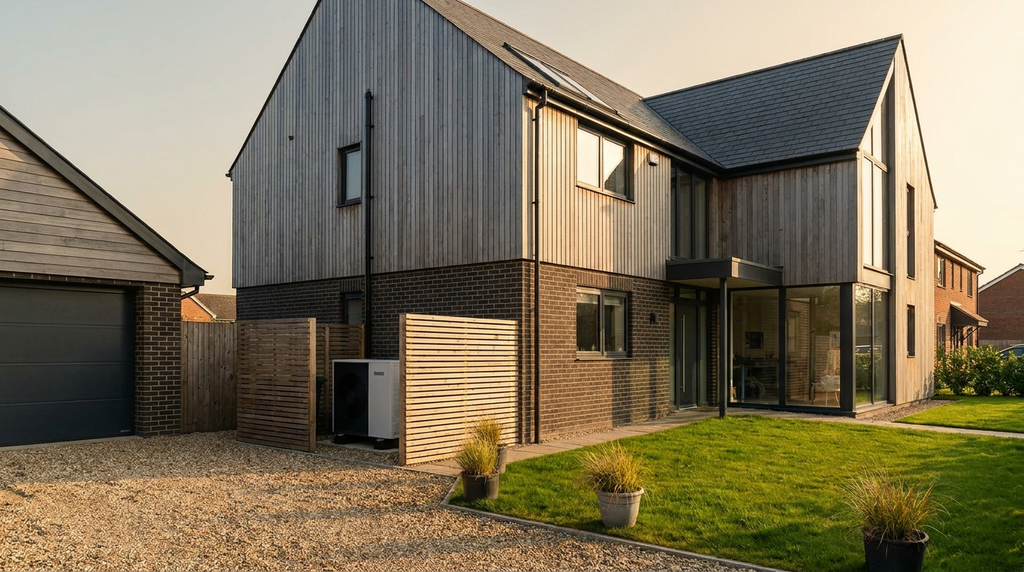
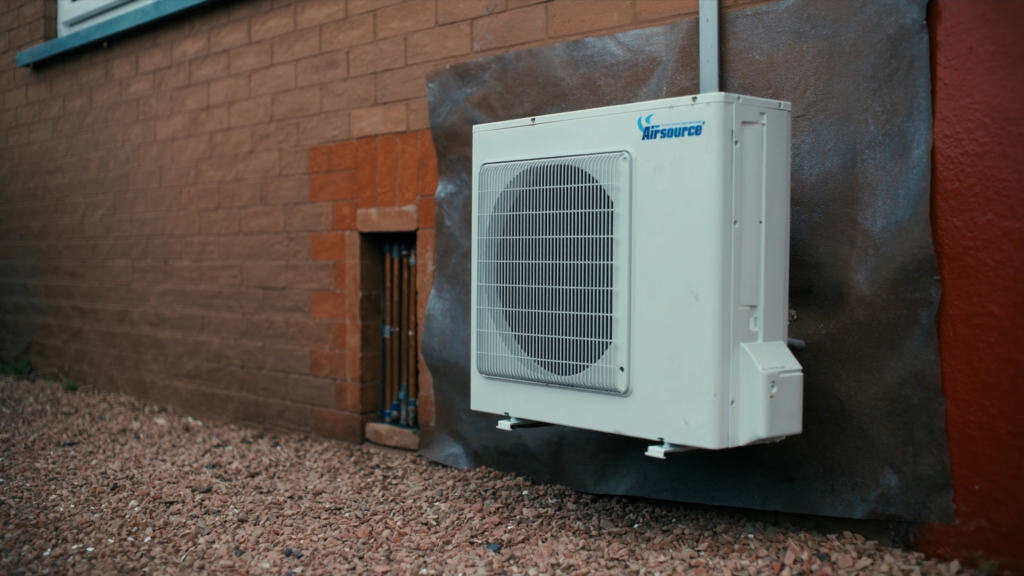
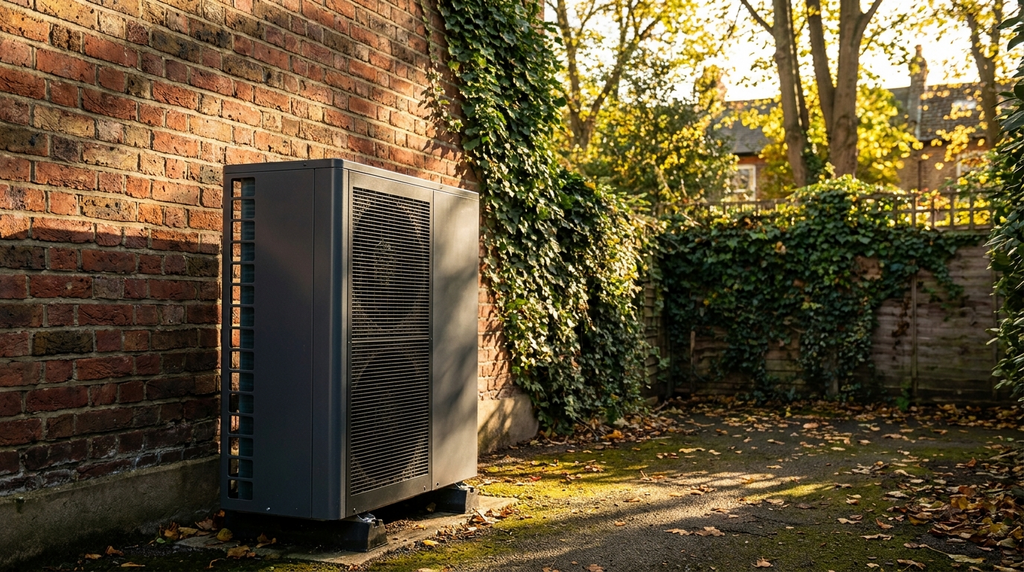
Air source heat pump (ASHP), This is the most common type in the UK. It extracts heat from outside air using a fan and an outdoor unit about the size of a washing machine. It is suitable for most homes with enough outdoor space for the unit and good airflow around it (Energy Saving Trust, 2026).
Ground source heat pump (GSHP), This extracts heat from the ground via buried pipes filled with a water and antifreeze mixture. It requires a garden large enough for horizontal trenches (around 100 metres of pipe per 6–8 kW system) or a vertical borehole. Installation costs are higher, but running costs are typically lower because ground temperatures are more stable than air temperatures (MCS, 2026).
Hybrid heat pump, This combines an air source heat pump with a gas boiler. The system automatically switches between the two depending on outside temperature and heating demand. It is useful for homes with existing gas infrastructure where a full heat pump installation is not practical or where the owner wants a backup heat source for very cold days.
Key UK regulations and standards for heat pump installation in 2026
Installations must comply with Building Regulations Part L (conservation of fuel and power) and Part F (ventilation). Part L sets minimum efficiency standards for the heating system and fabric of the building. Part F ensures adequate ventilation to prevent condensation and indoor air quality problems, which can arise when homes are made more airtight (Building Regulations 2026, England).
Permitted development rights allow most air source heat pumps to be installed without planning permission, provided the unit meets noise limits of 42 dB measured at the nearest neighbour’s boundary. If your property is in a conservation area or a listed building, you will need planning permission (GOV.UK, 2026).
Ground source heat pumps may require planning permission for boreholes or extensive ground works, especially if the work affects protected trees or archaeological sites. Check with your local planning authority before starting any ground works.
Heat pump running costs vs gas boiler comparison
Frequently Asked Questions
A heat pump extracts heat from outside air or ground even below freezing. The refrigerant absorbs thermal energy, compresses it to raise temperature, and transfers it indoors. The Energy Saving Trust confirms COP remains above 2.5 down to -15°C.
Typical COP ranges are 2.5–4.0 for air source and 3.0–4.5 for ground source, according to MCS 2026 data. A COP of 3.0 means 3 kW of heat for every 1 kW of electricity used.
Installation costs are £7,000–£13,000 for air source and £15,000–£25,000 for ground source, based on MCS installer data. The Boiler Upgrade Scheme offers a £7,500 grant to reduce upfront costs.
Yes, but performance depends on insulation. The Energy Saving Trust states that well-insulated homes achieve higher COP. Ground source heat pumps are more stable in older, draughty properties.
Heat pumps typically last 15–20 years with regular servicing, according to MCS guidelines. Ground source systems often exceed 20 years due to buried pipe durability.