Insulating a 1930s semi-detached home costs roughly £4,000–£12,000 and can cut annual heating bills by £300–£700, depending on the measures chosen.
If you own a 1930s semi-detached house, you are living in one of the most common home types in the UK, but also one of the most expensive to heat. The original construction methods, solid brick walls, suspended timber floors, and a loft with minimal insulation, mean heat escapes quickly in winter. The question is not whether to insulate, but which measures give you the best return for your money.
Insulating a 1930s semi costs £4,000–£12,000 and saves £300–£700 annually on heating bills. Solid-wall insulation is the main expense, while loft insulation costs £300–£600 and pays back fastest.
- Total insulation costs £4,000–£12,000 for a 1930s semi.
- Annual heating bill savings reach £300–£700 after insulation.
- Solid-wall insulation costs £4,000–£12,000; cavity fill is rarely suitable.
- Loft insulation costs £300–£600 and pays back in under 2 years.
- Prioritise solid walls and loft for the highest energy savings.
- Insulating a 1930s semi-detached home costs roughly £4,000–£12,000 and can cut annual heating bills by £300–£700, depending on the measures chosen.
- Cavity-wall insulation is rarely suitable for a 1930s semi, solid-wall options cost more but save more
- Loft insulation for a 1930s semi costs £300–£600 and pays back in under two years
- Quick numbers, 1930s semi insulation costs, savings, and payback
- Floor insulation for a 1930s semi costs £1,500–£3,000 and saves £100–£150 a year
- Draught-proofing a 1930s semi costs £100–£300 and saves £50–£100 annually
- The Great British Insulation Scheme closed on 31 March 2026. It funded insulation measures only and never covered windows or glazing.
- Use an MCS-certified installer for any insulation measure that affects building fabric or energy performance
The total cost to fully insulate a typical 1930s semi ranges from £4,000 to £12,000, and the combined annual savings on gas heating bills can reach £300 to £700, according to Energy Saving Trust modelling for 2026 (Energy Saving Trust, 2026). The exact figure depends on whether you tackle the walls, loft, floor, and draughts all at once, or prioritise the highest-impact jobs first.
Cavity-wall insulation is rarely suitable for a 1930s semi, solid-wall options cost more but save more
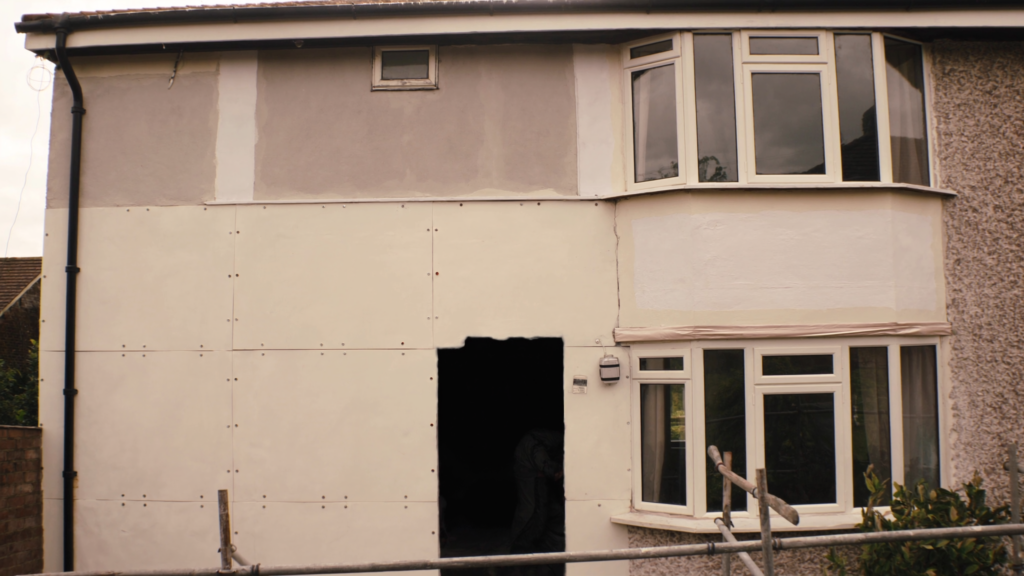
Most 1930s semis were built with solid brick walls, meaning there is no cavity between the inner and outer leaves of brickwork to fill with insulation. A simple drill test carried out by a surveyor will confirm whether your walls are solid or cavity. If you have solid walls, cavity-wall insulation is not an option, and you must choose between internal or external solid-wall insulation instead.
Solid-wall insulation costs significantly more than cavity fill, but the savings are also larger. For a typical 1930s semi, external solid-wall insulation costs £8,000 to £12,000, while internal insulation (applied to the inside face of external walls) costs £4,000 to £8,000, based on Energy Saving Trust cost estimates for 2026 (Energy Saving Trust, 2026). Annual savings on heating bills for a gas-heated semi are £300 to £500 after solid-wall insulation is installed, according to the same source.
Loft insulation for a 1930s semi costs £300–£600 and pays back in under two years
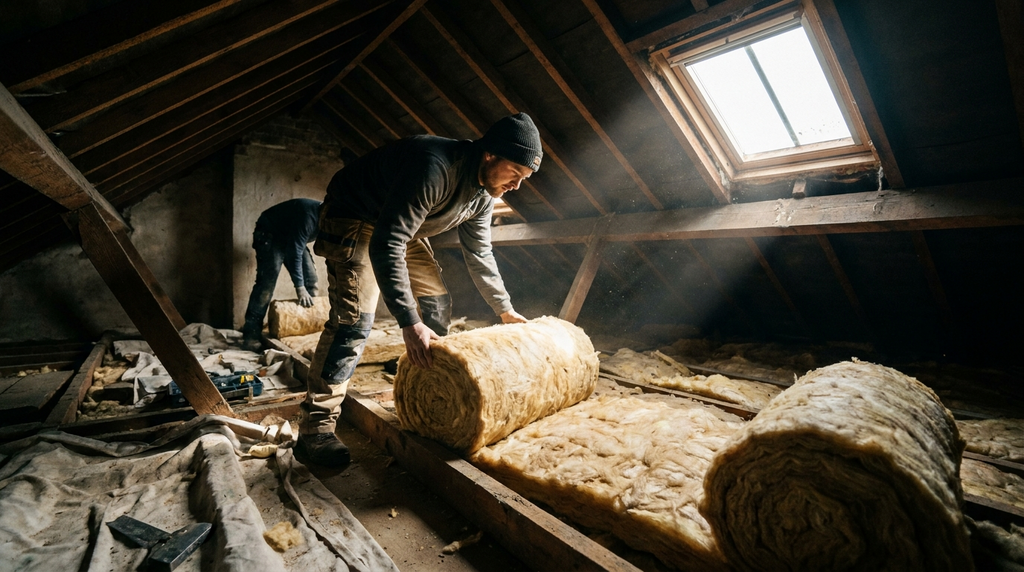
Loft insulation is the cheapest and fastest-paying measure you can add to a 1930s semi. A typical 1930s semi has 50 to 70 square metres of loft space, and most still have only 100 mm of insulation or less. Topping up from 100 mm to the recommended 270 mm costs £300 to £600 if you do it yourself, or £500 to £800 if you hire a professional installer, according to the Energy Saving Trust (Energy Saving Trust, 2026).
The annual saving for a gas-heated semi is £200 to £300, which means the insulation pays for itself in under two years. Because the loft is accessible and the work is straightforward, this is the first measure most homeowners should prioritise.
Quick numbers, 1930s semi insulation costs, savings, and payback
| Measure | Typical cost (£) | Annual savings (£) | Payback period (years) | U-value improvement (W/m²K) |
|---|---|---|---|---|
| Loft insulation (top-up to 270 mm) | 300–600 | 200–300 | 1–3 | 0.16 to 0.11 |
| Solid-wall insulation (internal) | 4,000–8,000 | 300–500 | 8–16 | 2.1 to 0.35 |
| Solid-wall insulation (external) | 8,000–12,000 | 300–500 | 16–24 | 2.1 to 0.30 |
| Floor insulation (suspended timber) | 1,500–3,000 | 100–150 | 10–20 | 0.8 to 0.25 |
| Draught-proofing | 100–300 | 50–100 | 1–3 | N/A (air leakage reduction) |
Cost and savings data from the Energy Saving Trust (Energy Saving Trust, 2026). U-value benchmarks from DESNZ building regulations guidance (GOV.UK, 2026).
Floor insulation for a 1930s semi costs £1,500–£3,000 and saves £100–£150 a year
Suspended timber floors are standard in 1930s semis, meaning there is a gap between the floorboards and the ground below. Insulation can be installed between the floor joists either by lifting the floorboards or by working from below if you have access to a cellar or crawl space. The cost for a typical semi is £1,500 to £3,000, according to the Energy Saving Trust (Energy Saving Trust, 2026).
Annual savings on heating bills for a gas-heated semi are £100 to £150. Floor insulation also makes rooms feel warmer underfoot and reduces draughts, though the payback period is longer than loft insulation at 10 to 20 years.
Draught-proofing a 1930s semi costs £100–£300 and saves £50–£100 annually
Draught-proofing is the cheapest insulation measure you can take, and it works immediately. In a 1930s semi, common draught sources include sash windows, the front door, the loft hatch, gaps between floorboards and skirting boards, and unused chimneys (which can be sealed with a chimney balloon). The total cost for a DIY or professional draught-proofing kit for a typical semi is £100 to £300, per the Energy Saving Trust (Energy Saving Trust, 2026).
Annual savings are £50 to £100 for a gas-heated semi. Because the cost is low and the work can be done in a weekend, draught-proofing should be combined with loft insulation as a first-step package.
The Great British Insulation Scheme closed on 31 March 2026. It funded insulation measures only and never covered windows or glazing.
The Great British Insulation Scheme closed on 31 March 2026. It funded insulation measures only and never covered windows or glazing. For a 1930s semi, the scheme can cover loft insulation, cavity-wall insulation (if your walls have a cavity), or solid-wall insulation if your home has no cavity. To qualify, your property must have an Energy Performance Certificate (EPC) rating of D, E, F, or G, and your household income must be below £31,000 a year, or you must be receiving certain means-tested benefits (GOV.UK, 2026).
The Great British Insulation Scheme closed on 31 March 2026. It funded insulation measures only and never covered windows or glazing. If you qualify, the installer will arrange a survey and carry out the work at little or no cost to you. The Great British Insulation Scheme closed on 31 March 2026. It funded insulation measures only and never covered windows or glazing.
Use an MCS-certified installer for any insulation measure that affects building fabric or energy performance
The Great British Insulation Scheme closed on 31 March 2026. It funded insulation measures only and never covered windows or glazing. For work you fund yourself, it is still strongly recommended to use an MCS-certified or TrustMark-registered installer to ensure the work meets building regulations and quality standards (MCS, 2026; TrustMark, 2026).
Check the MCS installer database at mcscertified.com or the TrustMark find-a-trader tool at trustmark.org.uk before hiring anyone. How to find a certified insulation installer in the UK
Frequently Asked Questions
Insulating a 1930s semi costs £4,000–£12,000 in total. According to the Energy Saving Trust (2026), solid-wall insulation alone ranges from £4,000 to £12,000, while loft insulation costs £300–£600.
No, most 1930s semis have solid brick walls with no cavity. A surveyor can confirm this with a drill test. Solid-wall insulation is the only option, costing £4,000–£12,000 according to the Energy Saving Trust.
Annual savings range from £300 to £700 on heating bills. The Energy Saving Trust (2026) states solid-wall insulation saves £300–£500 per year for a gas-heated semi, with loft insulation adding further savings.
Solid-wall insulation is the most impactful measure for a 1930s semi. Ofgem and the Energy Saving Trust recommend external or internal solid-wall insulation, as cavity fill is unsuitable for solid-brick construction.
Yes, loft insulation costs £300–£600 and pays back within two years. The Energy Saving Trust (2026) confirms it cuts heat loss through the roof. That makes it one of the most cost-effective measures for a 1930s semi.