Insulating a Victorian home in 2026 typically costs £4,000–£12,000 but can cut heating bills by £300–£600 a year
A typical solid-wall Victorian terrace loses up to 45% of its heat through its walls, according to the Energy Saving Trust (Energy Saving Trust, 2026). The total cost range covers loft, floor, and solid-wall insulation, while the bill saving depends on your fuel type and property size. The direct answer is that insulating a Victorian home in 2026 typically costs between £4,000 and £12,000, but it can cut annual heating bills by £300 to £600.
Energy Saving Trust data shows that insulating an uninsulated solid-wall home can save £300–£600 annually on heating bills in 2026 (Energy Saving Trust, 2026). These savings are based on a gas-heated, three-bedroom Victorian terrace using current Ofgem price cap rates. Your actual saving will vary with fuel type, property size, and how many measures you install.
Solid wall insulation is the biggest single upgrade for a Victorian home
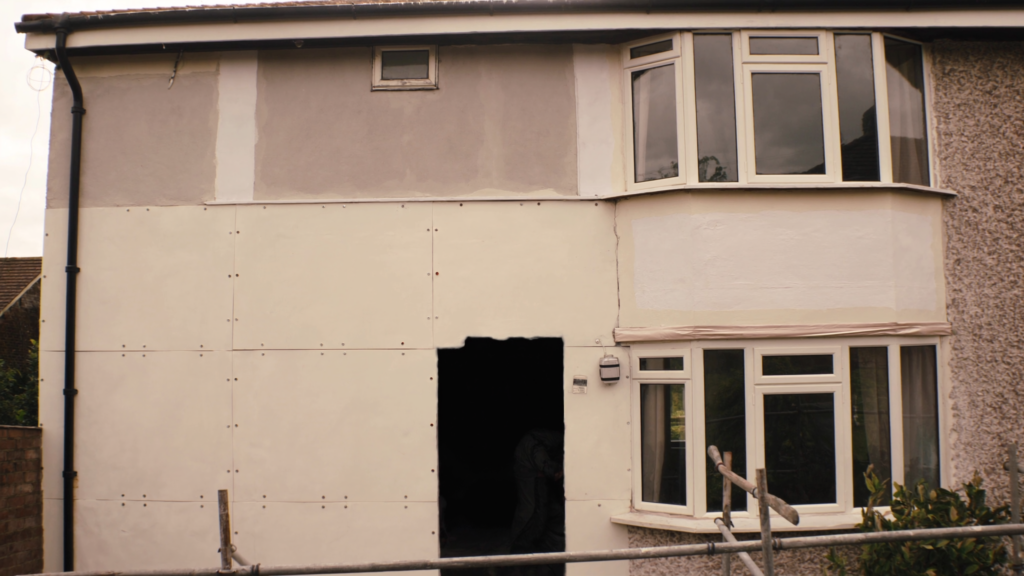
The Energy Saving Trust states that solid walls lose heat roughly twice as fast as cavity walls, making insulation the priority (Energy Saving Trust, 2026). Internal solid wall insulation (IWI) costs £4,500–£8,000 for a typical Victorian terrace, while external solid wall insulation (EWI) costs £8,000–£14,000, per EST 2026 figures.
To understand the performance improvement, you need to know the U-value. A U-value measures how quickly heat passes through a building element. An uninsulated solid wall has a U-value of around 2.1 W/m²K, meaning heat escapes rapidly. After installing 100mm of insulation, the U-value drops to 0.30–0.35 W/m²K, based on industry standard calculations recognised by the Department for Energy Security and Net Zero (DESNZ Standard Assessment Procedure, 2026). This is a six-fold improvement in thermal performance.
Quick numbers cost, saving, and payback for each insulation type
| Insulation type | Typical cost (GBP) | Annual saving (GBP) | Payback period (years) | U-value before (W/m²K) | U-value after (W/m²K) |
|---|---|---|---|---|---|
| Loft insulation (top-up from 100mm to 270mm) | £200–£500 | £30–£80 | 3–8 years | 0.40 | 0.16 |
| Solid-wall insulation (internal) | £4,500–£8,000 | £300–£600 | 10–20 years | 2.10 | 0.35 |
| Solid-wall insulation (external) | £8,000–£14,000 | £300–£600 | 15–25 years | 2.10 | 0.30 |
| Floor insulation (suspended timber) | £800–£1,500 | £50–£100 | 10–15 years | 1.20 | 0.30 |
Sources: Energy Saving Trust cost and savings data (2026 update); Ofgem Energy Price Cap average unit rates for gas and electricity (April–September 2026) (Ofgem, 2026).
Loft insulation is the cheapest measure and must reach 270mm depth
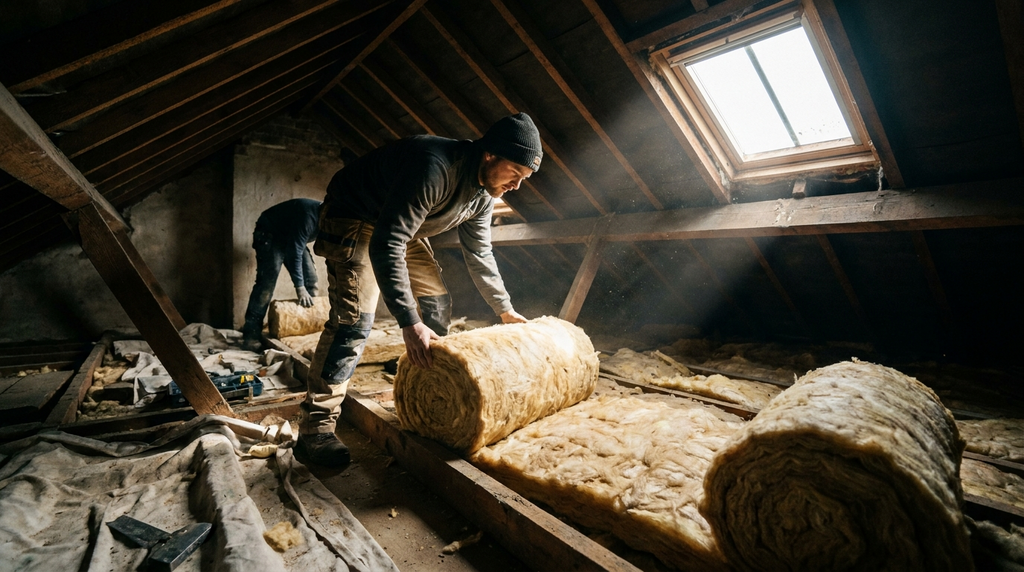
The Energy Saving Trust recommends loft insulation depth of 270mm (mineral wool) for optimal performance in a Victorian home (Energy Saving Trust, 2026). Cost to top up from 100mm to 270mm is £200–£500, saving £30–£80 annually, per EST 2026 figures.
Loft insulation is usually DIY-friendly, which keeps costs low. However, you must not block eaves ventilation. Victorian homes rely on airflow through the loft space to prevent condensation. If you block the vents, moisture can build up and cause rot in roof timbers. Use rigid insulation boards or plastic baffles to maintain airflow at the eaves.
Floor insulation for suspended timber floors saves draughts and heat
A typical Victorian ground floor is suspended timber with gaps between floorboards. This lets cold air rise from the subfloor void. Floor insulation costs £800–£1,500 for a terrace, according to the Energy Saving Trust (Energy Saving Trust, 2026). Annual saving is £50–£100, with payback of 10–15 years.
BRE guidance on suspended timber floor insulation recommends fitting rigid insulation boards between the joists, supported by netting or battens (BRE, 2026). You must leave a 150mm air gap below the insulation to prevent moisture buildup. how to insulate a suspended timber floor without causing damp
The Great British Insulation Scheme closed on 31 March 2026. It funded insulation measures only and never covered windows or glazing.
The Great British Insulation Scheme closed on 31 March 2026. It funded insulation measures only and never covered windows or glazing. Eligibility requires an MCS-certified installer, per GOV.UK 2026 rules (GOV.UK, 2026). For non-grant work, MCS certification is not legally required but is strongly recommended for quality assurance and warranty.
Check the MCS Installer Register or TrustMark for accredited solid-wall insulation contractors (MCS, 2026; TrustMark, 2026). If your boiler is involved in the insulation work, also verify Gas Safe registration (Gas Safe Register, 2026).
Moisture risk is the main concern, ventilation and vapour control layers are essential
Solid-wall insulation can trap moisture inside the wall if installed without a vapour control layer (VCL), leading to damp and mould, per Historic England guidance (Historic England, 2026). A VCL is a plastic sheet placed on the warm side of the insulation to stop indoor moisture reaching the cold wall surface.
BRE recommends a VCL on the warm side of insulation and background trickle vents in each room (BRE, 2026). For external wall insulation, a breathable render system is required. Cement-based renders can cause moisture buildup in Victorian brickwork, which is softer and more porous than modern brick. vapour control layers explained for solid wall insulation
The direct answer insulating a Victorian home in 2026 means prioritising solid walls, topping up loft insulation to 270mm, and insulating suspended timber floors
This is the standard advice from the Energy Saving Trust and DESNZ for Victorian solid-wall properties (Energy Saving Trust, 2026). Typical total cost range for the three measures is £5,000–£12,000, with combined annual saving of £350–£700.
Payback is 10–20 years depending on fuel prices and install quality. The Great British Insulation Scheme closed on 31 March 2026. It funded insulation measures only and never covered windows or glazing. If you cannot access grant funding, start with loft insulation as the cheapest measure, then tackle floor insulation, and finally consider solid-wall insulation as a longer-term investment. what grants are available for home insulation in 2026
Frequently Asked Questions
Insulating a Victorian home in 2026 costs between £4,000 and £12,000, according to the Energy Saving Trust. The total covers loft, floor, and solid-wall insulation, with solid wall insulation alone costing £4,500–£14,000.
You can save £300–£600 per year on heating bills, based on Energy Saving Trust data for a gas-heated three-bedroom Victorian terrace. Actual savings depend on your fuel type and how many measures you install.
The best option is internal solid wall insulation (IWI), costing £4,500–£8,000, or external solid wall insulation (EWI) at £8,000–£14,000, per Energy Saving Trust 2026 figures. IWI is cheaper but reduces room space; EWI is more expensive but preserves interior floor area.
External solid wall insulation may require planning permission in conservation areas or for listed buildings, as per GOV.UK guidance. Check with your local council before installation.
After installing 100mm of insulation, the U-value should drop to 0.30–0.35 W/m²K, according to the DESNZ Standard Assessment Procedure. This is a six-fold improvement from an uninsulated value of 2.1 W/m²K.