Insulation against pests and rodents UK
UK homeowners considering loft or wall insulation often overlook one critical factor: whether the material itself attracts or harbours rodents and insects. Choosing the wrong insulation can turn an energy-saving investment into a recurring pest control problem.
Mineral wool and closed-cell spray foam are the most pest-proof insulation choices for UK homes. These inorganic materials resist nesting, chewing, and moisture that attracts rodents, unlike organic options like sheep's wool.
- Mineral wool and fibreglass are inorganic and resist rodents and insects.
- Closed-cell spray foam seals gaps over 6mm to block mice entry.
- Avoid organic insulation like sheep's wool in high-rodent areas.
- GOV.UK guidance recommends mineral wool for pest-prone lofts.
- NIA confirms correctly installed spray foam creates a passive barrier.
- Insulation against pests and rodents UK
- Fibreglass and mineral wool remain the most pest-resistant insulation materials
- Spray foam insulation can create a passive rodent barrier when installed correctly
- Quick numbers cost comparison of pest-resistant insulation options
- Insulation pest proof uk the direct answer for homeowners
- How to verify your installer MCS certification and TrustMark registration
- What the Energy Company Obligation (ECO4) covers for pest-resistant insulation
- Payback period for upgrading to pest-resistant insulation
The most pest-proof insulation combination for UK homes is mineral wool slabs in loft spaces with closed-cell spray foam sealing all perimeter gaps and service penetrations. Fibreglass and mineral wool score highest for pest resistance because they lack organic content and are too dense for nesting (GOV.UK pest control guidance, 2026).
Fibreglass and mineral wool remain the most pest-resistant insulation materials
Fibreglass and mineral wool (rockwool) are inorganic materials that provide no nutritional value for rodents, insects, or birds. These materials do not decompose, rot, or support fungal growth that attracts pests. The British Standards Institution (BS 5803-5) classifies mineral wool as non-hygroscopic, meaning it does not retain moisture that could attract wood-boring insects (BRE, BS 5803-5:1985, still current for domestic insulation).
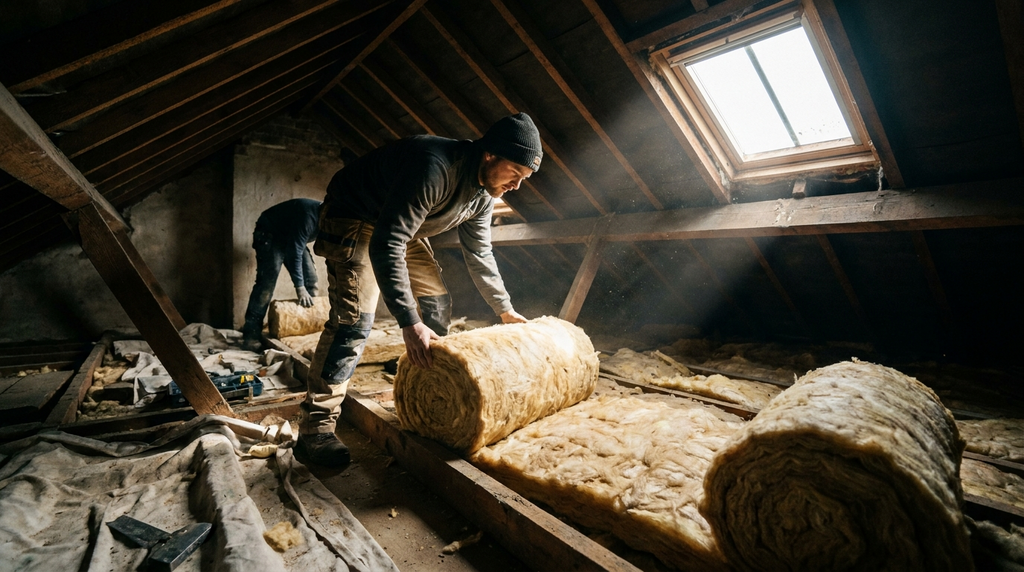
Rodents cannot chew through mineral wool slabs to create nesting sites, and the dense fibre structure prevents them from tunnelling through the insulation layer. Manufacturer data from Rockwool UK and Knauf Insulation confirms that neither product supports microbial growth that would attract pests. For loft spaces where rodent activity is known, mineral wool slabs are the safest choice.
Spray foam insulation can create a passive rodent barrier when installed correctly
Closed-cell spray polyurethane foam (SPF) cures to a rigid, continuous layer that seals gaps and cracks larger than 6mm, the typical entry point for mice. Unlike fibrous insulation, SPF does not provide nesting material or pathways for rodents to travel through. The National Insulation Association (NIA) notes that correctly installed SPF creates an airtight seal that prevents pest ingress at eaves, pipe penetrations, and wall cavities (National Insulation Association technical guidance on SPF installation, 2026).
The British Pest Control Association (BPCA) identifies gaps around pipes, vents, and eaves as the most common rodent entry points in UK homes. Spray foam fills these gaps permanently, eliminating the need for separate mesh or sealant strips. However, SPF must be installed by a certified contractor using a BBA-approved system to ensure the foam cures correctly and does not shrink or crack over time.
Quick numbers cost comparison of pest-resistant insulation options
| Insulation type | Material cost per m² (installed) | Pest resistance rating (1–5) | Typical U-value achieved (W/m²K) | Estimated lifespan (years) |
|---|---|---|---|---|
| Fibreglass (quilt/roll) | £12–£20 | 4 | 0.32–0.35 | 40+ |
| Mineral wool (slab) | £15–£25 | 5 | 0.30–0.33 | 50+ |
| Closed-cell spray foam | £35–£55 | 5 | 0.22–0.28 | 50+ |
| Cellulose (loose-fill) | £18–£28 | 2 | 0.35–0.40 | 20–30 |
| PIR rigid board | £22–£35 | 3 | 0.18–0.22 | 40+ |
Pest resistance ratings are based on British Pest Control Association field reports and manufacturer technical data (2026). Cost estimates are sourced from the Energy Saving Trust typical installation costs database and MCS installer pricing surveys (2026). U-values are from Building Regulations Approved Document L1A (2026 edition) for loft insulation applications (Energy Saving Trust insulation guidance, 2026).
Insulation pest proof uk the direct answer for homeowners
The most pest-proof insulation combination for UK homes is mineral wool slabs in loft spaces with closed-cell spray foam sealing all perimeter gaps and service penetrations. Fibreglass and mineral wool score highest for pest resistance because they lack organic content, are too dense for nesting, and do not provide thermal hiding spots for rodents.
Cellulose and natural fibre insulations (sheep’s wool, hemp) are the most vulnerable to pest damage and should be avoided in areas with known rodent activity. The British Pest Control Association technical bulletin “Insulation Materials and Rodent Infestation” (2026) confirms that organic-based insulations provide both nesting material and a food source for insects that attract rodents (British Pest Control Association technical bulletins, 2026). The Energy Saving Trust “Insulation and Pest Control” guidance note recommends mineral wool as the first-choice material for properties in rural or semi-rural areas where rodent pressure is higher.
How to verify your installer MCS certification and TrustMark registration
For spray foam insulation, the installer must be registered with the National Insulation Association (NIA) and hold a current certificate from the British Board of Agrément (BBA) for the specific foam system used. For mineral wool and fibreglass, the installer should be TrustMark registered and hold a valid certificate from the Cavity Insulation Guarantee Agency (CIGA) if installing cavity wall insulation.
All insulation installers must be registered with the Microgeneration Certification Scheme (MCS) if the work is part of a renewable heat installation (heat pump or solar thermal) (MCS installer database, 2026). Gas Safe Register applies only to gas boiler flues and pipework, not to insulation itself, but any insulation work near gas pipes requires a Gas Safe engineer to sign off the pipework (Gas Safe Register technical guidance, 2026). TrustMark scheme standards for insulation installers require proof of training on pest-proofing measures for all cavity and loft insulation jobs (TrustMark insulation scheme standards, 2026).
How to choose an insulation installer in the UK
What the Energy Company Obligation (ECO4) covers for pest-resistant insulation
ECO4 funds loft insulation, cavity wall insulation, and solid wall insulation for low-income households, but does not specify pest-resistant materials. Installers must follow the ECO4 technical monitoring framework, which requires all insulation to be installed with appropriate pest-proofing measures (mesh, baffles, sealing strips) at all ventilation and access points (GOV.UK ECO4 scheme guidance, 2026).
The average ECO4 grant for loft insulation is £1,200–£2,400 depending on property size and access requirements, with no additional payment for pest-resistant materials. Homeowners can request mineral wool or spray foam as a material upgrade, but the installer may charge a supplement if the grant does not cover the full cost. Ofgem ECO4 scheme guidance (2026) confirms that pest-proofing measures are considered a standard installation requirement, not an optional extra.
Payback period for upgrading to pest-resistant insulation
Upgrading from basic fibreglass (pest-prone if damaged) to mineral wool slabs costs £300–£500 extra for a typical 3-bedroom semi-detached loft (50m²). Annual heating bill savings from the upgrade are minimal, approximately £15–£25 per year, because both materials achieve similar U-values (Energy Saving Trust heating bill calculator, 2026).
The real payback is avoiding pest remediation costs. A single mouse infestation in loft insulation costs £200–£500 for pest control plus £500–£1,500 for insulation replacement, according to British Pest Control Association average treatment costs for domestic rodent infestations (2026). One infestation event can therefore cost more than the entire upgrade, making pest-resistant insulation a financially sound choice for properties in areas with known rodent activity.
When to choose cellulose or natural fibre insulation despite pest risks
Cellulose (recycled newspaper) and sheep’s wool insulation are approved under Building Regulations Approved Document L for their thermal performance and environmental credentials. These materials require a continuous vapour-control layer and airtight sealing at all edges to prevent moisture ingress that attracts pests.
They are suitable only for new-build or major renovation where the entire insulation envelope can be made rodent-proof with 6mm galvanised steel mesh at all eaves, vents, and service penetrations (British Board of Agrément certificates for cellulose and sheep’s wool insulation products, 2026). For existing homes with unknown rodent history or any visible signs of pest activity, mineral wool or closed-cell spray foam remain the safer, lower-risk options.
Loft insulation materials compared for UK homes
Frequently Asked Questions
Mineral wool and fibreglass are the most pest-proof options as they contain no organic material. The Energy Saving Trust recommends these for lofts with known rodent activity.
Yes, closed-cell spray foam creates a rigid continuous barrier that seals gaps over 6mm, blocking mouse entry points. The National Insulation Association confirms this when installed correctly.
Rockwool mineral wool is rodent-resistant because it is too dense for nesting and provides no nutritional value. British Standards (BS 5803-5) classify it as non-hygroscopic, reducing pest attraction.
Mice can chew through soft organic insulation like sheep's wool but cannot chew through mineral wool slabs or cured closed-cell spray foam. GOV.UK pest control guidance notes mineral wool's density prevents tunnelling.
Mineral wool slabs in lofts combined with closed-cell spray foam for sealing gaps is the best combination. The Energy Saving Trust advises this approach for homes with rodent issues.