The morning it stopped being a theory
You know that sound. The old boiler’s deep-chested shudder as it fires up, the sudden blast of air so dry it cracks your lips, the way the living room goes from arctic to sauna in twenty minutes then back again. Now imagine the opposite. A frosty January morning, your hand hovering over the thermostat, bracing for that familiar clatter. Instead: nothing. Just a low, steady hum from the cupboard, and the quiet sense that the house has been warm all night without anyone noticing.
That’s the moment it clicked for Sarah, who had her heat pump installed last spring. “I kept waiting for the floor to feel cold,” she says. “But it didn’t. It was just… even. Like the whole house had been gently breathing warmth for hours.” This isn’t a laboratory test or a manufacturer’s promise. It’s a kitchen-table conversation about what happens when you stop treating your heating like a fight and start letting it work the way it was built to.
Why the thermostat stays put at 18.5°C
The first thing every heat pump owner learns is that your old boiler habits are dead wrong. With a boiler, you crank the thermostat up when you’re cold, wait ten minutes for a blast of scorching air, then turn it off again when you’re sweating. The heat pump doesn’t do drama. It does steady.
“We set ours to 18.5°C in late October and haven’t touched it since,” says Mark, who lives in a 1930s semi in Leeds. “The house holds warmth like a flask. You don’t get those hot spots and cold drafts. You just get a house that’s always comfortable.” The behavioural shift is real: instead of “blast it hot then freeze”, you learn to trust a constant, gentle temperature. Mark now wears a jumper in winter and prefers it. “I feel better. Less dry, less stuffy. My skin doesn’t crack.”
The science is simple: heat pumps move heat rather than creating it, so they’re most efficient when running continuously. A steady 18.5°C uses less energy than cycling between 15°C and 22°C. Your boiler lied to you about what “warm” means.
The sound you stop noticing after three days
The first night with a heat pump, you’ll hear everything. The low fan hum from the outdoor unit. The soft whoosh of air through the vents. The faint click of the compressor switching on. You’ll lie awake wondering if it’s normal. It is.
“I spent the first week hyper-aware,” admits Emma, who had her system installed in September. “Every sound felt like a warning. By day three, I’d stopped noticing. By day seven, the silence when it switched off felt wrong.” Compare that to a boiler’s bang-and-shudder, the sudden roar of the pump, the gurgling pipes. One owner’s neighbour walked past the outdoor unit for three months before asking: “When did you get that installed?” The sound is a feature, not a flaw. It signals the system is working, not failing.
Most units run at around 40-50 decibels, quieter than a refrigerator. If you’re worried about noise, look for a model with a “silent mode” that reduces fan speed overnight. Your ear will adjust faster than you think.
Five things that surprised us about running costs
Everyone talks about the upfront cost of a heat pump. Nobody talks about the small, surprising ways the running costs shift your budget. Here’s what real owners wish they’d known:
- Summer cooling cuts your bills. Heat pumps can reverse to provide cooling. One owner in a south-facing flat says her summer electricity bill dropped by £30 a month because she stopped running a separate air conditioner. The heat pump does both jobs.
- Hot water costs differently. “Heating the house is cheap,” says Tom, who lives in a 1970s bungalow. “But the hot water cylinder takes time. We learned to run the dishwasher and washing machine during the day when the heat pump is already working.” Timing matters.
- The tariff trick. Switching to a time-of-use tariff (like Economy 7 or a smart tariff) can save around £200 a year. Run the heat pump overnight at the cheaper rate, store heat in the fabric of the house, and top up during the day. One owner says it paid for their smart meter in six months.
- Defrost cycles look dramatic but cost pennies. In cold weather, the outdoor unit switches to defrost mode for a few minutes. You’ll see a plume of steam and hear a brief change in sound. “I panicked the first time,” says Sarah. “Then I checked the meter. It used about 4p worth of electricity.”
- A smarter thermostat schedule saves more than you’d think. “We used to set it and forget it,” says Mark. “After six months, we tweaked the schedule to drop by 1°C at night and during the workday. That single change saved us £150 over the winter.”
What the installers never told us about the garden
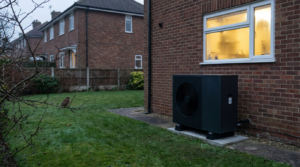
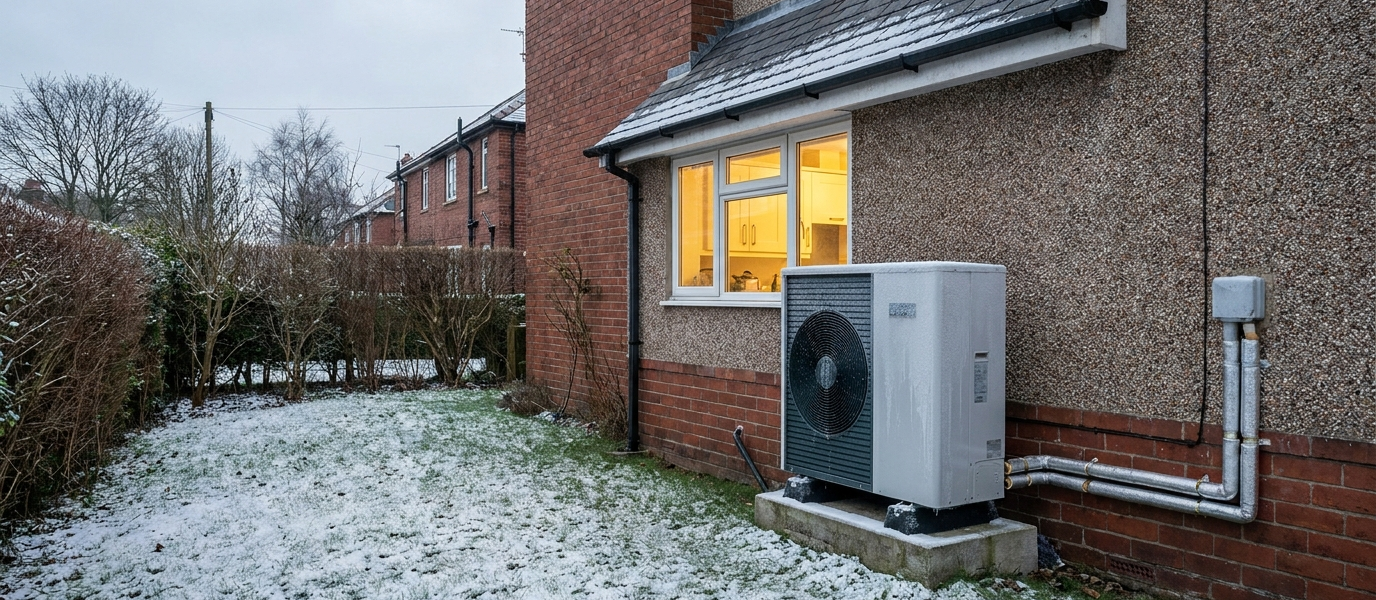
The outdoor unit is the part you don’t think about until it’s sitting in your flowerbed. Placement matters more than anyone warned. “Ours was originally too close to the bedroom window,” says Emma. “The low hum was fine during the day, but at night it felt louder. We moved it six feet and it made all the difference.”
Practical fixes from owners who’ve been through it: a gravel pad keeps the unit clear of mud and allows good airflow. A small screen of evergreen shrubs (like box or yew) blocks wind and snow without trapping heat. A winter cover for the pipework, just a simple foam wrap, prevents freezing and protects the insulation. “We planted a row of lavender around ours,” says Tom. “It looks intentional now, like a feature, not a mistake.”
The gain is a heat pump that lives quietly alongside your outdoor space, not in spite of it. For more on integrating your heating system with your home’s style, see door colour ideas for how a coordinated palette can tie the unit into your garden design.
The one week that nearly broke our resolve
It happens to almost everyone. The coldest spell of the year, -6°C, heavy snow, the wind howling through the gaps in the old window frames. The heat pump runs almost continuously. You watch the meter tick over. You wonder if you’ve made a terrible mistake.
“We had a week in January when the temperature didn’t get above freezing,” says Mark. “The system ran non-stop for four days. I nearly called a plumber on day three. But I checked the indoor temperature: 19°C. Rock solid. The house was warm, the pipes weren’t frozen, and the defrost cycle was just puffing steam into the garden like a friendly dragon.”
The lesson is simple: trust the system’s design, not your old boiler habits. Your boiler taught you to expect instant heat and sudden silence. A heat pump teaches patience. “Now I look forward to a cold snap,” says Sarah. “It’s like testing the thing. And it always passes.”
How we learned to love the slow heat
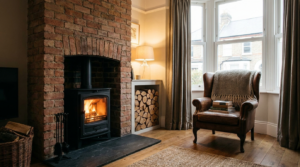
The biggest shift isn’t technical. It’s emotional. A boiler gives you heat in a hurry, dry, sharp, almost aggressive. It works fast and stops fast. A heat pump works like a wood stove’s patience, not a radiator’s impatience. The warmth builds over hours, filling a room from the floor up, radiating from the walls and furniture.
“I used to get headaches from the boiler,” says Emma. “The air was so dry. Now the house feels alive, not blasted. There’s less dust, less static. My skin doesn’t itch.” One owner noticed their cat stopped sleeping on the radiator and started sleeping on the floor. “She knows where the real warmth is now.”
The slow heat changes how you live. You stop rushing to turn the heating on and off. You stop fighting the temperature. You simply inhabit a house that’s always comfortable, always steady, always breathing gently around you. For more on making your home work with your heating, heat pump daily life explores how your daily routines adapt. And if you’re considering a change, boiler replacement options can help you weigh your choices.