The morning you stop guessing at the thermostat
You wake to a November cold snap, the kind where frost has sketched its own delicate geometry across the bedroom window. Your hand reaches for the thermostat dial out of pure muscle memory, that old, twitchy habit of cranking the temperature up by a degree or two because the morning air feels sharp. But then you stop. The house is already there. Not blasting, not chilly, just exactly where you want to be. The radiators are warm but not aggressive, the air still and settled. You don’t need to intervene.
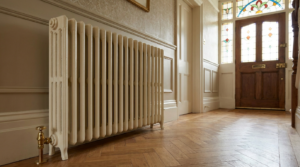
Contrast this with the old rhythm: the frantic 6am roar as the boiler fired up at full tilt, the stuffy living room by 10am, the frantic rush to turn everything off before you left for work, then the cold return at 6pm. That was a house that demanded constant negotiation, tweaking timers, adjusting TRVs, never quite comfortable. What you’re feeling now is something quieter. This is what “set and forget” actually means. Not neglect, but a quiet trust in a system that adjusts itself.
Before the house that fought back
Most of us have lived in a house that fought back. Radiators that roared to life at dawn, then went stone cold by mid-afternoon, leaving rooms either too hot or too draughty. On mild winter days, the kind where the sun streams through a south-facing window, the boiler still fired up at full tilt because the thermostat didn’t know the sun was warming the living room. You’d end up opening a window in January to let the heat out, which feels absurd when you think about it.
That constant negotiation wore you down. You’d layer up indoors, then strip off again. You’d set the timer for 6am, then wake up at 5:30 and wish you hadn’t. You’d hover by the thermostat like it was a guilty secret, tweaking it up by half a degree, then back down again. The house never quite felt like it was on your side. It was a machine you had to manage, not a shelter that looked after you.
After warmth that follows the weather, not the clock
The first winter with weather compensation feels different from the very first day. Instead of the boiler firing up at full power and then cutting out abruptly, it modulates its output based on what’s happening outside. On a milder January day, say 8°C instead of -2°C, the radiators run cooler but for longer. The heat feels softer, more diffuse, like the house is breathing gently rather than gasping.
The physical sensation is unmistakable: no more sudden blasts of hot air that make you flush, then leave you shivering twenty minutes later. No cold spots by the windows, because the system runs for longer at lower temperatures, keeping every corner of the room within a degree or two of the same warmth. You stop layering up indoors. You stop rushing to turn the heating off before leaving for work. The home holds its temperature like a steady hand on your shoulder.
Why this matters reclaiming the feeling of a home that looks after you
Here’s the truth that nobody tells you: the real gain isn’t the energy bill, it’s the end of the mental load of managing your heating. That constant low-level anxiety about whether you’ve set the timer right, whether the house will be warm when you get home, if you’re wasting money because you forgot to turn it down, it all evaporates. You stop thinking about the boiler and start noticing the quality of the warmth instead.
The shift from active control to passive comfort is profound. A home that responds to the weather feels less like a machine and more like a shelter. It adjusts to keep you comfortable, not to hit a programmed target. You reclaim the feeling that your house is on your side, working quietly in the background so you don’t have to. smart heating controls can take this further, but even on its own, weather compensation changes the relationship between you and your home.
Four things you notice when you stop noticing the heating
- The silence. No more clicking on and off, no more sudden gurgle as the boiler fires up. Just a constant, gentle hum from the boiler running at a lower output. The house feels quieter, more settled.
- The evenness. No cold bathroom floor in the morning. No overheated kitchen in the afternoon. Every room sits at roughly the same temperature, so you can move through the house without that jolt of thermal shock.
- The lack of drafts. Because the system runs for longer at lower temperatures, the house stays uniformly warm. You stop feeling that sudden chill when you move from room to room, or when you sit near a window. The draught excluders gather dust in the cupboard.
- The forgotten thermostat. Days go by without touching it. You realise you’ve stopped checking the temperature altogether. The house just is, and that’s the point.
Pick a colour that softens with the seasons, but let the heating do the same
There’s a visual calm that comes with a house where the heating doesn’t dictate the layout. No more radiators covered in laundry to dry, no more draught excluders shoved against doors, no more furniture positioned to avoid cold spots. You can place a sofa against an external wall. You can hang curtains that fall freely to the floor. Rooms feel less cluttered, more intentional.
It’s the same principle as choosing paint colours that shift with the light, a soft Farrow & Ball Drop Cloth that looks different at noon than at dusk, or a deep Setting Plaster pink that glows in the evening. You’re letting the house respond naturally to its environment, rather than forcing it to behave a certain way. paint colours for north-facing rooms explores this idea further, but the parallel is clear: a home that adapts to the weather, inside and out, is a home that feels alive rather than rigid.
The quiet authority of a home that knows what it’s doing
You walk into a room and you can’t tell whether the heating is on or off, because it doesn’t matter. The temperature is just right. That’s the quiet authority of a home that knows what it’s doing. The boiler is working smarter, not harder, and the house is handling the weather for you. You don’t need to intervene.
Sit in a room in February, watching rain streak down the window. The glass is cool to the touch, but the air around you is steady and warm. You haven’t thought about the thermostat in a week. You haven’t checked the timer, you haven’t fiddled with a TRV, you haven’t wondered if you’re wasting money. The house has taken care of it. That’s what weather compensation feels like, not a feature, but a feeling. The feeling of being looked after.