The room that never quite gets warm
You know the feeling. The heating has been on for an hour, the thermostat reads a respectable twenty degrees, and yet you’re still reaching for a jumper. The air feels technically correct but somehow insufficient, like a meal that fills you without satisfying you. Your hand hovers near the radiator, and yes, it’s hot. But the heat seems to pool somewhere above your head, leaving your ankles cold and your shoulders tense. The room is heated, technically. But it doesn’t feel warm.
This is the quiet tension at the heart of most British homes: we choose radiators based on wall space, not on how we actually live in a room. We install one under the window because that’s where the pipework runs, one on the narrow wall because there’s a gap, and one behind the door because the surveyor said the room needed the output. Three average radiators, each doing its bit, none doing it well. The question this piece asks is simple but quietly radical: what if you took them all out and put one excellent radiator in their place?
Why the biggest radiator isn’t always the best
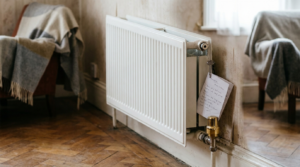
Here’s where the industry lets us down. Radiator output is measured in BTUs or watts, and we’ve been trained to think that bigger numbers mean better heat. But a large, cheap panel radiator, the kind you find in a builder’s merchant for £80, dumps heat unevenly. The top gets scorching, the bottom stays lukewarm, and the air stratifies: hot at the ceiling, cold at the floor. You turn the thermostat up to compensate, and the boiler cycles on and off inefficiently.
A well-designed single radiator works differently. Take a tall vertical column radiator, two metres high and slender. It creates a gentle convection current: cool air is drawn in at the bottom, heated as it rises through the columns, and released steadily at the top. The heat moves horizontally across the room rather than straight up. Or consider a low-profile trench radiator, set into the floor beneath a glazed wall, it throws heat outward at ankle height, where you actually feel it. These radiators produce what designers call heat quality: the room feels warmer at a lower thermostat setting because the heat behaves better. Raw BTUs are only half the story.
Three radiators, three compromises
Walk through the typical three-radiator scenario and you start to see the compromises stacking up. The first radiator sits under the window because that’s where cold air enters, but it’s also where you want your sofa. So the sofa is pushed six inches away from the wall, creating a dust trap and a visual gap. The second radiator is on the narrow wall between two doors, it’s too small for the room’s heat loss, so it runs hot and cold in cycles. The third is tucked behind the door, half its output blocked every time someone enters. Each radiator was placed for convenience, not comfort.
Then there’s the visual clutter. Three small white panels break up your wall space like punctuation marks in a sentence that doesn’t need them. They collect dust in awkward corners, force you to paint around them, and make every furniture layout a negotiation. And the hidden costs add up: more pipework, more valves, more potential for leaks and airlocks. Your heating system has to push water through multiple small loops, which means more resistance, more pump work, and more energy wasted. Three radiators aren’t just three compromises, they’re three opportunities for something to go wrong.
Eleven ways one excellent radiator changes a room
- One uninterrupted wall. Your sofa can sit flush against the wall. Your sideboard can stretch from corner to corner. The room gains a clean, intentional line.
- Less surface area to dust. One radiator means one set of fins to vacuum, one grille to wipe. That’s two fewer awkward cleaning jobs every week.
- A single thermostat valve. One twist to adjust the whole room. No walking from corner to corner balancing temperatures, no arguments about whose side is too hot.
- More even heat distribution. Tall radiators create a gentle vertical airflow that moves heat across the room rather than straight up. The floor stays warm. The ceiling stops cooking.
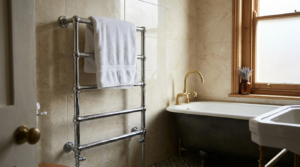
- A design statement. A single carefully chosen radiator, a deep anthracite column, a polished chrome towel-rail shape, a matt black panel, becomes furniture. It anchors the room rather than apologising for existing.
- Easier smart control. One radiator valve to pair with your smart heating system. One zone to programme. One point of failure instead of three.
- Less visible pipework. One pair of pipes entering the room instead of three pairs. That’s two fewer holes in the floorboards, two fewer chrome covers, two fewer places where the decor is interrupted.
- Fewer cold bridges. Three radiators create three warm zones and three cool gaps between them. One large radiator fills the space with a single, stable thermal envelope.
- Furniture can sit closer to walls. With one radiator positioned thoughtfully, you’re not forced to leave a gap behind every chair and table. The room feels bigger because it is bigger, you’ve reclaimed the floor space.
- The radiator goes where you sit. Not under the window because the plumber said so. Not behind the door because that’s the only wall left. You put it where you spend time: beside the armchair, opposite the dining table, along the wall where the evening light falls.
- Simpler system balancing. One radiator to bleed, one to flush, one to balance. The system runs quieter, the boiler cycles less, and the room holds its temperature longer.
The case for keeping three (and when to ignore this advice)
Honestly? Sometimes three radiators are the right answer. Long, narrow rooms, think Victorian galley kitchens or 1930s hallways, genuinely benefit from multiple heat sources because the heat has too far to travel from a single point. Open-plan spaces with two external walls, or rooms with large glazed areas on opposite sides, need heat distributed to counteract cold draughts from multiple directions. And there’s the practical reality: existing pipework may make a single swap impractical without lifting floors or chasing walls. If your heating system is buried in a concrete screed, you’re not going to dig it up for aesthetic purity.
But there’s a middle path that most people overlook: two excellent radiators instead of three average ones. It still reduces clutter, still cuts pipework, still improves heat quality. You get the benefit of distributed warmth without the visual noise. Think of it as the Goldilocks solution, enough radiators to do the job, few enough to let the room breathe. If you’re planning a renovation, this is the conversation worth having with your heating engineer: not “how many do I need to hit the BTU target,” but “what’s the smallest number that will make this room feel genuinely comfortable.”
How to know which radiator your room actually wants
The practical answer starts with a heat-loss calculation, any decent heating engineer can do one in ten minutes. But the human answer is simpler: stand in the room and think about where you actually sit. Not where the previous owners put the sofa, not where the estate agent’s floorplan suggests. Where do you read? Where do you eat? Where do you stand at the kitchen counter? That’s where the heat needs to land. A radiator that heats the centre of the room is better than a radiator that heats the wall.
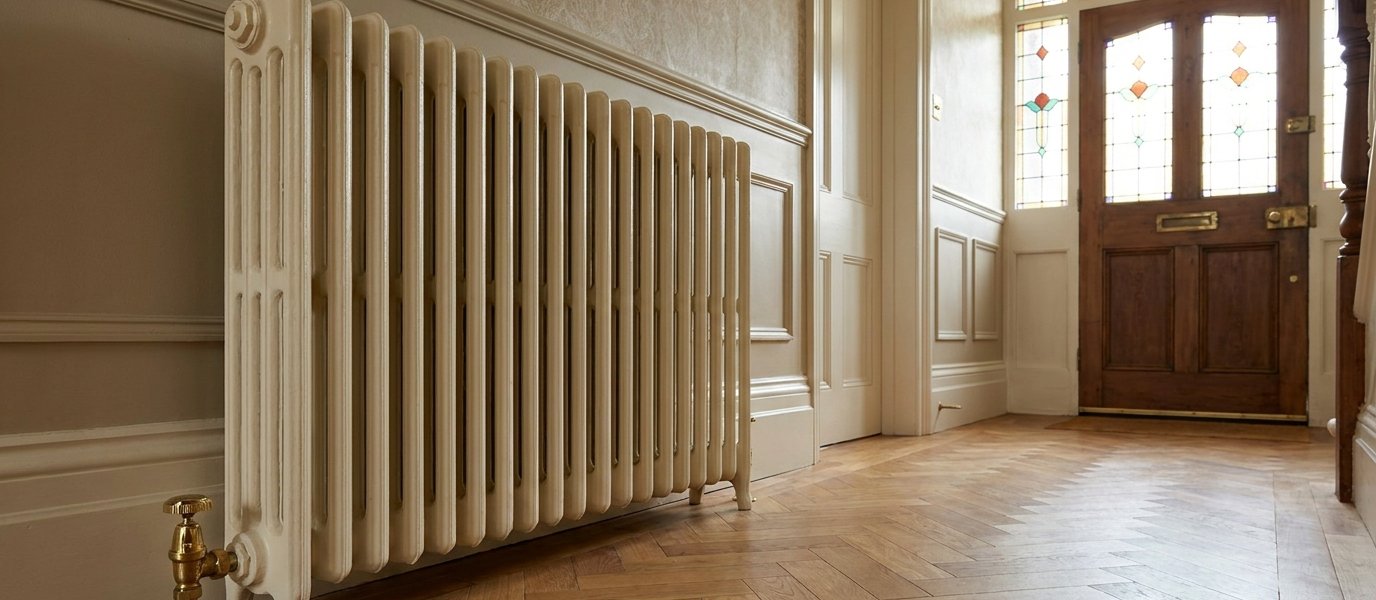
Then think about the radiator as furniture. A cast iron column radiator radiates heat differently to a steel panel, the iron stays warm longer after the heating switches off, releasing a soft, steady warmth rather than a blast-and-cool cycle. A tall vertical radiator in a matt finish absorbs light rather than reflecting it, which changes how the room feels at different times of day. radiator styles and finishes can completely transform a space without moving a single wall.
The best radiator, in the end, is the one you forget about. You don’t notice it because the room is simply comfortable, no cold shoulders, no hot spots, no second-guessing the thermostat. You just sit down, and the room wraps around you, and the heating does its work without asking for your attention. That’s the radiator sizing strategy that actually matters: not the biggest, not the most, but the one that lets you stop thinking about heating altogether.
smart radiator valves can help you fine-tune a single-radiator setup, and heating system balancing will ensure that one excellent radiator performs at its best. But the first step is the hardest: letting go of the idea that more radiators means more warmth. Sometimes, less really is more, and warmer, and quieter, and infinitely more pleasant to live with.