The towel that greets you
You step out of the shower. The air hits your shoulders, and for a second, everything pauses. You reach for the towel. If it’s cold, the moment snaps, you hurry, you rub, you move on. If it’s warm, you pause differently. You press it to your face. You take a breath. That small shift, from chore to ritual, is what a heated towel rail actually buys you.
It’s easy to overlook. A bathroom renovation tends to fixate on the big stuff: the walk-in shower, the statement tile, the vanity that makes you feel like you’ve finally grown up. But the quietest luxury in any room isn’t the expensive finish. It’s the towel you reach for, and whether it meets you warm. That one touchpoint rewires your morning and evening routines more than any slab of marble ever could. A bathroom that feels functional is one you use. A bathroom that feels like a retreat is one you want to use. The difference is often just a few degrees of gentle heat, waiting for you.
Where to hang it (and why placement changes everything)
A heated towel rail is only as good as its position. The classic spot, beside the bath or shower, arm’s reach from where you stand, is classic for a reason. You shouldn’t have to stretch across cold air to find the warmth. That defeats the point.
The overlooked spot is just outside the bath screen. Steam can trap heat inside a shower enclosure, so if the rail sits inside, the towel gets damp before you’ve even dried yourself. A few inches beyond the screen, it stays dry and toasty. The luxury spot is on a wall that catches you as you step out, not one that forces a reach. If you have to turn and lean, the moment breaks. If the towel meets you exactly where you land, the comfort feels effortless.
Rails that do double duty
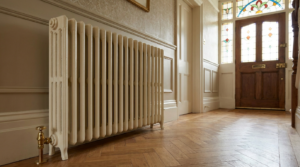
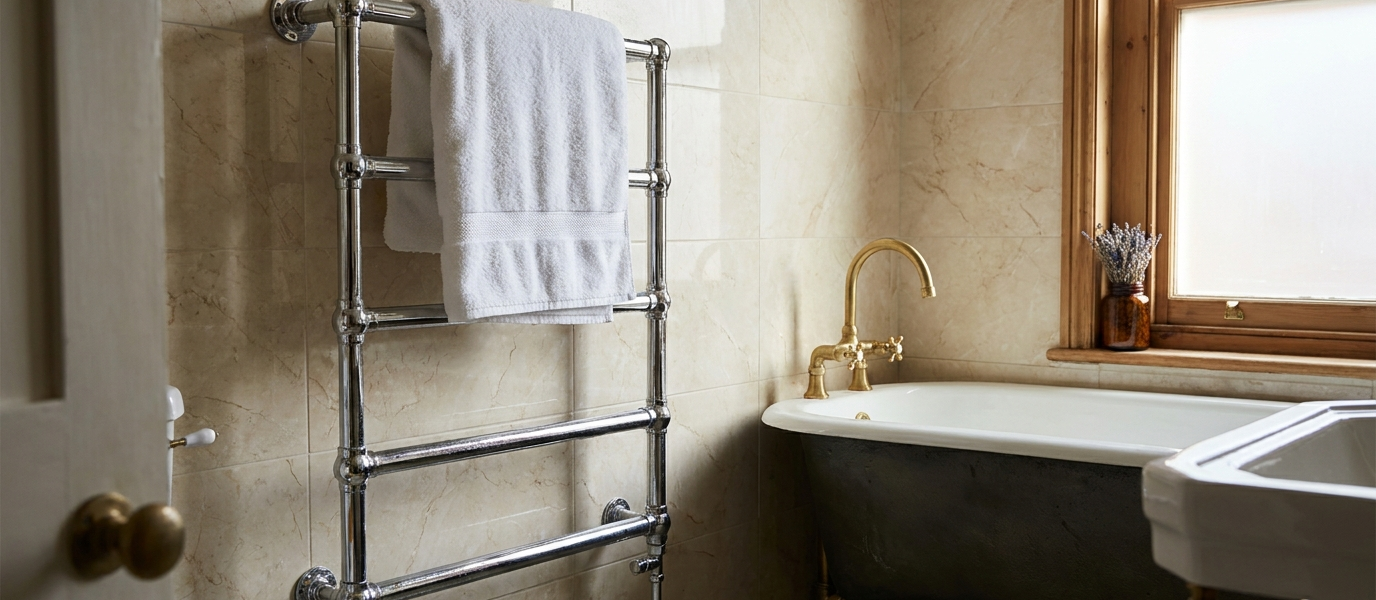
A good heated rail doesn’t just warm towels. It gently dries damp bath mats, robes, and the flannels that otherwise hang sullenly over the side of the bath. A ladder profile is especially useful here, smaller items get their own rung, and a silk robe can drape without pooling on the floor.
In smaller homes, a heated rail can reduce the need for a separate airing cupboard. That’s a genuine space-saving win. You hang a damp bath mat on the bottom rung after your shower, and by morning it’s ready to use again. No radiators, no separate drying rack taking up floor space. The rail earns its keep every day, not just when you wash.
The quiet effect on humidity
Here’s something most people don’t realise until they live with it: a warm surface helps a bathroom dry out faster after a shower. The gentle heat radiates into the room, encouraging moisture to evaporate rather than settle on mirrors, windows, and walls. Less condensation means less wiping, less fog, less of that damp feeling that lingers for hours.
It’s a practical comfort that feels invisible until it’s gone. You stop noticing the clear mirror. You stop noticing that the room smells fresh rather than musty. But the moment you’re in a bathroom without one, where the window is still streaming at lunchtime, you remember. A bathroom that dries properly needs less cleaning, not more. The rail does the work while you sleep.
Eight ways to soften a tall sash window
Victorian and Edwardian bathrooms often come with beautiful tall sash windows, and cold draughts. A heated towel rail can be part of the solution, not just an appliance. Here’s how to make it work visually:
- Use the rail’s vertical lines to echo the window’s proportions. A ladder rail beside a tall sash feels intentional, not accidental.
- Hang a towel across the bottom rung to break the height visually. It grounds the window and adds softness.
- Pair with a sheer curtain that stops at the rail, not the floor. The rail becomes the natural endpoint.
- Place a low stool beneath the window with a folded towel. The rail becomes part of a vignette, not just plumbing.
- Choose matte brass or brushed nickel to reflect soft light rather than glare. Shiny chrome can fight with the window’s natural light.
- Mount the rail on the adjacent wall, not directly under the window. You keep the view and avoid blocking the sill.
- Use the rail to air a damp bath mat after use. The heat speeds drying without a separate rack cluttering the room.
- Add a single plant on the windowsill. The rail’s warmth keeps it from catching a draught, and the green softens the whole composition.
Pick a finish that lives with you
The finish of your rail matters more than you might think. Brushed nickel and satin brass soften with use, they develop a gentle patina rather than tarnishing. White or black rails can feel like furniture rather than plumbing, especially if you choose a chunky profile. A matte black ladder rail against a pale wall reads almost as sculpture.
The finish should echo your taps, but it doesn’t have to match exactly. A sibling finish, warm brass with warm chrome, or brushed nickel with matte black, is often more interesting than a perfect set. The eye registers the family resemblance without the sterility of a matching suite.
Why the small comfort wins
A heated towel rail doesn’t transform a bathroom on paper. It doesn’t add square footage or resale value in a spreadsheet. What it does is transform the experience. It gives you one touchpoint in the day that feels deliberate, not rushed. One moment when your home meets you where you are, without you having to ask.
The real upgrade isn’t the rail itself. It’s the memory of stepping out of the shower on a grey Tuesday morning, reaching for a towel that’s been waiting for you, and feeling, for just a second, cared for by your own home. That’s the small comfort that wins, every time.