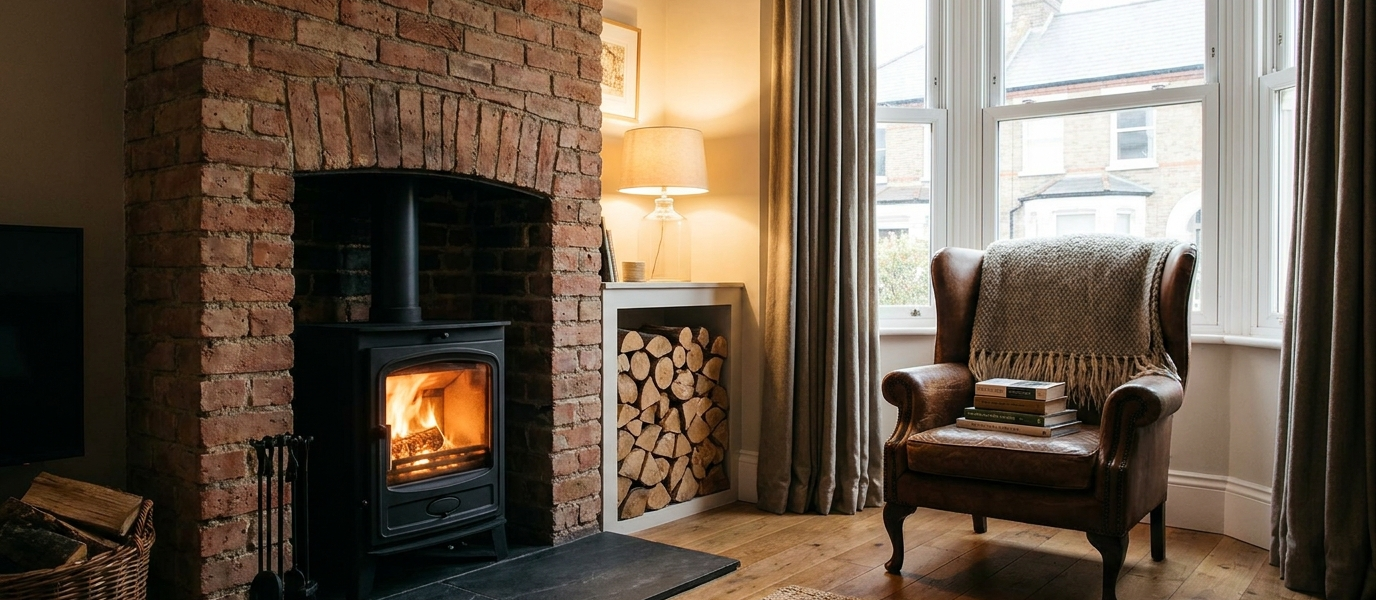
The rain is drumming a little harder now, a steady, insistent patter against the single-glazed pane of the sash window. You pull your cardigan tighter, listen to the draft whistle under the door. Then a match is struck, the sharp scent of sulphur cuts through the damp, and the first dry crackle of kindling takes over. The room changes. Not just in temperature, but in mood. The air thickens with a low, amber glow. The sound shifts from a hiss to a steady, breathing hum.
This is the real argument for a wood burning stove. Not the efficiency figures or the off-grid reassurance, though those are fine things. The argument that wins, the one that settles in the bones before you even think about the energy bill, is the aesthetic one. A stove is not a heating appliance first. It is a focal point, a piece of furniture, a ritual object. It rewrites the room around it. This piece is permission to choose one for how it makes the room feel, for the way it draws a line through the space and says: here.
The stove as a room’s anchor
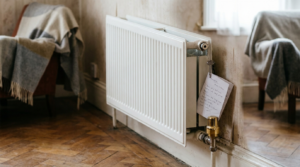
Think about how a room works without one. A radiator, tucked under a window, does its quiet work invisibly. Underfloor heating is even more discreet, a ghost warmth that rises through your socks. Both are excellent at their job. But neither commands the space. A stove does. It rewrites the layout of a living room: furniture turns toward it, conversation gathers around it, feet point towards its glow. It gives a room a centre it may have lacked, a deliberate, sculptural presence that feels almost gravitational. The visual weight of cast iron, steel, or soapstone anchors the eye, and the room suddenly makes sense.
Cast iron, steel, or soapstone, the material sets the mood
The first aesthetic decision is the material. Everything else, the surround, the hearth, the mantle, follows from it. Cast iron is the traditionalist’s choice: ornate, dark, heavy. It suits a period property, a cottage with low beams and uneven floors, where it looks as though it has always been there. Steel offers cleaner lines, matte or glossy finishes that work in modern or minimalist rooms. It feels deliberate, almost industrial. Then there is soapstone: a soft, quiet grey that holds heat like a slow battery. It is an architectural choice, contemporary and calm, for a room that wants warmth without ornament. Each material sets a different mood, and the mood is the point.
Pick a colour that softens with the seasons
Black is the classic, and it is hard to argue with. But the UK interiors world is waking up to the fact that a stove can wear colour. Deep greens, charcoal blues, and warm greys are becoming more common, and they change how the room reads. A dark stove against white walls is graphic and bold, a deliberate statement. Against earthy tones, it feels integrated, almost calm, as though it has grown from the same soil. And then there is the patina of use. A stove darkens or warms in colour over time, the surface taking on a subtle history. That is not a flaw; it is the room’s character deepening with the years.
Eight ways to soften a tall sash window
A tall sash window is a beautiful thing. But paired with a stove, it can feel unbalanced, too much vertical light against a low, crouching heat source. Here is how to make them sit together like old friends.
- Set the stove low on a raised hearth to balance the window’s height.
- Use a long, low log store beneath the window to anchor the eye horizontally.
- Hang a simple shelf above the stove that mirrors the window’s proportions.
- Choose a stove with a wide, horizontal firebox rather than a tall, narrow one.
- Place a mirror opposite the window to reflect both glass and flame, doubling the light.
- Use a pale, matte surround to avoid competing with the window’s brightness.
- Keep window treatments minimal, linen blinds or no curtains at all. Let the glass speak.
- Let the flue pipe rise straight and visible, echoing the window’s vertical line. It becomes a quiet companion.
Why texture matters more than colour
Colour is the first thing we notice, but texture is what we live with. A stove’s surface, rough cast iron, smooth enamel, brushed steel, interacts with light and touch in different ways. The same is true of the surround. Slate is cool and dark, stone is raw and ancient, brick brings warmth, tile introduces pattern. Each changes how the stove reads in the room. The contrast between a matte black stove and a rough stone hearth is a conversation. A glossy stove against a lime-washed wall is a different one, quieter, more reflective. Texture is the detail that keeps the eye moving, the hand wanting to reach out.
The hearth as a stage, not a safety zone
The hearth is the visual foundation of the stove. Too often it is treated as a regulatory afterthought, a flat, black slab that does its duty and nothing more. Treat it as a design element. A deep slab of reclaimed York stone has a quiet gravity. A raised timber platform warms the room before the fire is even lit. A tiled inset with a geometric pattern, perhaps in a deep blue or a soft terracotta, can be the room’s most interesting surface. What sits on the hearth matters too. A single log, a stack of kindling, a brass companion set, these are props for the daily ritual. They are not clutter; they are the room telling you what it is for.
Let the flue be seen
There is a temptation to hide the flue pipe, to box it in or chase it through the wall. Resist it. An exposed flue pipe is not a compromise; it is a design opportunity. A straight vertical run in matte black or brushed steel reads as minimal and honest. A slight bend or offset can add character, a gentle curve that softens the line. In rooms with high ceilings, the flue becomes a line drawing against the wall, a deliberate, architectural gesture. Paint it to match the stove for a unified look, or choose a contrasting finish that draws the eye upward. The flue is part of the composition, not an afterthought. Let it be seen.