The sound that isn’t a noise
Every new system in your home introduces an acoustic signature you didn’t ask for. The old boiler had that soft whoosh when it fired up, the radiators clicked as they cooled, and the fridge hummed a low G note that you stopped noticing after about three days. A heat pump is no different. It hums. Not loudly, not intrusively, but distinctly, a steady, low-frequency presence that sits somewhere between a transformer and a large cat purring.
The real shift isn’t about decibels. It’s about how quickly your brain reclassifies a sound from “intrusion” to “background.” Understanding heat pump noise tolerance isn’t about learning to endure something unpleasant. It’s about recognising when a sound becomes part of your home’s natural rhythm, as ordinary as the ticking of a mechanical clock or the soft rumble of a washing machine on its final spin.
What the hum actually says about the system
There’s a difference between the sound of normal operation and the sound of something wrong. A steady, low-frequency hum, think of it as a soft drone, around 40-50 decibels at three metres, means the compressor is doing its job. The fan is turning. The refrigerant is moving. All is well.
Irregular chattering, a rhythmic thumping, or a high-pitched whine? That’s different. That’s air in the system, loose mounting bolts, or a fan blade grazing a leaf guard. Modern inverter-driven units are clever: they modulate their output, running softer at night when the house is quiet and the heating demand is low, then stepping up slightly firmer when the morning frost needs clearing. The hum changes pitch and intensity with the weather and the time of day, and that’s exactly how it should behave.
Here’s the thing most people don’t expect: the most noise-sensitive owners often become the most satisfied. Once you learn to read the hum as a health check, a gentle reassurance that the system is working, it stops being a complaint and starts being useful information.
Placement as an acoustic softener
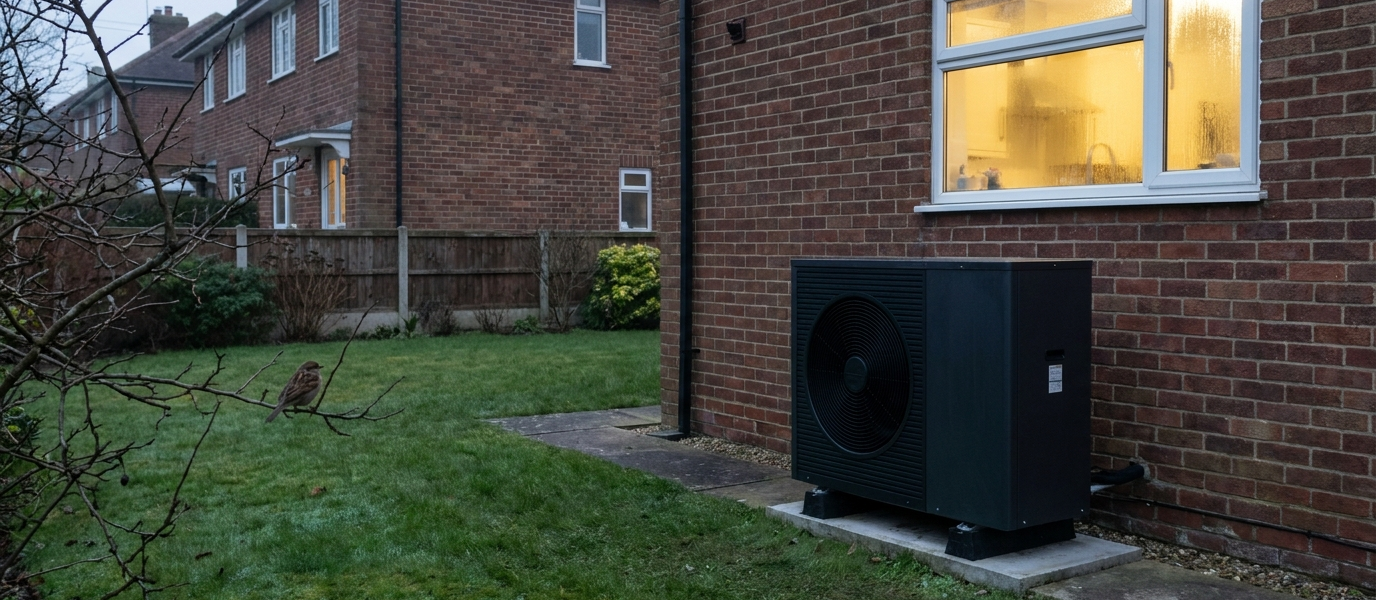
Where you put the outdoor unit matters more than any insulation wrap or acoustic blanket. Siting it away from bedroom windows is the obvious first step, but the real trick is breaking the line of sight. A unit placed around a corner, behind a low wall, or partially screened by a trellis sounds quieter, not because the sound waves are absorbed, but because your brain has a harder time locating the source. When the ear can’t pinpoint where a noise is coming from, it tends to downgrade the perceived loudness.
The base matters too. A concrete plinth does more than keep the unit level, it couples the machine to the ground, which can transmit vibration into the house if you’re not careful. A rubber pad or anti-vibration mat decouples it, turning a potential low-frequency rumble into a clean, airborne hum that dissipates quickly. Boundary planting helps as well, though not in the way you might think. Evergreen shrubs don’t block sound effectively, but they do break the line of sight. And once you can’t see the unit, the sound becomes easier to ignore.
The first week versus the first winter
The psychological curve is predictable. During the first week, you hear everything. Every cycle feels loud. You check the decibel meter on your phone, you stand next to the unit with a frown, you wonder if you’ve made a mistake. By week two, you notice it less. By month two, you don’t check the meter at all.
The real test comes during the first winter, when the unit runs more frequently and the nights are longer. Most owners don’t realise how habituated they’ve become until a power cut wakes them at 3am. The house is silent, no hum, no fan, no compressor, and the silence itself feels wrong. That’s the moment you know the heat pump has stopped being an intrusion and started being part of the home’s acoustic landscape.
Noise tolerance doesn’t increase because the unit gets quieter. It increases because your brain stops flagging the sound as important. The hum becomes a neutral signal, like the sound of rain on the roof or the boiler clicking on in the morning.
Three things that break the silence (and how to fix them)
Most “noise complaints” about heat pumps aren’t actually about the hum. They’re about vibration, small, preventable rattles that turn a steady drone into an irritating buzz. Here are the three most common culprits and how to fix them yourself:
- Loose panel rattling. The sheet metal casing can vibrate against itself if screws are slightly loose. Tighten them by hand, not with a power drill, which can strip the thread, and the rattle usually disappears. If it persists, a small dab of silicone sealant between the panels will dampen the vibration for good.
- Refrigerant line vibration against a wall. The copper pipes that connect the indoor and outdoor units should never touch a wall, a joist, or another pipe. If they do, they’ll transmit a low-frequency buzz that feels louder than it is. Add a rubber grommet or a foam pipe sleeve where the line passes through a wall or bracket, and the buzz stops.
- Leaf debris hitting the fan blades. In autumn, a single leaf caught in the fan housing can create a clicking sound that drives you mad. It’s not a design flaw, it’s a seasonal check. Turn the unit off, remove the debris by hand, and you’re done. No engineer needed.
Each fix takes ten minutes and costs a few pounds. The payoff is a system that hums rather than rattles.
When the hum changes, and what to do about it
A shift in pitch, a sudden click that repeats, or a rhythmic thumping that wasn’t there before, these are the system’s way of speaking. A heat pump has no dashboard lights, no error codes you can read at a glance. Sound is its only language.
Listen with curiosity rather than annoyance. A change in pitch might mean the fan speed has adjusted to clear frost from the coils, normal. A clicking sound that repeats every few seconds might mean a loose electrical connection or a failing capacitor, not normal, but not a catastrophe if caught early. A rhythmic thumping, especially one that follows the compressor cycle, often points to air in the refrigerant line or a mounting bolt that has worked loose over time.
There’s a quiet satisfaction in catching a minor issue early because you noticed the hum was off. It transforms noise from a nuisance into a diagnostic tool. And it saves you the cost of an emergency callout when a small problem becomes a big one.
The silent payoff
Owners who stop hearing the heat pump often start hearing other things. Birdsong in the morning. The wind moving through the garden. The house itself breathing, the soft creak of timber as it warms, the gentle expansion of floorboards underfoot.
The real gain isn’t a lower decibel reading. It’s reclaiming the acoustic comfort of your home. A heat pump’s hum, once accepted, becomes a sign that the house is working quietly on your behalf, keeping you warm without fanfare, without drama, without the sudden clatter of an old boiler kicking in.
And when the power goes out and the silence falls, you’ll notice it. Not because the hum was loud, but because it was yours.