Before and after, the sound of a room that breathes
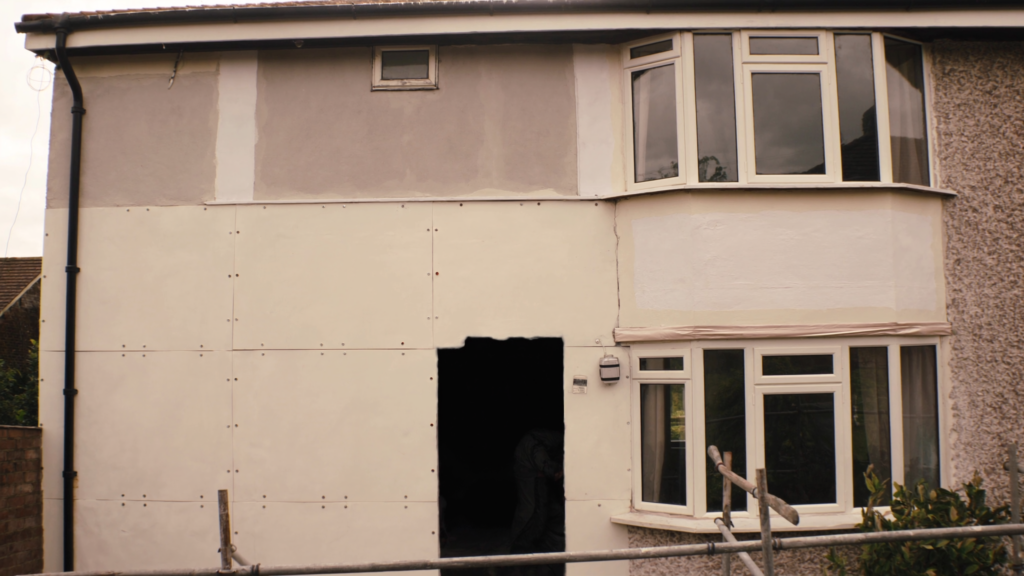
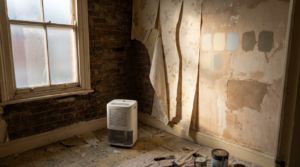
You know the kitchen I mean. The one where every car door slam from the street arrived a split second before the person did, where your neighbour’s radio drifted through the wall as if it were playing in your own cupboard. And the living room, voices from the pavement reached you before the speaker rounded the corner, turning your sofa into a public bench. Then something shifted. The same room, the same house, but now it feels like it has its own air, its own stillness. The noise didn’t vanish; the room simply stopped passing everything through.
Insulation is the quietest upgrade nobody talks about. Everyone knows it keeps the heat in, but the acoustic benefit, the way a well-insulated wall doesn’t just hold warmth, it holds a kind of privacy, is the forgotten gift. What you gain is not silence, but the feeling that your home listens to you, not to the street.
The wall between you and the world
Think of insulation as a sound sponge. Dense materials, mineral wool, rigid boards, even certain types of blown fibre, absorb vibration and slow airborne noise. It’s not about blocking sound entirely, but about damping the sharpness of it. A shout becomes a murmur; a slammed door becomes a muffled thud. The physics is straightforward: the more mass per square metre your insulation has, the more energy it takes for sound to travel through it.
If you’re renovating a party wall or an external wall, look for insulation with a higher mass. Even a modest upgrade, say, swapping standard glass fibre for a denser mineral wool, can turn a room that felt exposed into one that feels held. This is different from acoustic panels or foam, which sit on the surface and treat echoes. This is structural, permanent, and invisible once the plasterboard goes up. You don’t see it, but you feel it the moment the front door closes and the world stays outside.
Why the loft matters more than you think
Loft insulation is almost always framed as a heat-loss fix, and rightly so. But it’s also the single largest surface area between your home and the outside. Rain drumming on the roof, wind rattling the tiles, birds scrabbling in the eaves, all of that is dampened by a thick, even layer of insulation. A room directly below a poorly insulated loft feels brittle during a storm. Every drop is a tap on a drum. Top up to 300mm if you can, and the difference is immediate: less rattle, less drumming, more of the storm as a distant rhythm rather than an intrusion.
There’s a bonus too. A well-insulated loft stops sound travelling between upstairs rooms. Footsteps become softer, voices stay contained. That teenage bedroom that leaks music into the spare room? The insulation in the ceiling joists is doing more than you realise. It’s the difference between a house that echoes and a house that breathes quietly.
Six ways to soften a tall sash window
Sash windows are beautiful, but they’re also sound bridges. The single glazing, the gaps, the thin frame, noise pours through. You don’t have to replace them. Here are six low-intervention methods that compound beautifully:
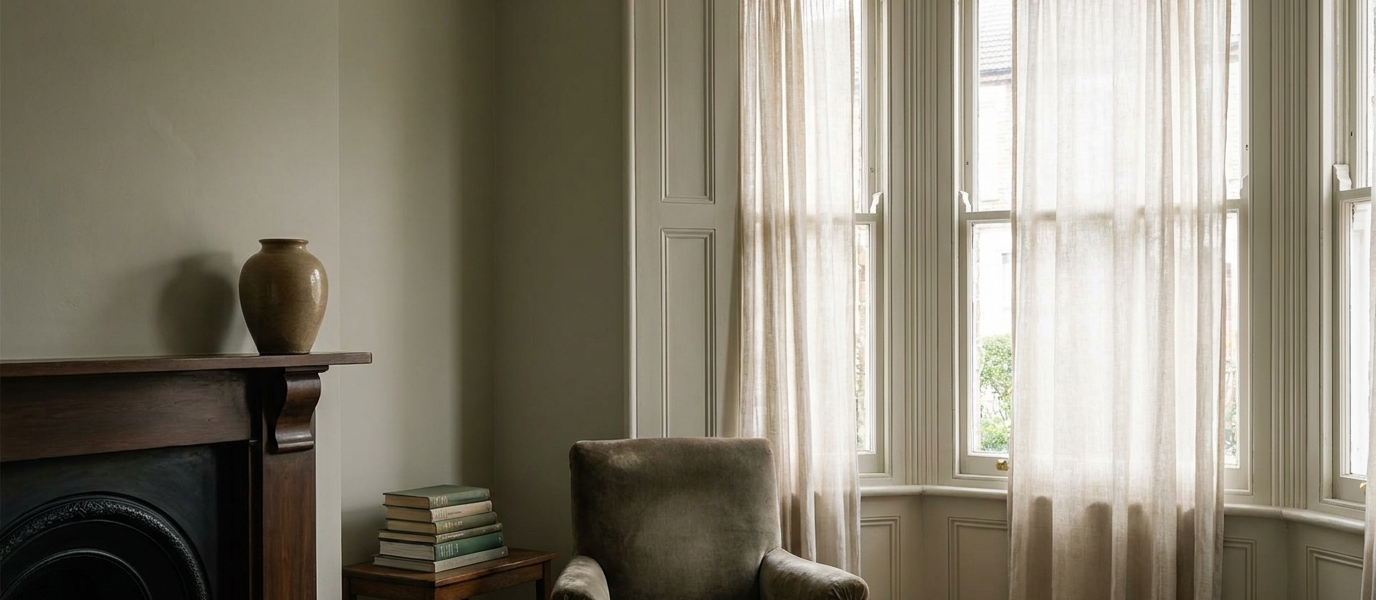
- Heavy lined curtains, floor-to-ceiling, with a thermal interlining. They catch sound like a net.
- Secondary glazing film, a clear film that sticks to the frame, creating a thin air gap. Cheap and surprisingly effective.
- Draught-proofing strips, self-adhesive foam or brush strips around the sash. They seal the gaps that let noise sneak in.
- Window plugs, custom-cut panels of acoustic foam or dense board that sit inside the frame. Remove them when you want the view.
- Plantation shutters with acoustic backing, the slats let you control light and air, while the backing adds mass to the window.
- Thermal blinds with honeycomb cells, the cellular structure traps air and deadens sound. They’re the quietest blind you can buy.
The goal is not to seal the window shut, but to let it breathe without letting noise through. Each action is small. Together, they turn a window from a sound bridge into a sound buffer. For more ideas on dressing your windows, see door colour ideas, the same principle of layering applies.
The floor that doesn’t broadcast your footsteps
Sound travels through floors in two ways: impact noise (footsteps, dropped objects, furniture scraping) and airborne noise (conversation, TV, music). Insulation under floorboards or between joists changes both. If you’re renovating a period property, consider laying mineral wool between the joists before you put down new boards. It’s a one-time job, and it transforms how a room feels. The upstairs becomes a separate world; the downstairs stops being a listening post.
Rugs and underlay are the finishing layer. A thick wool rug on a hardwood floor catches the last echoes, softening the room’s acoustic profile. Cork underlay beneath engineered wood does the same. You don’t need to walk on eggshells, you just need the floor to stop broadcasting every step.
Pick a colour that softens with the seasons
Here’s the thing about a quiet room: it can handle stronger colours. When sound isn’t competing with the visual, you can afford to be bolder. Muted greens like Farrow & Ball’s Green Smoke, warm greys like Drop Cloth, clay pinks like Setting Plaster, deep navy like Hague Blue, these colours don’t bounce light or sound; they settle. A room that feels private can carry a darker wall without feeling small, because the quiet gives it depth.
Insulation noise reduction isn’t just about decibels; it’s about how a room makes you feel. Once the room is quieter, you can afford to let the palette do the work. The room becomes a place to rest, not just to look at. For more on choosing the right shade, our guide on door colour ideas explores how colour affects atmosphere.
Why texture matters more than colour
Texture is the finishing layer of insulation noise reduction. Wool rugs, linen curtains, cork wall tiles, upholstered headboards, all of them naturally absorb sound. In a room where you can’t add more insulation, a rental, a listed building, texture is your best tool. A single wool rug changes the acoustic profile of a hardwood floor. A linen curtain softens the echo of a bare wall.
Texture makes a room feel lived-in. Insulation makes it feel private. Together, they create a home that holds you, not just your things. The quiet isn’t empty, it’s full of the sounds you want to hear: a kettle boiling, a book page turning, the low hum of a room that finally belongs to you.