The quiet frustration is unmistakable. You spent a whole weekend on it, the careful masking, the primer, the two coats applied with the patience of a saint. You stood back, coffee in hand, and felt a genuine swell of pride. Then autumn arrived, and a corner of the frame began to lift. A blister. Then a crack. By November, a strip of paint was peeling away like a secret you’d rather not keep.
What you actually wanted, what any of us actually wants, isn’t just a fresh coat of colour. It’s a finish that looks settled. As though the shade grew there, as though it belongs to the house and always has. Not a job that announces itself as a job. A window frame you love looking at changes how light feels in a room. A botched one nags at you every time you close the curtains. This is about avoiding that quiet, persistent regret.
The preparation that decides everything (the 80/20 rule of windows)
Sanding, cleaning, and priming aren’t chores. They’re the difference between a frame that lasts a decade and one that demands redoing next spring. Most DIY failures happen before the paint tin opens: trapped moisture lurking behind old gloss, forgotten filler that never quite bonded, a surface wiped clean but not dry clean. The 80/20 rule applies here with brutal honesty, 80% of the result comes from the 20% of the work you’re tempted to skip.
There is, however, a quiet ritual to a Saturday morning spent on preparation. The slow rhythm of sandpaper smoothing the old paint. The satisfaction of running a finger over a surface and feeling nothing but grain. The dust settles, you wipe it down, and for a moment the frame sits bare and honest. That moment is where the good work begins.
Pick a colour that softens with the seasons
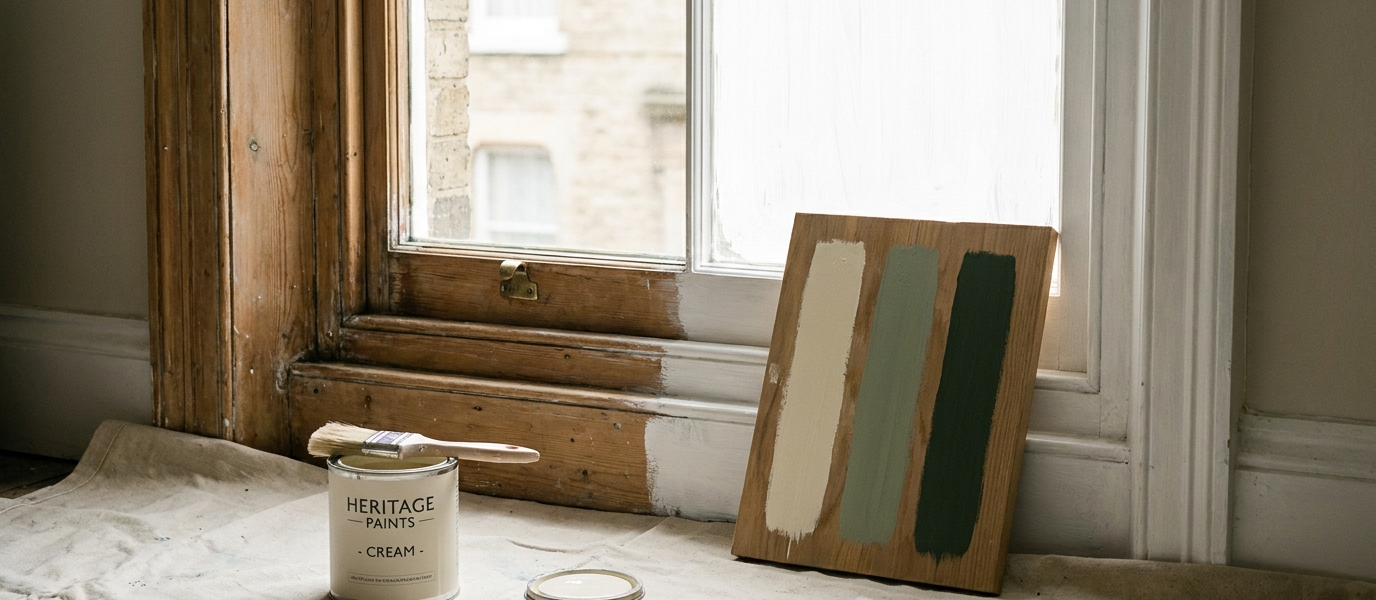
Please, not just “white.” The difference between a warm off-white that glows in low January light and a stark brilliant white that looks clinical is the difference between a room that welcomes you and one that feels like a showroom. A soft Farrow & Ball Drop Cloth, for instance, holds a pale warmth that shifts with the day. In the dim, quiet hour just before dawn, it reads as almost creamy. By noon, it’s a clean neutral. That’s the kind of colour that settles into the house.
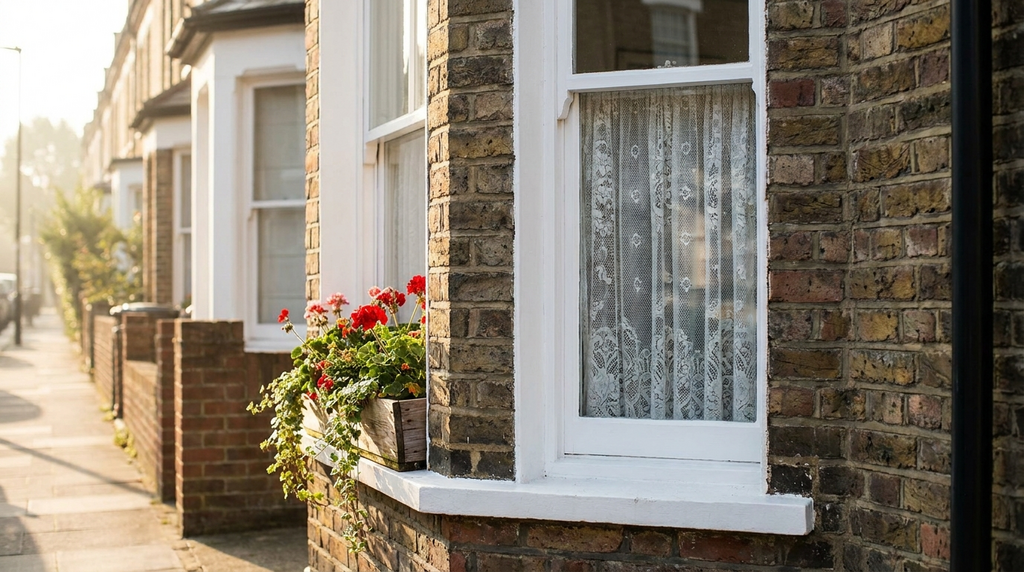
But the frame doesn’t live in isolation. It sits against brick, beneath a roofline, beside the garden planting. A pale stone, something like Little Greene’s French Grey, can echo the limestone of a lintel or the lichen on a wall. A muted sage, say Paint & Paper Library’s Sage, works beautifully against red brick or a tiled roof. The trick is to choose a shade that belongs to the whole house, not just the room behind the glass.
And if you’re tempted to shift from cream to a pale stone, or from white to a muted sage, do it. A single, deliberate colour change is often all a house needs to feel more itself.
Why the finish matters more than the colour
You can pick the perfect shade and still get it wrong if the finish is wrong. Matt, satin, eggshell, gloss, each changes how the frame reads from the street and from inside. High-gloss on a Victorian sash, for example, can look harsh unless the frame is absolutely flawless. Every bump, every brush mark, every slight imperfection is thrown into sharp, unforgiving relief.
The quiet luxury of a satin finish is worth considering. It’s low enough to hide the small imperfections of an old wooden frame, the gentle undulation of a sash that has settled over a century, but high enough to wipe clean. A damp cloth, a quick pass, and the frame looks fresh again. Eggshell sits a step below, softer still, but less forgiving of sticky fingers and kitchen steam. For most wooden windows, satin is the sweet spot.
Six details that separate a good repaint from a great one
A good repaint is something you notice only when you look closely. A great repaint is something you never notice at all, because nothing has gone wrong. These six details are where the difference lives.
- The meeting points between frame and glass. This is where paint often cracks first, the tiny gap where the frame meets the pane. A small, angled brush and a steady hand here will save you a touch-up in eighteen months.
- The inside edge of the sill. The strip nobody sees but the first place damp enters. Paint it well, and paint it carefully. Water finds the gaps you leave.
- The trick of painting the rebate before the face. The rebate is the recess where the glass sits. Paint it first, let it dry, then paint the face. It sounds obvious, but it’s the kind of order that saves you a headache, and a tide mark, later.
- How to handle the meeting rail on a sash window. The horizontal bar where the two sashes meet is a notorious trouble spot. Paint it in one smooth, continuous stroke, and don’t let the brush linger. A tide mark here is almost impossible to hide.
- The small brush that changes everything for the glazing bars. A 1-inch angled brush, nothing bigger, gives you control where you need it most. The glazing bars are the skeleton of the window; treat them with respect.
- The final pass with a dry brush. After the last coat, take a clean, dry brush and gently drag it over the wet paint. This softens the brush marks, leaving a surface that looks almost sprayed. It’s the kind of trick that separates a professional finish from a weekend one.
Let the weather dictate your timing, not your calendar
A warm, still, overcast morning beats a blazing June afternoon every time. Direct sun dries the paint too fast, leaving brush marks and a surface that cures unevenly. Rain is obvious, but the invisible enemy is dew-point, the temperature at which moisture in the air condenses on the frame. Paint over dew and you’re trapping water under the finish. It will blister before the leaves fall.
Early autumn can actually be better than late spring. The air is drier, the temperatures are mild, and the nights are cool enough to prevent rapid drying. Learn to read a forecast not just for “dry” but for “dry for three days after.” A frame needs time to cure, not just to dry to the touch.
Repainting wooden window frames without regret the one thing you slow down for
The temptation to rush the final coat is almost overwhelming. You’ve done the prep, you’ve chosen the colour, you’ve painted the rebate and the glazing bars. The end is in sight. But the last 10% of the job is where most regret lives. That’s when you rush, when you miss a spot, when you leave a drip that you tell yourself you’ll sand out later (you won’t).
Slow down. Take the final coat in the quiet of a late afternoon, when the light is soft and the house is still. Stand back, coffee in hand, and see the frame catch the light differently. The colour will shift as the day moves, as the seasons turn. It will settle into the house, as though it has always been there.
This is your house, your light, your long view. Paint it like you mean to stay.