Before the winter film
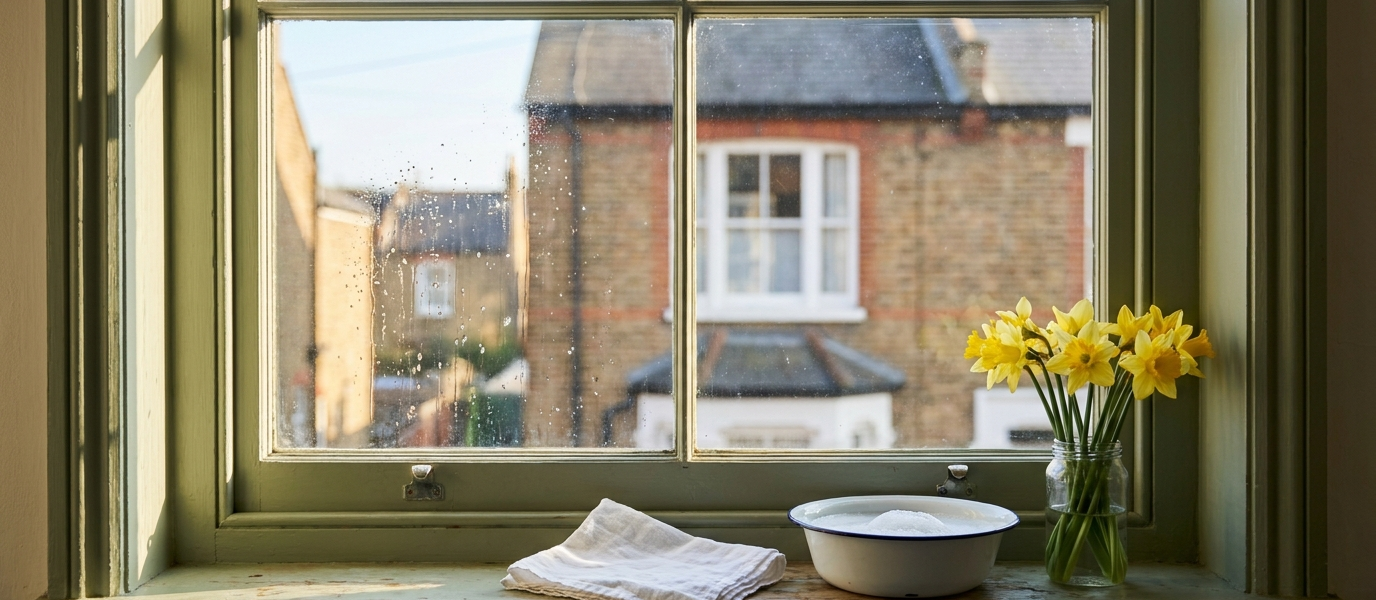
The first warm morning of the year arrives without warning. You’re standing at the kitchen sink, coffee in hand, when the low sun catches every smear on the glass, every dried drip of condensation from a cold January night, every cobweb tucked into the sash track, every thumbprint pressed there by a child who was just trying to see the snow. The window looks like it’s wearing a film. And for the first time since November, you want to see through it rather than just look at it.
There’s a shift that happens in that moment. The house has been a shell all winter, warm, yes, but inward-facing. Curtains drawn by four in the afternoon. The outside world kept at arm’s length. Now you want the outside in. You want the light to pour across the kitchen table. You want to see the magnolia buds from the sofa. So you reach for the roll of paper towels, fill the bucket with warm water and a splash of washing-up liquid, and realise the ritual has arrived. This is spring window cleaning, and it matters more than you think.
Why this matters
A clean window doesn’t just let in more light. It changes how a room feels at different times of day. That low morning sun that was catching the smears? Now it catches the dust motes dancing in the air, the grain of the wooden floor, the colour of the cushion on your favourite chair. The room shifts from feeling tired to feeling alive. And that feeling lasts far longer than the clean glass itself, weeks, sometimes months, until the next soft rain reminds you it’s time again.
There’s a quiet dignity to a house with clean windows. It’s not about perfection. It’s about care. And that care radiates inward as much as outward.
Let your front door do the heavy lifting
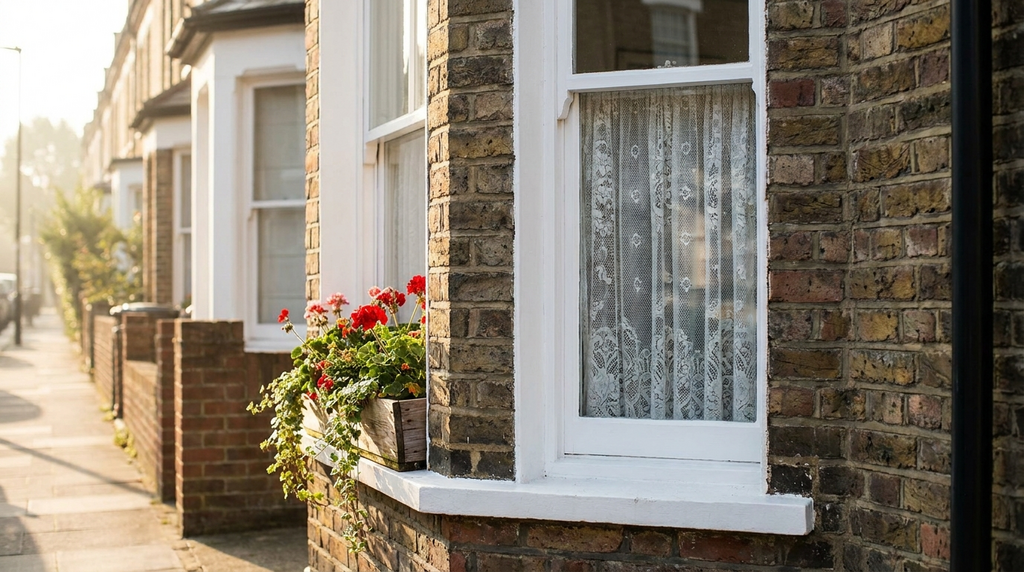
Start with the front window. The bay, if you have one. That single pane, or set of panes, sets the tone for the whole facade. Clean it first, and suddenly the brick terrace looks cared-for from the pavement. A streak-free Victorian sash tells the street that someone lives here with pride. It’s a small thing, but you notice it when you walk past other houses. The ones where the glass is clear and the frames are wiped down. They look like they’re breathing.
And here’s the funny thing: neighbours notice too. There’s a quiet, unspoken street ritual that happens in spring. You clean your front window. The next day, the house two doors down has its bucket out. By the end of the week, the whole terrace gleams. No one mentions it. But everyone feels it.
Pick a colour that softens with the seasons
Once the glass is clean, look at the frame. The paint or stain around the window is as much a part of the cleaning ritual as the pane itself. A soft, chalky white, something like Farrow & Ball’s Drop Cloth or Little Greene’s Rolling Fog, looks clean even when it isn’t. It forgives the dust that settles between cleans. A muted sage, like the same brand’s French Grey, does the same trick. The dirt doesn’t shout at you.
The visual payoff of wiping down frames and sills is immediate. Bright glass against a refreshed border creates a crispness that makes the whole room feel sharper. It’s the same principle as a white shirt: the collar might be clean, but if the cuffs are grubby, you notice.
Why texture matters more than colour
There’s a tactile shift that happens when you clean a window properly. The rough, winter-grimed putty that you’ve been avoiding all season suddenly feels smooth under a damp cloth. The timber of the sill, dried out and dusty from months of radiators, softens as you wipe it. Run your finger along the meeting rail after a clean. It’s a different surface entirely.
And that changes your relationship with the room. You start noticing the small things: the hinge points that were stiff, the trickle vents clogged with fluff. Press a clean cloth into the corner of the sill and feel the dust lift away. Open and close the window afterwards, it moves more freely. The whole act becomes almost meditative. You’re not just cleaning. You’re resetting the room for the season ahead.
Eight ways to soften a tall sash window
A tall sash window is a feature to dress, not just a surface to clean. Once the glass is clear, treat the window as a canvas for the room. Here are eight ways to make the most of that vertical light:
- Hang a single, long linen panel to one side. It lets light pour through but adds softness to the hard lines of the frame. A pale oatmeal or stone colour works best.
- Place a low vase of catkins or bare branches on the sill. The vertical line echoes the sash itself, drawing the eye upward and making the ceiling feel higher.
- Use a gentle, liquid-based cleaner, not spray foam. Spray foam leaves residue on the timber that attracts dust. A few drops of washing-up liquid in warm water, applied with a microfibre cloth, does the job without the mess.
- Clean the top sash first, then the bottom. It’s counterintuitive, you want to start where you can see, but cleaning top-down avoids drips on already-clean glass.
- Wipe the cords or chains with a barely-damp cloth. They collect dust invisibly, and a clean cord moves more smoothly through the pulley.
- Polish the brass or chrome catches. A tiny gleam catches the eye every time you pass. Use a dedicated metal polish or just a dry cloth for a quick sheen.
- Put a small mirror opposite the window. It doubles the clean light and makes a narrow room feel wider.
- Leave the window open for ten minutes after cleaning. The breeze dries the glass without streaks, and the room gets a proper airing.
The second window is always easier
The first pane is the hardest. You’re still finding your rhythm, still figuring out how much pressure to use on the cloth, still annoyed at yourself for leaving it so long. But the second window is always easier. The chore shifts into something quieter. You find the same cloth, the same bucket, the same podcast or playlist. The ritual becomes a marker of the season, a thing you do every spring, like planting the first seeds or switching the duvet.
And then the unexpected reward arrives. You’re wiping the third pane when you notice a bird on the sill. Or a neighbour’s cat stretching in the sun. Or the way the light now falls on a favourite chair, a chair you’d forgotten could look that good. The room is coming back to life, and you’re the one who woke it up.
After the room you forgot you had
You step back. Close the window. And the room is suddenly bigger. Brighter. Quieter. The view, not the glass, is what you were cleaning all along. The magnolia buds are clearer now. The sky is bluer. The room feels fresh without you having changed anything but the pane.
That’s the real gift of spring window cleaning. Not the streak-free glass, though that’s satisfying. Not the admiring glance from the pavement, though that’s nice too. It’s the feeling of being in a room that feels new again. A room you forgot you had. A room that’s ready for the season ahead.