The morning you notice the house before you feel the cold
The first real frost of autumn catches you off guard, as it always does. You wake to a bedroom that feels sharp at the edges, the kind of cold that settles in the hollow of the throat before you’ve even swung your legs out of bed. Downstairs, the radiators are barely warm, not cold, not broken, just… hesitant. A low, reluctant heat that seems to apologise for itself. This isn’t a complaint. It’s an observation, and a useful one.
Your heating system is a kind of domestic barometer. It tells you how your home breathes, leaks, and holds heat long before the thermostat drops. A cold snap doesn’t just test your boiler, it reveals the personality of your house. The way the hall stays colder than the kitchen. The way the back bedroom takes an age to warm, as though it’s sulking. That’s worth listening to, because the first cold snap heating lesson is never about the boiler alone. It’s about the conversation between your house and the weather.
The five-minute walk-around that changes everything
On that first freezing morning, before you turn up the thermostat, try something simple. Walk through every room. Feel the floors with your bare feet, not the carpet, but the edges where the skirting meets the floorboards. Run a hand along the window frames, the top of the curtain pole, the gap beneath the front door. What you’re doing is mapping heat loss, not with a thermal camera or a draught-expert’s gadget, but with attention.
Drafts announce themselves as a faint, persistent chill on the back of your hand. Cold patches on a radiator suggest trapped air or sludge. A window that feels like a sheet of ice means the glass is doing nothing for you. This isn’t a checklist; it’s a quiet conversation with your home. The first cold snap heating truth is that your house speaks in temperature. All you have to do is listen.
Why your radiators feel different after a long summer
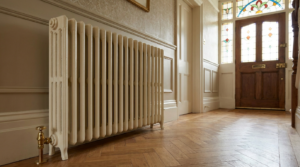
For six months, your radiators have been dormant, silent, cool, almost decorative. They’ve held summer dust in their fins and forgotten what it feels like to push heat into a room. Then autumn arrives, and that first blast of heat can feel thin, uneven, almost apologetic. The science is gentle: trapped air rises to the top of the panel, sludge settles in the bottom, and valves stick after months of stillness. It’s not a breakdown; it’s a seasonal shift.
Bleeding a radiator is less a chore and more a kind of autumn reset, like turning the soil before planting. A quick hiss of air, a trickle of rusty water, and the heat returns, fuller and more confident. It’s one of those small rituals that connects you to the rhythm of your home, and it costs nothing but ten minutes and a radiator key.
The rooms that always tell the truth
Every home has one or two rooms that expose the system’s limits. A north-facing bedroom that never quite shakes off the morning chill. An extension with a flat roof that feels like a greenhouse in summer and a fridge in winter. A converted loft where the radiator seems to be working, but the warmth never quite reaches the floor. These rooms are not failures; they’re clues.
How they behave during the first cold snap reveals whether your heating is balanced, or whether it’s been fighting a losing battle all along. A room that stays cold might be telling you about poor insulation, an undersized radiator, or a pipe run that takes the heat somewhere else first. It’s a moment to notice, not to panic. The room that stays cold isn’t a problem to fix overnight. It’s a piece of information you can act on when you’re ready.
Eight ways to soften a tall sash window without losing the light
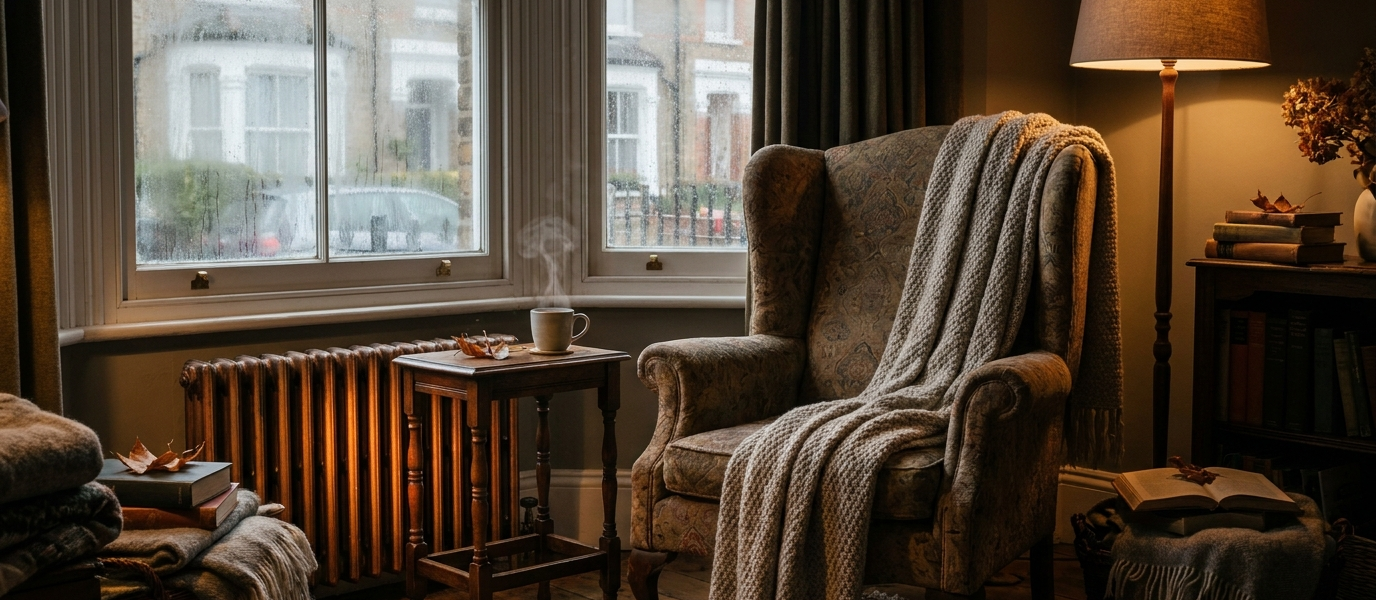
The first cold snap heating test is often won or lost at the glass. Sash windows are beautiful, that 1930s suntrap bay, the Victorian double-hung with its original weights and cords, but they leak heat like a colander. The trick isn’t to replace them; it’s to dress them so they work for you. Here are eight ideas that preserve the character while stopping the cold from seeping in:
- Heavy linen curtains on wooden rings, floor-length, with a pelmet to trap the air pocket above.
- Secondary glazing in slim bronze frames, almost invisible, but it cuts draughts and noise.
- Thermal blinds that sit flush with the architrave, honeycomb-celled, in a soft cream or pale grey.
- A deep Roman blind in wool felt, dropped to the sill, with a magnetic strip at the bottom.
- Curtains with a thermal lining in a muted olive or slate, they look like velvet but behave like insulation.
- Draught excluders that tuck into the gap at the bottom of the sash, in a fabric that matches the wall colour.
- A simple roller blind in a semi-sheer linen, paired with a heavier curtain for the coldest nights.
- Window film that clings to the glass, barely visible, but it stops the cold radiating into the room.
And here’s the quiet truth: these same windows frame winter light more beautifully than any modern double-glazed unit. The low sun slanting through old glass, the soft distortion of the pane, it’s a kind of domestic poetry you’d lose with a uPVC replacement.
The sound your boiler makes when it means business
Heating systems have an acoustic language all their own. There’s the gurgle of air moving through pipes, the click of a thermostat switching on, the low hum of a boiler that says everything is working. And then there’s the silence, the moment when the house is cold and the boiler isn’t firing, and you realise something’s off. The first cold snap reveals boiler health not in pressure gauges or error codes, but in the way the house responds.
Does the warmth arrive quickly, filling the corners of each room? Or does it creep in slowly, never quite reaching the far wall? That difference is a kind of diagnosis. A boiler that works hard but never quite delivers might be telling you about a blocked filter, a failing pump, or a system that needs balancing. It’s not a service appointment; it’s a conversation. The first real test of your boiler is always the first real cold of the year, and it tells you what you need to know without a single engineer’s visit.
Let your thermostat be a diary, not a command
During a cold snap, we tend to treat the thermostat like a weapon, cranking it up in the morning, then back down when we leave, then up again in the evening. It’s a frantic dance that says more about our relationship with comfort than it does about the heating system. A well-tuned system doesn’t need constant adjustment. It responds to the house, the weather, and the rhythm of the day.
The first cold snap heating lesson isn’t about fixing what’s broken. It’s about learning to live with your home’s natural temperature, knowing when to turn the heating up and, just as importantly, when to let the cold in. A bedroom that’s cooler at night helps you sleep. A window left open for ten minutes in the morning clears the air. The thermostat is a diary, not a command. It records the relationship between you, your house, and the season. And that’s a relationship worth tending.