Let the Light Decide, Not the Room
You know the moment. It’s eleven in the morning, the rest of the house is flooded with that buttery, optimistic glow, and you walk into your north-facing room only to find it still wearing that same flat, greyish expression it had at dawn. The kind of light that makes even a carefully chosen sofa look a little apologetic. It’s a familiar disappointment, and it’s easy to blame the room itself, to assume it’s just a cold, difficult space that will never feel quite right.
But here’s the thing: the room isn’t the problem. The window dressing is. More often than not, north-facing rooms are dressed by habit, the same curtains, the same blinds, the same white sheers that work fine in a south-facing bay, and then we wonder why the space feels washed out. The right choice, though, can turn that cool, flat light into something layered and alive. It’s not about fighting the light. It’s about letting it lead.
Why North Light Asks for Something Different
North-facing light is peculiar. It’s steady, cool, and almost shadowless, it never gets the direct sun that creates those dramatic pools of warmth and contrast elsewhere in the house. Artists have prized it for centuries; a north-facing studio gives you consistent, even illumination that doesn’t shift every hour. But in a living room or a bedroom, that same consistency can feel flat. Cold, even.
The common mistake is treating north-facing windows like any other. You pick up a crisp white linen curtain because it looks fresh in the shop, hang it, and wonder why the room now feels like a doctor’s waiting room. The white fabric, instead of bouncing light around, just reflects the greyness of the sky back at you. The room doesn’t get warmer, it gets greyer.
The human gain here is real. Choosing window dressings specifically for north-facing rooms means you stop fighting the architecture and start working with its natural mood. You stop trying to fake a south-facing glow and instead lean into the quiet, introspective quality that north light offers. It’s a shift in thinking, but it changes everything.
Sheer Layers That Hold the Grey at Bay
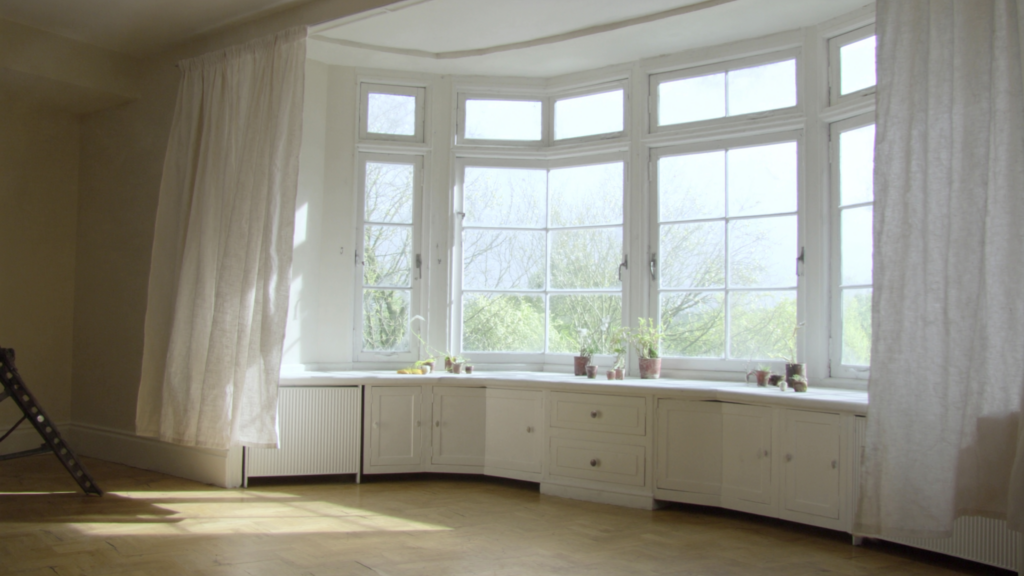
Sheers are an obvious starting point, but not all sheers are created equal. A fine white voile against a north-facing pane doesn’t soften the light, it just adds a milky filter that makes the room feel even more clinical. The trick is to choose a sheer with a bit of warmth: oyster, stone, a pale blush, or a soft mushroom. These tones catch the cool north light and warm it from within, like a gentle backlight.
Double-layering works beautifully here. A fine linen or cotton sheer against the glass gives you daytime privacy without blocking what little light there is. Over the top, a heavier panel, wool, velvet, or a thick cotton, adds weight for the evening. The sheer keeps the room from feeling bare; the outer layer gives it depth. Together, they create a sense of softness that a single layer never achieves.
Avoid anything with a blue or grey undertone in the sheer. That cool north light will amplify it, and you’ll end up with a room that feels like a winter morning at 4pm. Stick to warm neutrals, and you’ll be surprised how much life the light can have.
Let Your Front Door Do the Heavy Lifting
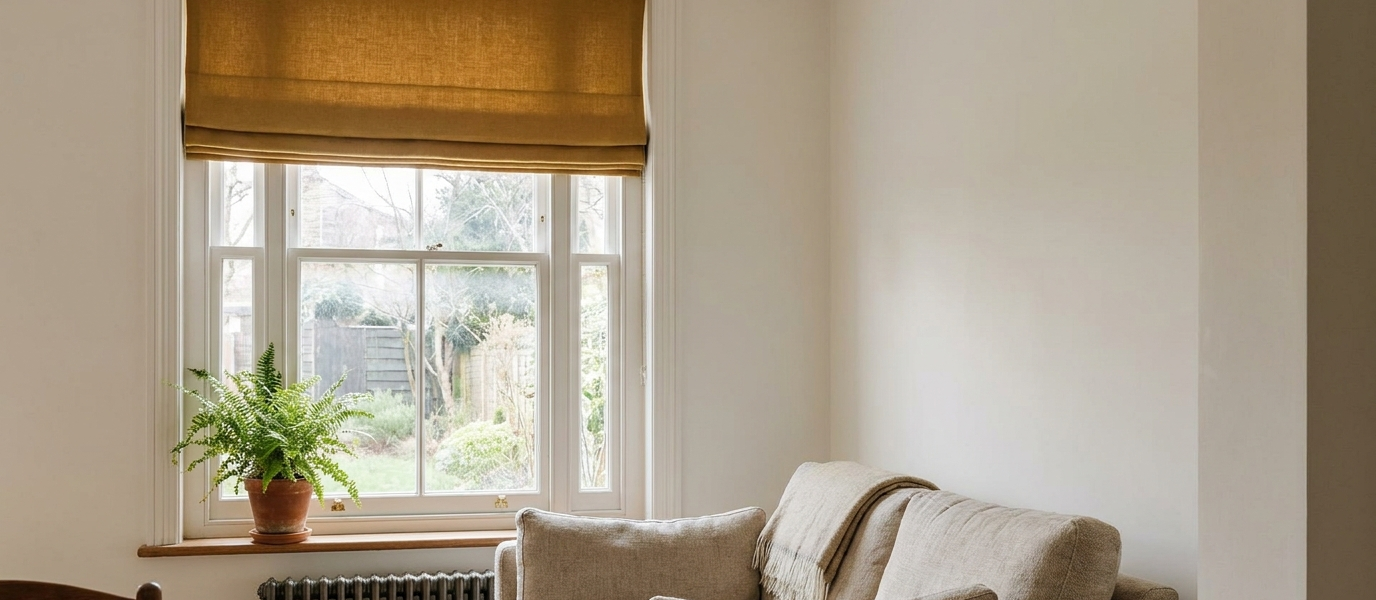
Actually, let your Roman blind do it. A tailored, flat-fold Roman in a warm-toned natural fabric is one of the most forgiving choices for a north-facing window. It adds depth without the bulk of a full curtain, and because it sits close to the glass, it doesn’t eat into the light the way a heavy gathered curtain can.
The fabric choice matters enormously here. Velvet is surprisingly good in low light, its nap catches the flat north light and creates subtle shifts of tone that a smooth fabric simply can’t. Corduroy and bouclé work the same way: anything with a textured surface or a visible weave will catch what little sun there is and throw back tiny highlights. A flat cotton or a satin weave, by contrast, just sits there, flat and unresponsive.
And here’s where a patterned Roman can be a genuine saviour. In a south-facing room, the sun does the work of creating visual interest, shadows dance, highlights shift. In a north-facing room, the light is too even to do that. A pattern on your blind introduces the visual activity that the light can’t provide. A subtle stripe, a soft geometric, a faded floral, anything that gives the eye something to move across.
Why Texture Matters More Than Colour
It’s a counterintuitive truth, but in a north-facing room, colour is secondary. Texture does the emotional work. You can paint the walls a beautiful warm ochre, but if your curtains are a flat, smooth polyester, the room will still feel cold. Texture is what catches the low, even light and creates the shadows and highlights that a south-facing room gets for free.
Think ribbed linen, slubbed silk, handwoven cotton with a visible weave, or a chunky wool blend. These fabrics don’t just hang, they behave. They catch the light differently from every angle, creating a sense of movement and depth that a smooth fabric can’t touch. A velvet curtain in a north-facing room reads as rich, not heavy; a bouclé blind feels warm, not bulky.
The rule of thumb is simple: if you run your hand over the fabric and it feels interesting, it will look interesting in north light. If it feels smooth and uniform, it will look flat. Choose texture first, and let colour follow.
Eight Ways to Soften a Tall Sash Window
Tall sash windows are a joy in a period home, but in a north-facing room, that long vertical drop can feel stark. Here are eight ways to soften it:
- Use a pelmet or a soft valance to break the vertical line and add a horizontal anchor.
- Hang the pole wider than the frame, this lets light wrap around the edges and makes the window feel larger.
- Choose a blind that sits inside the reveal for a clean, architectural look that doesn’t interrupt the wall.
- Add a sheer under-curtain beneath a heavier outer layer, it softens the glass without blocking light.
- Introduce a warm-toned trim or contrast binding on the leading edge of the curtain to draw the eye.
- Consider a half-height café curtain that leaves the top third of the window bare, letting in maximum light.
- Use a blackout lining on the outer layer for evening, but a light-filtering lining on the inner layer for daytime softness.
- Finish with a tie-back in a complementary natural fibre, wool tape, leather, or braided cotton, to add a tactile detail.
The One Rule That Changes Everything
If you remember nothing else, remember this: warm undertones, not cool ones. North light amplifies blue and grey, it’s what makes the room feel cold in the first place. Your window dressing should counter that with cream, taupe, terracotta, ochre, or muted rust. Even a pale pink Roman blind in a north-facing room reads as warm neutral, not pink. The cool light knocks back the pinkness, leaving behind a soft, creamy warmth.
The rule in practice is brutally simple. Hold your fabric swatch next to the window at 3pm on a cloudy day. If it looks cold in that light, it will always look cold. If it looks warm, it will look warm in any light. Trust your eyes, not the label.
This is also where door colour ideas might surprise you, the same principle applies to interior doors in a north-facing room. A warm taupe or a soft olive on the door frame can pull the whole scheme together.
When You Want Drama Without the Gloom
Dark curtains in a north-facing room sound like a terrible idea. And they can be, if you do it wrong. But done right, a dark, moody curtain can be the best thing that happens to the room. The trick is contrast.
Keep the walls light, a warm white, a pale stone, a soft cream, and let the curtain be the dark element. The light walls bounce what little light there is around the room, while the dark curtain creates a deep, rich focal point. The contrast gives the room depth that a mid-tone curtain never could.
The best dark shades for north light are those with a warm or brown undertone. A deep olive, a charcoal that leans towards brown rather than blue, a navy with a hint of green, these colours absorb the cool light without making the room feel like a cave. Avoid anything with a blue or grey base; it will just look muddy and cold. A deep rust, a chocolate brown, or a muted aubergine can be surprisingly luminous in the right light.
The payoff is a room that feels intimate and cocooning rather than flat and chilly. And that, in a north-facing room, is exactly the kind of magic you’re after.