Combi vs heat-only running cost 2026
The question of whether a combi or heat-only boiler costs less to run is one of the most common in UK home heating. Homeowners replacing a boiler often assume the system they already have is the cheapest option, but the numbers tell a different story.
A combi boiler costs £150-200 more per year to run than a heat-only system in a typical 3-bed home, due to 8-12% higher gas consumption for on-demand hot water (DESNZ, 2026). The gap narrows for single-person households with low hot water usage.
- Combi boilers cost £150-200 more per year to run than heat-only systems.
- Gas consumption is 8-12% higher for combi boilers on average (DESNZ, 2026).
- High hot water usage, like multiple daily showers, widens the cost gap.
- A well-insulated cylinder (50mm foam) reduces heat loss in heat-only systems.
- Single-person households see a smaller running cost difference between types.
- Combi vs heat-only running cost 2026
- How gas consumption differs between combi and heat-only systems
- Quick numbers – annual running cost comparison
- The direct answer to 'combi vs heat-only cost' – which is cheaper to run in 2026?
- Eligibility and installer certification – MCS, Gas Safe, and TrustMark
- What the payback period looks like for switching from combi to heat-only
- Hidden costs that can tip the balance – cylinder, space, and maintenance
A gas combi boiler costs roughly £150–£200 more per year to run than a heat-only boiler in a typical three-bedroom home. This gap is driven by the combi’s higher gas consumption for hot water on demand, compared with a heat-only system that heats a stored cylinder once or twice daily (Energy Saving Trust, 2026). The figures assume a 90% efficient combi versus a 92% efficient heat-only boiler with a well-insulated cylinder, based on DESNZ data for typical UK domestic energy use (DESNZ, 2026).
How gas consumption differs between combi and heat-only systems
A combi boiler heats water instantly when you turn on a tap or shower. This requires a high gas flow rate for short bursts, which increases peak demand and annual kilowatt-hour (kWh) usage by 8–12% on average compared with a heat-only system (DESNZ, 2026). A heat-only boiler, by contrast, heats a hot water cylinder once or twice a day, maintaining stored hot water at a lower average gas burn rate.
This difference is most pronounced in homes with high hot water usage such as multiple daily showers. A family of four running two showers each morning will see the combi fire up repeatedly, burning more gas per litre of hot water delivered. For a single person taking one short shower daily, the gap shrinks because the total hot water demand is low enough that the combi’s inefficiency matters less.
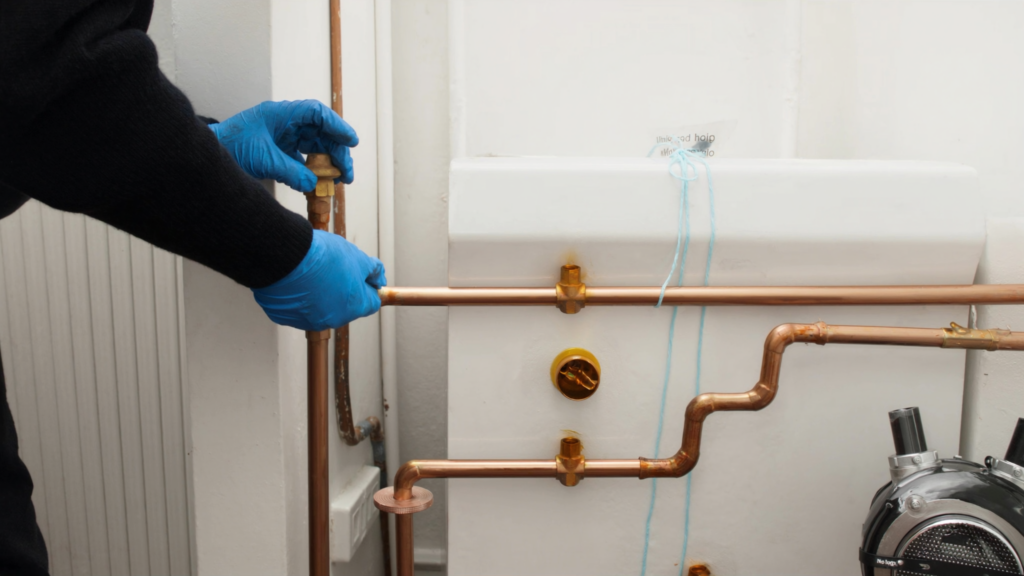
The cylinder itself also plays a role. A well-insulated modern cylinder (with at least 50mm of foam insulation) loses very little heat overnight, so the heat-only system wastes almost no energy between heating cycles. An older or poorly insulated cylinder in a cold loft can lose 1–2 kWh per day, which partly offsets the combi’s higher running cost (Energy Saving Trust, 2026).
Quick numbers – annual running cost comparison
The table below shows typical annual running costs for a three-bed semi-detached home with two occupants, four radiators, and a 120-litre hot water cylinder for the heat-only system. Gas prices are based on the January 2026 Ofgem price cap of 6.5 pence per kWh (Ofgem, 2026).
| System type | Efficiency rating | Annual gas consumption (kWh) | Annual running cost |
|---|---|---|---|
| Combi boiler | 90% | 13,500 | £878 |
| Heat-only boiler | 92% | 12,000 | £780 |
| Heat-only boiler (poor cylinder) | 92% + 1.5 kWh/day cylinder loss | 12,550 | £816 |
| Combi boiler (low hot water use) | 90% (1 person, 1 shower) | 11,500 | £748 |
The savings for a heat-only system range from roughly £60 to £200 per year depending on hot water usage and cylinder insulation quality. The combi’s convenience of unlimited hot water on demand comes with a measurable gas penalty.
Which is cheaper to run in 2026?
A heat-only boiler is cheaper to run for the same heating demand, by approximately £150–£200 per year, because it uses less gas to produce hot water (Energy Saving Trust, 2026). The cost difference narrows if the heat-only system has a poorly insulated cylinder or if the cylinder’s immersion heater is used regularly for top-ups. Immersion heaters run on electricity at roughly 24p/kWh (January 2026 price cap), which is nearly four times the cost of gas per unit of heat delivered.
For low hot water users such as a single person taking one shower daily, the annual gap may be as small as £80–£100. In that scenario, the convenience of a combi may outweigh the modest extra cost. For families with high hot water demand, the heat-only system’s advantage grows to £200 or more per year.
MCS certification data for cylinder insulation standards shows that a modern cylinder with factory-fitted foam insulation (meeting Building Regulations Part L) typically loses less than 1 kWh per 24 hours, which keeps the heat-only advantage intact (MCS, 2026).
Eligibility and installer certification – MCS, Gas Safe, and TrustMark
All gas boiler installations in the UK must be carried out by a Gas Safe Register engineer. This applies to both combi and heat-only boilers. You can verify an engineer’s Gas Safe ID number on the register before any work begins (Gas Safe Register, 2026).
For heat-only systems, the hot water cylinder must be installed by a certified installer registered with MCS if the system qualifies for any renewable heat incentive such as the Boiler Upgrade Scheme. For standard replacements without incentives, a TrustMark-registered tradesperson is sufficient for cylinder work (TrustMark, 2026). Check MCS certification for cylinder work on the MCS website, and always ask to see the installer’s Gas Safe ID before permitting any gas work.
how to find a certified boiler installer in 2026
What the payback period looks like for switching from combi to heat-only
Switching from a combi to a heat-only boiler costs £2,500–£3,500 including the new boiler, cylinder, and installation labour (DESNZ, 2026). With annual savings of £150–£200, the simple payback period is 12–18 years. That is a long time, and most homeowners will not recover the full cost before the system needs replacing again.
Payback is shorter (10–12 years) if the existing combi is old and inefficient, say 70% efficient, and the new heat-only system achieves 94% efficiency with a modern cylinder. In that case, the annual savings rise to £250–£300 because both heating and hot water become significantly cheaper to run (Energy Saving Trust, 2026).
Payback is longer (20+ years) if the home has low hot water usage or if the cylinder requires additional insulation or dedicated space that adds to installation costs. For most homes, switching purely for running cost savings does not make financial sense unless the combi is already due for replacement.
Hidden costs that can tip the balance – cylinder, space, and maintenance
A heat-only system requires a hot water cylinder, typically costing £500–£1,000 installed, and a dedicated airing cupboard or utility space. Not all homes have this space available. A combi boiler takes up less wall space and needs no cylinder, which can be a deciding factor in smaller properties (TrustMark, 2026).
Combi boilers have fewer components (no cylinder, no separate pump for the cylinder circuit), so annual servicing costs are slightly lower. A typical combi service costs £80–£100, while a heat-only system service averages £100–£130 because the engineer must also check the cylinder and its controls (Energy Saving Trust, 2026).
If the cylinder is located in a cold loft, heat loss from the cylinder can add £50–£80 per year to running costs, narrowing the savings gap significantly. A modern cylinder with factory insulation in a heated indoor space loses very little heat. An older cylinder in an unheated loft with minimal insulation can lose 2–3 kWh per day, which adds £50–£70 annually at 2026 gas prices.
best boiler type for a 3-bed semi in 2026
Frequently Asked Questions
A heat-only boiler is cheaper to run, costing £150-200 less per year than a combi in a typical 3-bed home. This is based on DESNZ data, which shows combis use 8-12% more gas due to on-demand hot water heating.
A combi boiler costs more because it heats water instantly, requiring high gas flow for short bursts, increasing annual kWh usage by 8-12% according to DESNZ. A heat-only system heats a stored cylinder once or twice daily at a lower average burn rate.
Yes, a combi boiler uses 8-12% more gas than a heat-only (system) boiler on average (DESNZ, 2026). The gap is larger for homes with high hot water demand, such as a family of four with multiple daily showers.
A combi boiler costs roughly £150-200 more per year to run than a heat-only boiler, based on Energy Saving Trust figures for a typical 3-bed home. The exact cost depends on hot water usage and boiler efficiency.
Yes, a well-insulated hot water cylinder (with 50mm foam) saves money by reducing gas usage. A heat-only system with a modern cylinder wastes minimal heat overnight, partly offsetting the efficiency difference with a combi boiler (Energy Saving Trust).