Why Wrexham Is Taking Eco Home Improvements Seriously
Wrexham has always done things its own way. Sitting in the north-east corner of Wales, it borders England to the east and the Clwydian Range to the west, a county that blends post-industrial town life with surprisingly beautiful countryside. It’s home to around 65,000 residents, and that relatively compact size actually works in your favour for eco home improvements. Installers know the area well, coverage is consistent, and word-of-mouth recommendations travel fast in close-knit communities.
What makes Wrexham genuinely different from many Welsh counties is its housing history. Much of the residential stock grew up around the coal and manufacturing industries, meaning you’ll find a lot of older terraced and semi-detached homes that were built long before anyone gave a second thought to insulation or energy efficiency. That’s both a challenge and an opportunity, there’s real room to make a difference here.
Wales also has its own distinct policy landscape. The Welsh Government runs its own energy schemes, sets its own building regulations, and has committed to its Net Zero Wales targets independently of Westminster. That means Wrexham homeowners have access to a slightly different mix of funding and support than you’d find just over the border in Shropshire or Cheshire.
Understanding Energy Performance Across Wrexham Homes
The average EPC rating across Wrexham is Band D, which puts the county squarely at the national average. That might sound reassuring, but Band D is actually a long way from where most homes need to be to run efficiently and cheaply. It means the typical Wrexham household is losing heat, spending more than necessary on energy, and missing out on the comfort that a well-insulated home provides.
With average gas usage of 12,000 kWh per year and electricity consumption of around 3,200 kWh per year, a typical Wrexham household is spending roughly £1,550 to £1,900 on gas and £800 to £1,000 on electricity annually, based on current tariff rates. That’s a combined energy bill somewhere in the region of £2,350 to £2,900 a year for many homes.
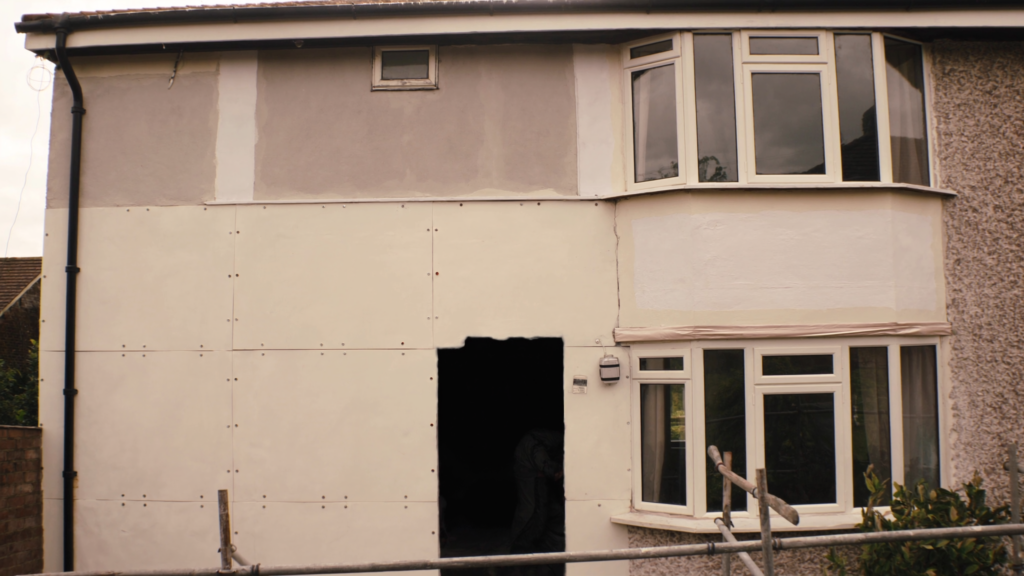
The older terraced streets closer to the town centre tend to sit at the lower end of EPC performance, many are Band E or even Band F. These properties were built before cavity walls became standard, and solid wall construction means heat escapes quickly without proper insulation. Semi-detached properties in newer residential areas generally perform a little better, though even homes built in the 1970s and 1980s are falling well short of modern standards.
Rural and semi-rural parts of the county, particularly those without mains gas connections, face a different challenge. Off-gas properties typically rely on oil or LPG, which pushes fuel costs higher still. For these households, switching to a heat pump can deliver some of the most significant savings available anywhere in the county.
The Full Range of Eco Home Services Available to Wrexham Residents
The good news is that Wrexham is well-served for eco home services. Whether your priority is cutting your bills, reducing your carbon footprint, or simply making your home warmer and more comfortable, there’s a solution worth exploring.
Solar Panels
Solar PV is one of the most popular upgrades across Wrexham right now. With around 1,000 to 1,200 sunshine hours per year, the county gets a reasonable amount of usable solar energy, not as much as the south coast, but enough to make panels a genuinely worthwhile investment. A typical 4kW system on a south-facing roof will generate somewhere in the region of 3,200 to 3,800 kWh of electricity per year. Pair that with a battery storage system and you can dramatically reduce what you buy from the grid.
Air Source Heat Pumps
Heat pumps are increasingly well-suited to Wrexham’s climate. Modern units work efficiently even in colder temperatures, and Wrexham’s moderate winters, with 1,500 to 1,800 heating degree days per year, mean they don’t have to work as hard as you might fear. For homes currently on oil, LPG, or electric storage heaters, switching to a heat pump can cut heating costs substantially.
Insulation
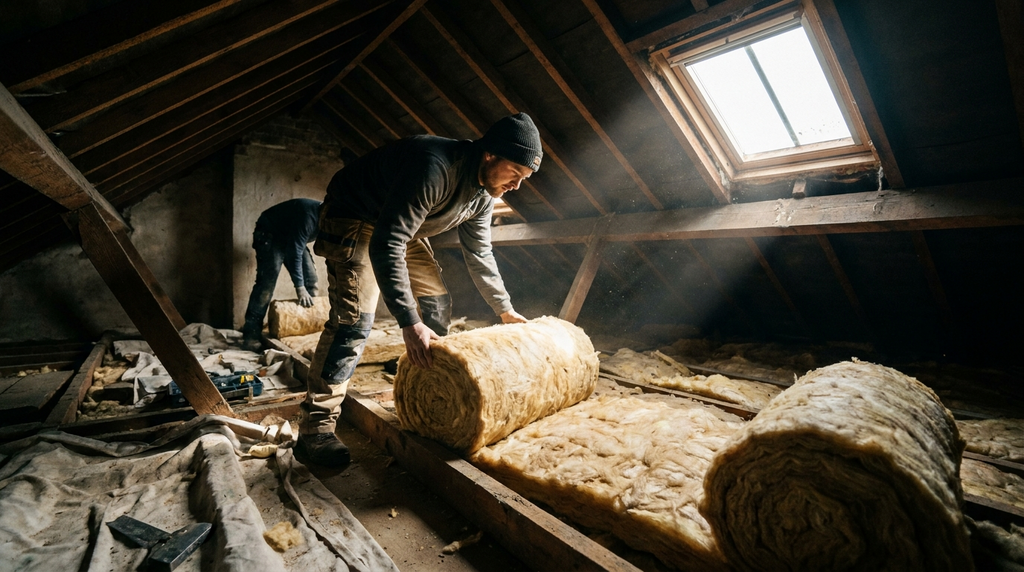
This is often the highest-impact upgrade you can make. Loft insulation, cavity wall insulation, and solid wall insulation all reduce the amount of heat your home loses, which means your boiler or heat pump doesn’t have to work as hard. Given the older housing stock across Wrexham, insulation improvements often deliver the fastest payback of any measure.
Double and Triple Glazing
Replacing single-glazed or original double-glazed windows with modern A-rated units makes a noticeable difference to both comfort and heat retention. Many older properties in Wrexham still have original windows that are well past their best.
EV Charging Points
Home EV chargers are becoming a standard addition for many households, especially when combined with solar panels. Smart chargers can be set to charge your car from your own solar generation during the day, cutting your transport costs significantly.
Smart Heating Controls and Heat Recovery Ventilation
Sometimes the simplest changes deliver strong returns. Smart thermostats, radiator controls, and mechanical heat recovery ventilation systems all help you use energy more intelligently without major upheaval.
Typical Costs and Savings for Wrexham Properties
Here’s a straightforward look at what common eco improvements cost across the typical property types in Wrexham, along with realistic estimates of annual savings and how long it takes to break even.
| Improvement | Terraced House (typical cost) | Semi-Detached (typical cost) | Estimated Annual Saving | Approximate Payback Period |
|---|---|---|---|---|
| Loft Insulation (top up to 270mm) | £300 – £500 | £400 – £600 | £150 – £250 | 2 – 3 years |
| Cavity Wall Insulation | £700 – £1,000 | £900 – £1,400 | £200 – £350 | 3 – 5 years |
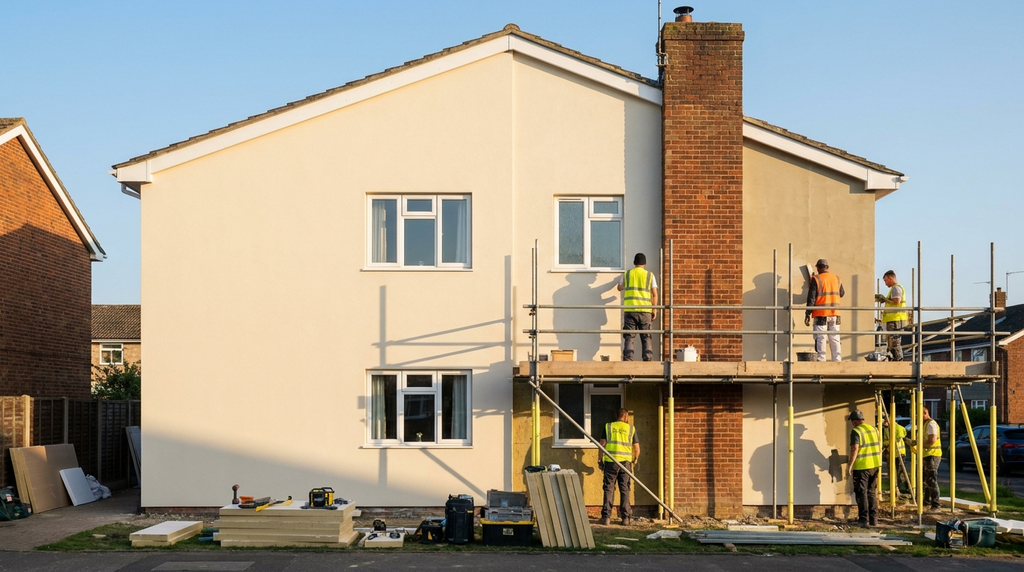
| External Solid Wall Insulation | £8,000 – £14,000 | £10,000 – £18,000 | £400 – £600 | 18 – 30 years |
| Solar PV (4kW system) | £5,500 – £7,500 | £5,500 – £7,500 | £600 – £900 | 7 – 12 years |
| Battery Storage (add-on) | £2,500 – £4,500 | £2,500 – £4,500 | £200 – £400 | 8 – 15 years |
| Air Source Heat Pump | £9,000 – £14,000 | £10,000 – £16,000 | £400 – £1,000 | 10 – 20 years |
| Double Glazing (whole home) | £4,000 – £7,000 | £5,000 – £9,000 | £100 – £200 | 25 – 40 years |
| Smart Heating Controls | £200 – £450 | £200 – £450 | £80 – £150 | 2 – 4 years |
Bear in mind that grants can dramatically shorten those payback periods, particularly for heat pumps and insulation. More on that below.
Grants and Funding Available to Wrexham Homeowners in 2026
This is where living in Wales genuinely works in your favour. Wrexham residents can access both UK-wide schemes and Wales-specific programmes, and the combination can cover a substantial chunk of the cost of eco improvements.
The Warm Homes Nest Scheme (Wales)
This is the flagship Welsh Government energy efficiency scheme, and it’s specifically for homeowners and private renters in Wales. If you’re on a low income or receiving certain benefits, you may be eligible for free energy efficiency improvements including insulation, heating upgrades, and even heat pumps. The scheme is delivered through Nest, and eligibility has been broadened in recent years to reach more households. It’s worth checking even if you’re not sure you qualify, many people are surprised to find they do.
The Optimised Retrofit Programme (Wales)
This Welsh Government programme takes a fabric-first approach, meaning it focuses on getting the building itself as efficient as possible before adding renewable technology. It’s been rolled out through social landlords but has influenced how Welsh local authorities approach whole-house upgrades. Keep an eye on Wrexham County Borough Council’s communications for any funded retrofit opportunities linked to this programme.
ECO4 (Great Britain-wide)
The Energy Company Obligation is a UK-wide scheme that requires energy suppliers to fund efficiency improvements for lower-income households. In Wrexham, this typically covers insulation and heating upgrades for homes with an EPC rating of Band D or below, which is most of the county. Your energy supplier can advise on eligibility, or you can apply through an approved installer.
The Boiler Upgrade Scheme (England and Wales)
The BUS grant provides £7,500 off the cost of an air source heat pump or £7,500 off a ground source heat pump. This is a significant chunk of the total installation cost and brings heat pumps within reach for many more households. Your installer claims the grant directly and passes the saving on to you.
The Great British Insulation Scheme
This scheme sits alongside ECO4 and targets homes with an EPC rating of Band D, E, F, or G. It funds a single insulation measure, typically loft or cavity wall insulation, for eligible households. Given that the Wrexham average is Band D, many homes here qualify.
Wrexham County Borough Council Support
Wrexham County Borough Council periodically runs its own energy advice and referral services, often in partnership with Nest and local housing associations. It’s worth contacting the council directly or visiting their housing pages to find out what’s currently available. Some area-based schemes target specific streets or neighbourhoods for whole-street upgrades, which can be particularly cost-effective.
Planning Permission and Local Authority Considerations in Wrexham
Most standard eco home improvements don’t need planning permission, but there are some important exceptions to be aware of, and it’s always better to check before you commit to anything.
Planning applications in Wrexham are handled by Wrexham County Borough Council, which is the unitary local authority covering the entire county. Unlike some parts of Wales, Wrexham has a single council managing all planning decisions, which simplifies things considerably.
What Usually Falls Under Permitted Development
- Solar panels on a roof that aren’t visible from a highway or public space
- Air source heat pumps (subject to noise and siting conditions)
- Loft and cavity wall insulation
- Internal wall insulation
- Double and triple glazing (on non-listed properties)
Where You Need to Be More Careful
Wrexham has a number of conservation areas, particularly in and around the town centre and some of the older village cores across the county. If your home sits within a conservation area, permitted development rights may be restricted, especially for solar panels visible from the street and external wall insulation that changes the appearance of the building.
Listed buildings require listed building consent for most external changes, and some internal work too. If you’re in any doubt about your property’s status, the planning department at Wrexham County Borough Council can confirm this quickly. It’s a simple check that can save a lot of hassle.
Wales has its own planning policy framework that differs slightly from England’s, so if you’ve been reading advice written for English homeowners, double-check that the rules apply here too. Your installer should be familiar with Welsh planning requirements, but it never hurts to verify.
How Wrexham’s Climate and Geography Shape Your Upgrade Choices
Wrexham’s location gives it a genuinely balanced climate, which is actually a real advantage for eco home improvements. You’re sheltered from the worst of the coastal winds that affect much of the Welsh coastline, and you get moderate rainfall of around 700 to 1,000mm per year. Winters are cool but rarely brutal.
What does this mean in practice? A few things worth knowing.
- Heat pumps work well here. The moderate winter temperatures mean your heat pump won’t be constantly running at its least efficient point. Modern units are built to work effectively down to minus 15°C, so Wrexham winters pose no problem at all.
- Solar panels are a worthwhile investment. You won’t generate as much as a home in Cornwall, but with 1,000 to 1,200 sunshine hours a year, a well-positioned system will still generate meaningful amounts of electricity and deliver solid returns, especially with battery storage.
- Insulation is always the right starting point. The moderate but persistent rainfall and cool temperatures mean that heat retention matters a great deal. A well-insulated home stays comfortable with less energy input, regardless of what heating system you use.
- Wind turbines are less commonly recommended for urban and suburban Wrexham properties. The sheltered geography means wind speeds aren’t reliably strong enough for small-scale turbines to be cost-effective for most homes.
The mix of older terraced homes and post-war semi-detached properties across the county also means that different properties suit different upgrade sequences. For a Victorian terrace with solid walls, improving the fabric of the building (insulation, draught-proofing, windows) often delivers better immediate returns than jumping straight to renewable technology. For a 1970s semi with cavity walls already present, the reverse might be true.
Where Eco Home Services Are Available Across Wrexham
Axiom Eco Homes covers the whole of Wrexham county, with services available across the entire area. The main town served is Wrexham itself, the county town and the largest settlement, where the bulk of the residential housing stock is concentrated.
Because Wrexham is a relatively compact county with a population of around 65,000, installers typically