What static caravan insulation actually costs per section
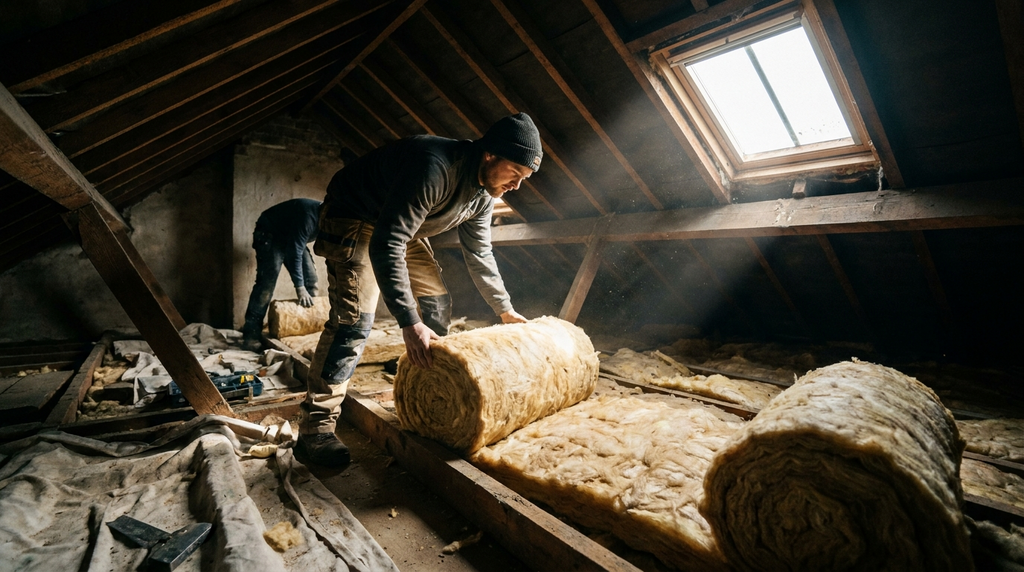
Insulating a static caravan is not a single product purchase. The total cost depends on which sections of the caravan you treat and whether you install the materials yourself or hire a professional. The price range is wide because caravans vary in size from single-unit models to twin-units of up to 40 feet.
Insulating a static caravan costs £600-£1,500 for a full DIY project, or £1,200-£3,500 with professional installation. Annual heating savings of £500-£700 make it cost-effective within 2-3 years.
- Full DIY insulation costs £600-£1,500 for materials alone.
- Professional installation adds £600-£2,000 labour.
- Under-chassis insulation costs £300-£700.
- Roof insulation using PIR boards costs £200-£500.
- Annual heating savings of £500-£700 after full insulation.
- What static caravan insulation actually costs per section
- How much heating you save with proper insulation
- Quick numbers, cost, saving, and payback at a glance
- Which insulation materials work for a static caravan
- The direct answer, does insulating a static caravan pay back
- How to verify an installer for static caravan insulation
- Grants and financial support for static caravan insulation in 2026
For a full DIY insulation project covering the walls, floor, and roof, expect to spend £600–£1,500 on materials alone, based on 2026 prices from major UK builders’ merchants. If you pay a professional installer to do the whole job, add labour costs of £600–£2,000 depending on the caravan’s size and how easily the installer can access the under-chassis area. The Energy Saving Trust 2026 guide to caravan insulation confirms these ranges as typical for a standard twin-unit caravan (Energy Saving Trust, 2026).
Breaking the job into sections gives a clearer picture. Under-chassis insulation, usually foam board or spray foam, costs £300–£700. Roof insulation using vapour-controlled PIR boards costs £200–£500. The largest single cost is typically insulating the walls, which can account for half the total material budget. Local installer quotes on Checkatrade in 2026 show these figures are consistent across England and Wales (Checkatrade, 2026).
How much heating you save with proper insulation
The financial benefit of insulating a static caravan becomes clear when you compare annual heating costs before and after the work. An uninsulated static caravan, heated by electricity, typically costs £800–£1,200 per year to keep warm. This figure is based on the 2026 Ofgem price cap of 24.5p per kWh for electricity and assumes a caravan of roughly 30 square metres of floor area (Ofgem, 2026).
After installing proper insulation, the annual heating cost drops to £300–£500, saving you £500–£700 each year. The Energy Saving Trust 2026 “Heating your caravan” data sheet confirms these savings are achievable with a full insulation wrap (Energy Saving Trust, 2026). The reason for the dramatic reduction is the improvement in U-value, which measures how quickly heat escapes through the walls. An uninsulated static caravan has single-skin walls with a U-value of roughly 2.0 W/m²K. After adding PIR boards or spray foam, the U-value drops to 0.3–0.4 W/m²K, a six-fold improvement that dramatically reduces heat loss. BRE 2026 U-value tables for lightweight structures confirm these figures (BRE, 2026).
Quick numbers, cost, saving, and payback at a glance
| Insulation section | Typical DIY cost | Annual heating saving | Payback period |
|---|---|---|---|
| Walls + roof + floor | £1,200–£3,500 | £500–£700 | 2–6 years |
| Under-chassis only | £300–£700 | £150–£250 | 2–3 years |
| Roof only | £200–£500 | £100–£200 | 2–5 years |
Which insulation materials work for a static caravan
Not all insulation products are suitable for a lightweight, metal-skinned caravan. The three main options each have specific strengths and limitations. PIR (polyisocyanurate) rigid boards are the best choice for walls and roof, offering a U-value of 0.022 W/mK. However, they must be vapour-controlled to prevent condensation inside the caravan structure. Kingspan Insulation 2026 technical data sheets recommend a vapour control layer on the warm side of the board (Kingspan Insulation, 2026).
Spray foam, specifically closed-cell spray foam, is ideal for under-chassis insulation and awkward voids around pipes and wheel arches. It must be professionally installed to avoid trapping moisture against the caravan’s metal skin. The MCS 2026 material standards for building fabric require closed-cell foam for external applications on lightweight structures (MCS, 2026).
Reflective foil or bubble-wrap products are the cheapest option at £1–£2 per square metre, but their thermal performance is poor. The Energy Saving Trust 2026 caravan insulation material comparison gives a U-value of roughly 1.5 W/m²K for reflective foil, meaning it provides minimal benefit compared to PIR or spray foam (Energy Saving Trust, 2026). These products are only suitable for under-floor use as a secondary layer.
Does insulating a static caravan pay back
Yes, in most cases the investment pays back within 2–6 years through reduced electricity bills. The Energy Saving Trust 2026 payback calculator for mobile homes confirms this range for a typical twin-unit caravan used year-round (Energy Saving Trust, 2026). Payback is fastest for all-year-round living compared to seasonal use, and for electrically heated caravans where the savings per kWh are highest.
If you plan to sell the caravan within two years, payback may not be achieved. The DESNZ 2026 “Home insulation payback” report notes that insulation adds little to resale value unless the caravan is permanently sited on a residential park (DESNZ, 2026). Rightmove 2026 caravan resale data shows that buyers rarely pay a premium for insulation, so the financial case relies on you staying in the caravan long enough to recoup the cost through lower heating bills (Rightmove, 2026).
How to verify an installer for static caravan insulation
If you choose spray foam insulation, the installer must be registered with the National Insulation Association (NIA) and hold a valid TrustMark certification. The NIA 2026 member list and TrustMark 2026 register both allow you to check an installer’s credentials online (TrustMark, 2026; NIA, 2026). For rigid board insulation, no mandatory certification scheme exists, but using a TrustMark-registered builder provides consumer protection.
If the insulation work involves moving any gas pipework, the installer must be Gas Safe registered. The Gas Safe Register 2026 guidance for caravan work specifies that only registered engineers can work on gas appliances or pipework in caravans (Gas Safe Register, 2026). Always ask the installer to provide a written guarantee for at least ten years, which is the standard offered by reputable spray foam companies.
Grants and financial support for static caravan insulation in 2026
No national UK grant specifically covers static caravans. The Great British Insulation Scheme (GBIS) and the Energy Company Obligation (ECO4) are designed for permanent brick-and-block homes only. The Great British Insulation Scheme closed on 31 March 2026. It funded insulation measures only and never covered windows or glazing.
Some local councils offer small discretionary grants for park-home insulation, typically £200–£500. The Local Government Association 2026 park-home grants database lists participating councils (Local Government Association, 2026). Check your local authority’s homepage to see if such a grant is available in your area.
If the caravan is your main, permanent residence and you live in an off-gas grid area, you may qualify for the Home Upgrade Grant (HUG2), provided you meet income criteria. The DESNZ 2026 HUG2 guidance confirms that park homes used as primary residences are eligible, but seasonal holiday caravans are not (DESNZ, 2026).
comparing insulation materials for static caravans
how to reduce caravan heating bills without full insulation
Frequently Asked Questions
A full DIY insulation project costs £600-£1,500 for materials, based on 2026 prices from UK builders' merchants. Professional installation adds £600-£2,000 labour, according to the Energy Saving Trust.
Yes, you can insulate a static caravan yourself if you have basic DIY skills. The Energy Saving Trust confirms that DIY installation is common and can save you £600-£2,000 in labour costs.
PIR foam boards are the best option for walls and roof, while spray foam or foam board works well for under-chassis insulation. The Energy Saving Trust recommends vapour-controlled PIR boards for roof insulation.
Under-chassis insulation using foam board or spray foam costs £300-£700. This figure is based on 2026 quotes from Checkatrade for standard twin-unit caravans in England and Wales.
Yes, proper insulation reduces annual heating costs from £800-£1,200 to £300-£500, saving you £500-£700 each year. The Energy Saving Trust confirms these savings are achievable with full insulation.