The quiet warmth you stop noticing
There is a particular sound that haunts every home with radiators: the tick. Then the hiss. Then the slow, metallic groan as water begins to move through pipes that have been cold all night. You know this ritual. You wake to it, or you set a timer to avoid it. Either way, the house announces its heating like a reluctant starter motor. Underfloor heating does none of this. It holds heat silently, like a stone that has been in the sun all afternoon. The first morning you step onto a warm floor, stone, wood, tile, you notice the absence of that ritual. No waiting. No shivering in a dressing gown while the room catches up. The heat is already there, beneath you, as if the house has been awake longer than you have.
This matters because it changes the feeling of a home from one that is startled awake to one that is already settled. You don’t think about the heating. You just live in the warmth.
How the heat moves, and how you move with it
The sensation underfoot is fundamentally different from radiator heat. With a radiator, you have a hot zone, the armchair nearest it, the spot by the window where you perch to read. And you have cold draughts, usually at ankle level, where the window meets the floor. Underfloor heating eliminates this entirely. The warmth rises evenly from the ground up, so the coldest part of the room, the floor, becomes the warmest. Your feet feel it first, and because warm air rises naturally, the heat spreads without fans or forced air.
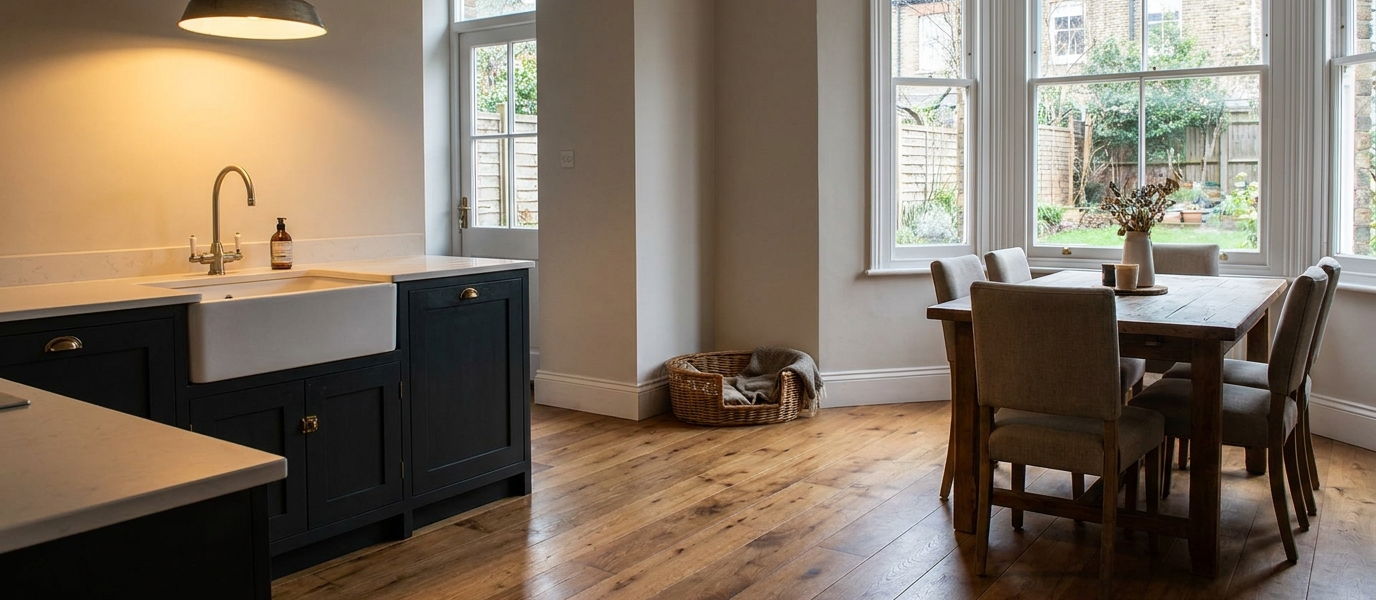
Barefoot in winter becomes normal. Slippers become optional, then forgotten. You stop thinking about “turning up the heat” and start noticing the steadiness. There is a particular pleasure in walking across a tiled kitchen floor in December and feeling the stone hold its warmth against your soles. It is not dramatic. It is simply comfortable, in a way that radiators never quite manage.
The silence is the first thing guests mention
The first time someone visits your home in winter, they will pause mid-sentence and say: “It’s so quiet in here.” And you will realise they mean the heating. No clicking pipes. No fan noise from a forced-air system. No sudden gurgle when the boiler fires up. The house is still. This silence changes how rooms feel, especially open-plan spaces where radiators once dictated furniture placement. Without a radiator on the wall, you can push a sofa against any surface. You can hang art at floor level. The room becomes about how you want to live in it, not about where the heat source happens to be.
One visitor, a contractor who had fitted underfloor heating for years, walked into our living room, stood still for a moment, and said: “You don’t hear it because it’s doing its job.” That is the highest compliment a heating system can receive.
Eight small adjustments to make underfloor heating work for you
- Rugs with low tog ratings. Thick wool rugs trap heat and stop it rising. Thin cotton or flatweave lets the warmth through. A 2-tog rug is ideal. Anything above 4-tog will insulate the floor from the room.
- Zone the thermostat by room, not by floor. Bedrooms need less heat, around 18°C feels comfortable with warm feet. Bathrooms need more, 22°C or higher for that towel-on-the-floor luxury. Kitchen and living spaces sit somewhere in between.
- Let the floor breathe. Heavy furniture with no legs traps heat underneath and can cause the system to overwork. Sofas on castors or slim feet allow airflow. A gap of at least 50mm under furniture is ideal.
- Use tiles or stone in high-traffic areas. These materials conduct and retain heat better than wood. Engineered wood is fine for living rooms, but for hallways, bathrooms, and kitchens, stone or porcelain tiles are more efficient.
- Set a steady base temperature. Underfloor heating prefers consistency. Boosting it suddenly wastes energy and takes hours to take effect. A steady 20°C in living areas, maintained day and night, costs less than a system that ramps up and down.
- Pair with smart controls. Learn your schedule. Morning ramp-up, evening hold, overnight setback. Smart thermostats can learn your patterns and adjust room-by-room without you touching a dial.
- Check floor coverings before installation. Some carpets and thick underlays block heat transfer entirely. If you want carpet, choose one with a tog rating of 1.5 or lower and a thermal underlay specifically designed for underfloor heating.
- Plan for a longer warm-up time. It takes 1-3 hours for a screeded floor to reach temperature, compared to 15 minutes for a radiator. But it also holds heat for hours after the system switches off. You learn to think ahead, not react.
For more on how to choose the right floor finish, see best flooring for underfloor heating.
Why texture matters more than colour
Without radiators on the walls, you gain freedom, but you also gain responsibility. The floor becomes the surface you notice most. Not just visually, but physically. The feel underfoot changes how the heat arrives. Smooth limestone conducts warmth evenly and feels luxurious barefoot. Brushed oak is gentler, with a slight grain that holds heat without feeling clinical. Matte porcelain is practical and efficient, but can feel hard underfoot compared to stone or wood.
The visual effect is subtle but real: a floor that is warm to the touch looks different. It appears richer, more grounded, as if the material itself has depth. A cold limestone floor looks grey and flat. A warm one glows. The same is true for engineered wood, the warmth brings out the grain in a way that a cold floor never does. If you are choosing a floor for an underfloor heating system, spend more time on texture than on colour. The colour you will see every day. The texture you will feel every time you walk barefoot across it.
For ideas on how to coordinate floor finishes with your wall colours, see warm floor colour schemes.
The morning test, no more cold tiles
The real test of any heating system is the first step out of bed. Not the thermostat reading. Not the energy bill. The moment your bare foot touches the floor. With underfloor heating in the bathroom, that moment is not a shock. The tiles are already warm. You do not shiver. You do not pre-heat the room by turning on a fan heater or running the shower for five minutes just to take the edge off. You simply stand up and start your day.
This is the detail that converts sceptics. It is not about the system’s efficiency, or the silent operation, or the even heat distribution. It is about the start of the day. That small, quiet luxury of stepping onto a warm floor when the rest of the world is still cold. Underfloor heating does not announce itself. It does not tick or hiss or gurgle. It simply makes the morning better, one barefoot step at a time.
If you are considering installation, start by reading underfloor heating installation guide.