Why Bath Homeowners Are Looking at Solar Panels Right Now
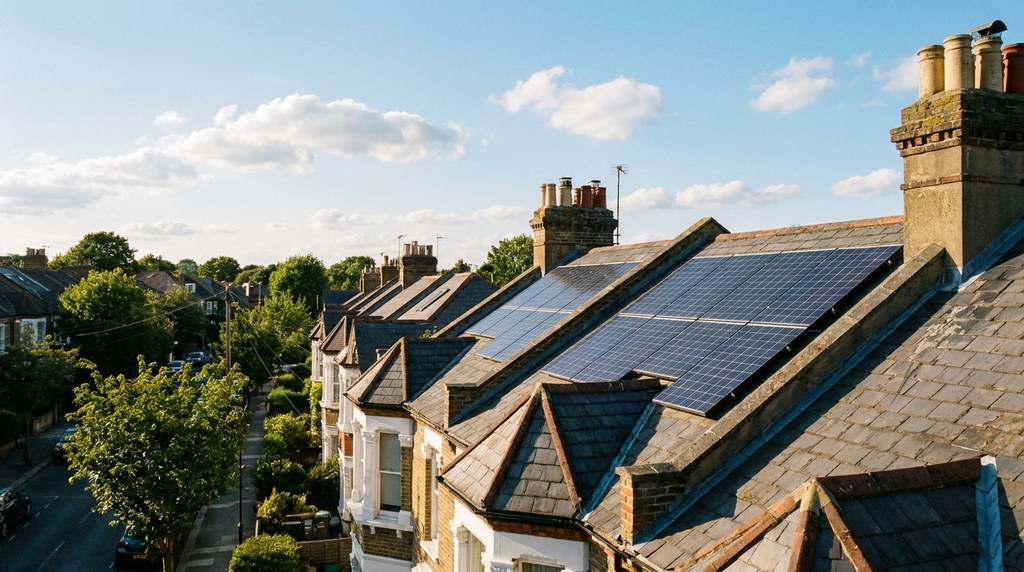
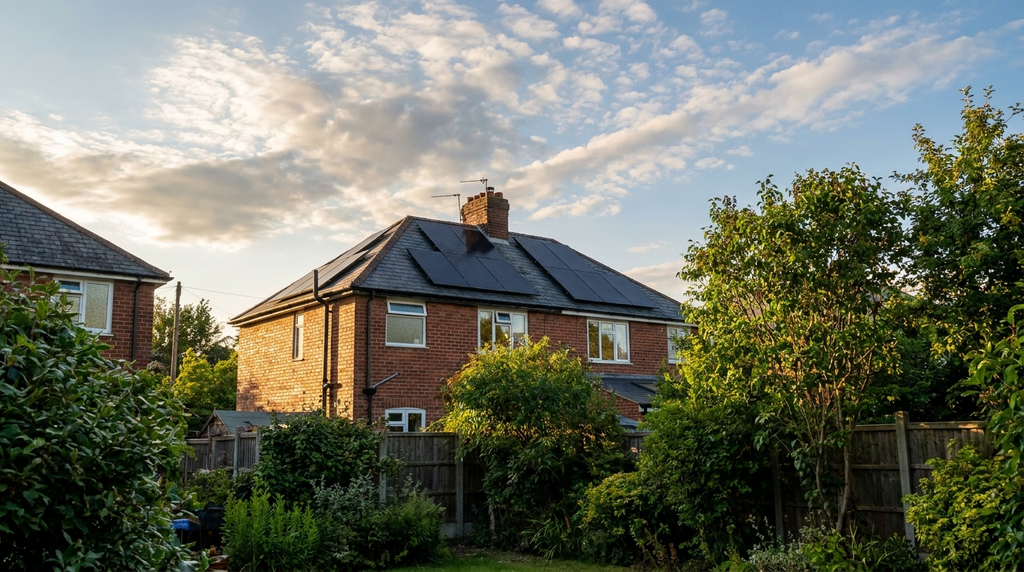
There’s something quietly exciting happening on the rooftops of Bath. From the Victorian terraces of Oldfield Park to the post-war semis of Twerton and Whiteway, solar panels are appearing in numbers that would have seemed unusual just a few years ago. And honestly, it makes complete sense when you understand Bath’s particular situation.
Bath sits in one of the most solar-friendly locations in the entire UK. The South West consistently records the highest solar irradiance of any UK region, around 1,100 to 1,200 kWh per square metre per year, and Bath benefits from that in full. You’re not taking a gamble on British weather here; you’re working with some of the best solar conditions the country has to offer.
Then there’s the EPC picture. Most Bath homes sit at Band D, right at the national average, which means there’s real, tangible improvement available. Electricity prices have remained stubbornly high, and with average household electricity usage running at around 3,000 kWh per year locally, a well-sized solar array can make a dramatic difference to what you actually pay each quarter.
Bath and North East Somerset Council has also been pushing hard on its climate commitments, and there’s growing awareness among homeowners here that solar is financially smart and increasingly expected as part of responsible ownership of an older property.
What Installing Solar Panels Actually Involves for a Typical Bath Home
Let’s be honest about what you’re working with. Bath’s housing stock is dominated by terraced and semi-detached properties, many of them built during the Victorian and Edwardian eras, with a significant proportion of Georgian and early 20th-century homes in and around the city centre. That’s both exciting and occasionally challenging for solar installation.
The good news first. Most Bath terraces and semis have pitched roofs with a reasonable south or south-west facing aspect, exactly what solar panels need. The Cotswold stone and Bath stone construction is generally solid and well-suited to supporting a modern solar array, provided the roof structure is checked first by your installer.
Here’s where it gets specific to Bath though. A large proportion of properties here, particularly anything in or near the city centre, Bathwick, Widcombe, or Lansdown, fall within conservation areas or are listed buildings. This changes the conversation significantly (more on planning below). Even in areas like Bear Flat or Combe Down, you may find that your terrace sits on a steeply sloping street, which affects scaffolding requirements and access for installers.
- Roof age matters here, many Victorian terraces have original or partially replaced roof structures. A good installer will check rafters and felt before committing to installation
- Party wall considerations, in mid-terrace properties, access to certain roof sections may require neighbour cooperation
- Electrical upgrades, older homes in Bath often need a consumer unit upgrade before solar can be connected safely, adding to overall cost
- Chimney stacks and dormers, common on Bath’s period properties, these can reduce usable roof area and complicate panel positioning
The typical installation on a Bath semi-detached takes one to two days. Terraces can take slightly longer depending on access and roof complexity. Most reputable local installers serving Bath are well-versed in period property challenges, they’re doing this type of job constantly across the city and in neighbouring Frome, Corsham, and Trowbridge.
How Much Solar Panels Cost in Bath and the South West in 2026
Let’s get straight to numbers, because that’s what you need for your planning. Costs in Bath sit slightly above the national average, primarily because of the area’s conservation sensitivities, frequent scaffolding requirements on steep-access streets, and the premium that skilled installers in a popular city can command. Even so, you’re not looking at Bristol city-centre prices either, Bath is well-served enough to keep competition reasonable.
| System Size | Typical Property | Panels | Bath Cost (2026) | South West Average | National Average |
|---|---|---|---|---|---|
| 3 kWp | Small terrace / 2-bed | 6 to 8 panels | £6,200 to £7,200 | £5,800 to £6,800 | £5,500 to £6,500 |
| 4 kWp | Mid-terrace / 3-bed semi | 8 to 10 panels | £7,500 to £8,800 | £7,000 to £8,200 | £6,800 to £7,900 |
| 5 kWp | Larger semi / 4-bed | 10 to 13 panels | £9,200 to £10,500 | £8,500 to £9,800 | £8,200 to £9,500 |
| 6 kWp | Detached / large semi | 13 to 16 panels | £10,800 to £12,200 | £10,000 to £11,500 | £9,800 to £11,000 |
| Battery storage add-on | Any of the above | N/A | £3,500 to £5,500 | £3,200 to £5,000 | £3,000 to £4,800 |
Why is Bath slightly pricier than the South West average? Scaffolding on steep, narrow streets (think Oldfield Park or the upper slopes of Lansdown) costs more to erect safely. Conservation area assessments sometimes require additional planning work. And installer parking restrictions in central Bath add time to every job. These aren’t huge premiums, but they’re real.
Comparing to nearby towns, Trowbridge and Frome typically come in 5 to 8% cheaper on labour, largely because access is less complicated. Corsham sits somewhere between Bath and Trowbridge pricing. Bristol, interestingly, can be more expensive than Bath for similar reasons of access and density.
How Bath’s Weather and Location Shape Your Solar Choices
This is where Bath genuinely stands apart from much of the UK, and it’s worth dwelling on because it affects which products are worth your money and which are overkill.
Bath receives roughly 1,200 to 1,500 sunshine hours per year, comfortably above the UK average of around 1,400 hours, and at the stronger end of that range. The Avon Valley setting gives the city a relatively sheltered character; you’re not dealing with the coastal battering that hits parts of Cornwall and Devon. Rainfall of around 700 to 900mm per year is moderate and well-distributed, useful for keeping panels clean, but not so heavy it creates ongoing performance issues.
What this means practically is that solar panels in Bath will generate more electricity than the same system installed in, say, Manchester or Edinburgh. The South West irradiance figure of 1,100 to 1,200 kWh per square metre per year is the highest in the UK, and Bath sits right in that sweet spot.
A few local specifics that really matter
- Frost and ice, Bath’s milder winters (1,200 to 1,500 heating degree days) mean fewer freeze-thaw cycles on your roof and panels compared to northern towns. This extends the working lifespan of mounting systems
- The Avon Valley fog, those who’ve lived in Bath for a while know the low-lying valley mist that can sit in the city on still autumn mornings. If your property is in Bathwick, Widcombe, or along the river corridor, factor in slightly reduced morning output on misty days compared to elevated sites like Combe Down or Lansdown
- South and south-west aspects, Bath’s typical terrace layout means many roofs face either south-east or south-west rather than true south. Both work excellently here given the irradiance levels; you’re not losing much by being slightly off-axis
- Wind loads, sheltered from the worst Atlantic weather by the Mendips and Cotswolds, Bath doesn’t experience the structural wind loading concerns that affect exposed coastal properties. Standard mounting systems are fine
The Products and Options That Actually Perform Well in Bath
Given Bath’s excellent solar resource and its mix of period and post-war properties, here’s an honest take on what works, and what’s worth the extra spend.
Monocrystalline PERC Panels, the Sensible Choice for Most Homes
For the majority of Bath terraces and semis, high-efficiency monocrystalline PERC panels (rated 400W to 430W per panel) hit the sweet spot between performance and cost. Brands like Jinko, LONGi, and REC consistently deliver strong output in the South West’s conditions. You don’t need to spend on premium all-black panels for performance, though they do look considerably better on period Bath properties if aesthetics matter to you.
All-Black Panels for Conservation-Sensitive Streets
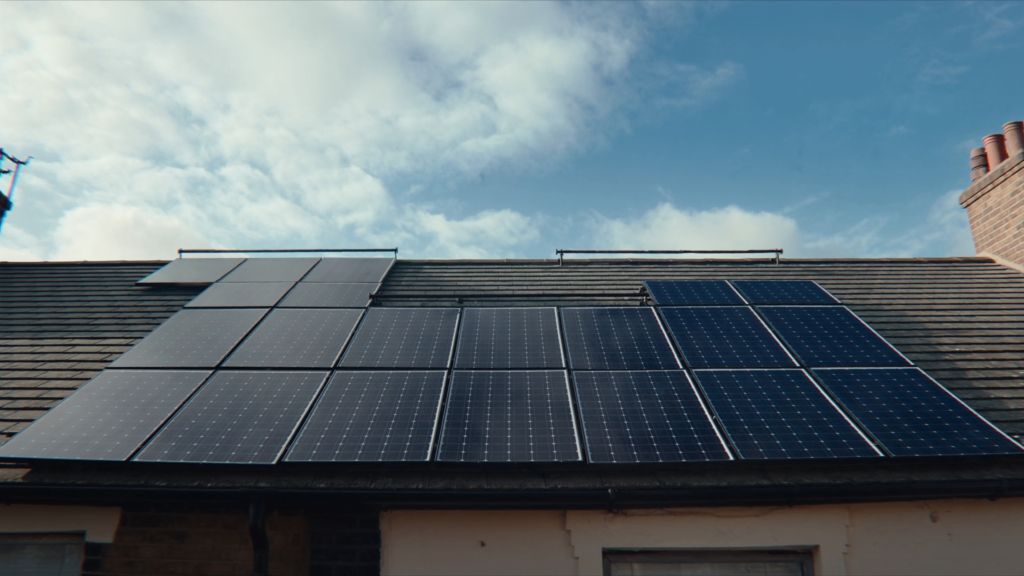
If you’re in a street where appearance is important, or where you’re trying to avoid attracting planning scrutiny, all-black monocrystalline panels are worth the small premium. They sit far more naturally against traditional Bath stone and slate than standard blue-cell panels. Expect to pay around £300 to £600 more for a typical 4 kWp system.
Battery Storage, More Compelling Here Than Most Places
Given Bath’s strong solar generation potential and relatively high local electricity prices, battery storage makes a genuinely strong financial case here. A 5 to 10 kWh battery (the Givenergy 9.5 kWh and SolarEdge Home Battery 10 kWh are both popular with South West installers) lets you use your daytime generation in the evening, dramatically improving self-consumption. For a typical Bath household using 3,000 kWh of electricity per year, a battery can push self-consumption from around 30% to 60% or more.
Microinverters for Shaded or Complex Roofs
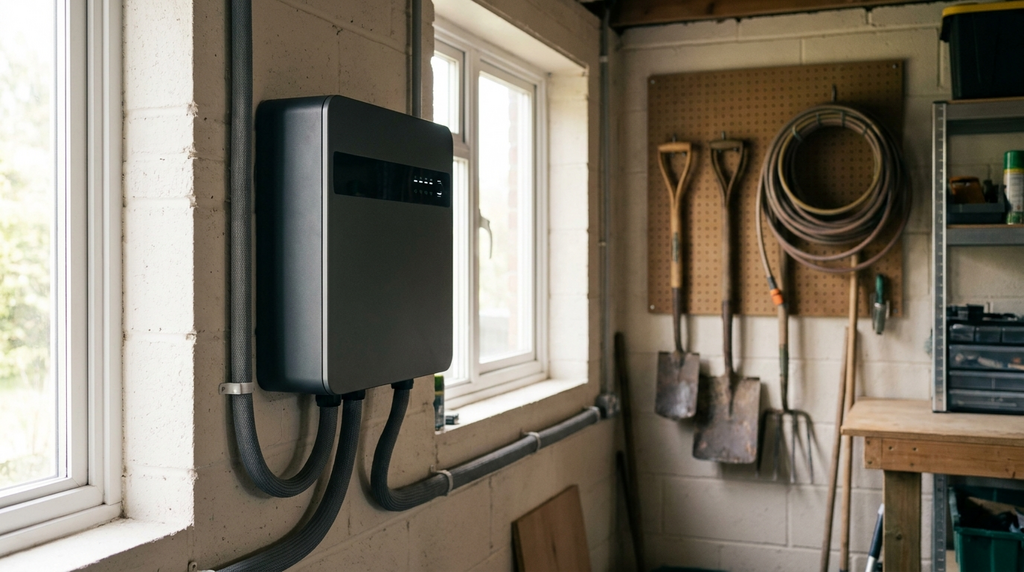
If your Bath property has dormers, chimney stacks, or a roof that catches shade from neighbouring buildings or mature trees (common in leafy areas like Bathampton or Weston), microinverters or power optimisers are worth the upgrade. Standard string inverters see the whole array perform at the rate of the worst-performing panel, microinverters make each panel independent, recovering significant output on partially shaded roofs.
Solar Roof Tiles, Consider Carefully
These are increasingly available and look beautiful on period properties. However, they cost significantly more than standard panels (typically £15,000 to £20,000 for a full installation) and their performance per square metre is lower. Unless you’re in a conservation area where standard panels are refused, the financial case doesn’t stack up compared to quality monocrystalline panels. Keep them as a last resort for listed building situations.
Finding a Trustworthy Solar Installer Near Bath
Bath is well-served by installers, and many of the South West’s strongest solar companies operate across the Bath, Bristol, Trowbridge, Frome, and Corsham corridor. That’s useful because it means genuine competition, you shouldn’t have to accept a poor quote or a long wait time.
The certifications you need to check
- MCS (Microgeneration Certification Scheme), this is non-negotiable. MCS certification is required for your installation to qualify for the Smart Export Guarantee (SEG), which pays you for electricity you export to the grid. Any installer who can’t show you their current MCS certificate should be crossed off your list immediately
- TrustMark registration, Government-endorsed quality framework. Not legally required but a strong signal of professionalism
- NICEIC or NAPIT membership, solar installation is electrical work, and your installer’s electrician should hold current registration with one of these bodies
- Manufacturer training accreditation, better installers hold specific training certificates from the brands they fit (LONGi, Jinko, SolarEdge etc). Ask for this
Questions worth asking every installer
- Have you worked on similar period Bath properties before, can you show me examples
- Will you check my roof structure and consumer unit before quoting
- Who does your electrical sign-off and are they NICEIC or NAPIT registered
- What’s your process if I’m near a conservation area boundary
- What does your workmanship warranty cover and for how long
Red flags to watch for
- Quotes given over the phone without a roof survey
- Pressure to sign on the day of the visit
- No mention of structural or electrical checks
- Prices that seem dramatically below everyone else’s quote
- Vague answers about MCS certification status
Lead times in the South West currently run at around 4 to 10 weeks from survey to installation for most reputable companies. Companies based in Bristol and Bath proper tend to have the busiest diaries, sometimes stretching to 12 weeks in spring. Installers based slightly further afield in Trowbridge or Frome who regularly work in Bath often have slightly shorter waits.
Grants and Funding That Could Reduce Your Costs in 2026
This is where many Bath homeowners leave money on the table by not asking the right questions. There are several routes to financial support, some require specific eligibility criteria, so read carefully.
The Smart Export Guarantee
This isn’t a grant, but it is ongoing income. Under the SEG, your energy supplier must pay you for electricity you export to the grid. Rates vary by supplier (typically 4p to 15p per kWh in 2026), but for a typical Bath household with a 4 kWp system, this could generate £150 to £300 per year in export payments. You need MCS-certified installation to qualify, another reason that certification matters.
ECO4 Scheme
The Energy Company Obligation scheme (ECO4) can fund solar panels for lower-income households or those with poor EPC ratings. Eligibility typically requires receipt of certain means-tested benefits (Universal Credit, Pension Credit, etc.) or referral through Bath and North East Somerset Council’s fuel poverty programmes. If you qualify, installation can be fully or substantially funded. Contact B&NES Council’s housing team or check the government’s ECO4 eligibility checker directly.
Great British Insulation Scheme (GBIS)
GBIS primarily targets insulation but is worth mentioning as part of a whole-home upgrade plan.