Solar Panels

Does solar panels save money?

Does solar panels save money?

You have probably seen neighbours with solar panels and wondered whether the upfront cost is actually worth it. With electricity prices still high, the idea of generating your own power is appealing, but the numbers need to add up for your specific home.

Quick Answer

Yes, solar panels save a typical UK household £200-£640 per year on electricity bills, with net savings of £5,000-£15,000 over 25 years. Your actual savings depend on system size, self-consumption, and roof orientation.

Key Takeaways

  • Save £200-£640 yearly on electricity bills with solar panels
  • Net savings of £5,000-£15,000 over a 25-year system lifespan
  • Self-consumption of 40-60% without a battery, 70-90% with one
  • Roof orientation affects savings by 10-15% for east or west
  • Use the 2026 Ofgem price cap rate of 24.5p per kWh for calculations

A typical UK household saves between £200 and £640 a year on electricity bills with solar panels, depending on system size and how much of the power you use directly (Energy Saving Trust, 2026). Over the 25-year lifespan of a good-quality system, net savings range from roughly £5,000 to £15,000 after installation costs.

A typical UK household saves between £200 and £640 a year on electricity bills with solar panels

The annual saving depends mainly on two things: the size of your solar array and how much of the electricity you use while the sun is shining. Based on the 2026 Ofgem price cap rate of 24.5p per kilowatt-hour (kWh), a small 4-panel system (around 1.5kWp) can save about £200 a year (Ofgem, 2026). A larger 10-panel system (roughly 4kWp) can save up to £640 a year, assuming you use half of the generated power directly and export the rest.

These figures assume no battery and a typical south-facing roof in central England. If your roof faces east or west, expect savings to drop by 10-15% (Energy Saving Trust, 2026).

How solar panel savings are calculated

Your actual savings come from three sources: the electricity you use directly from your panels (self-consumption), the electricity you export to the grid for payment, and the grid electricity you no longer need to buy. The biggest variable is self-consumption. Without a battery, most households use 40-60% of the solar power they generate. With a battery, that rises to 70-90% (Energy Saving Trust, 2026).

System size is measured in kilowatts peak (kWp), which is the maximum output under standard test conditions. A typical 4kWp system in southern England generates around 4,200 kWh per year. The same system in Scotland produces roughly 3,200 kWh per year due to lower sunlight hours (DESNZ, 2026). Roof orientation, shading from trees or chimneys, and panel tilt all affect the final yield.

Quick numbers solar panel costs vs savings

System size (kWp) Typical installed cost (GBP) Annual saving, no battery (GBP) Annual saving, with battery (GBP) Simple payback, no battery (years)
1.5 kWp (4 panels) £3,000 – £4,500 £200 – £280 £320 – £400 11 – 16
3.0 kWp (8 panels) £5,000 – £6,500 £350 – £480 £550 – £700 10 – 14
4.0 kWp (10 panels) £6,000 – £8,000 £500 – £640 £750 – £900 10 – 15
6.0 kWp (16 panels) £8,500 – £11,000 £700 – £900 £1,000 – £1,300 10 – 14

Costs are based on 2026 MCS registered installer averages (MCS register, 2026). Savings assume a south-facing roof in central England and 50% self-consumption without a battery, 80% with a battery. Payback periods are simple estimates that do not account for rising electricity prices or Smart Export Guarantee income.

Solar panels do save money over the system’s lifetime, typically £5,000 to £15,000 net

Over a 25-year lifespan, the total bill savings from a typical solar panel system range from roughly £5,000 for a small 1.5kWp system with low self-consumption, to £15,000 for a larger 4kWp system with a battery and high self-consumption (Energy Saving Trust, 2026). These net figures subtract the full installation cost from the total electricity savings and export income.

Adding a battery increases the upfront cost but boosts savings because you use more of your own power. A typical 5kWh battery costs £1,500-£2,500 installed, and a 13kWh battery costs £3,000-£4,000 (MCS register, 2026). Switching to a time-of-use tariff that offers cheap overnight rates can also improve savings if you charge the battery at night and use it during peak hours.

How to choose the right solar battery size for your home

Eligibility for the Smart Export Guarantee (SEG) adds extra income

The Smart Export Guarantee (SEG) requires energy suppliers to pay you for surplus electricity you send to the grid. In 2026, typical SEG rates range from 3p to 6p per kWh, with an average around 4.5p/kWh (Ofgem, 2026). For a 4kWp system exporting half its generation, that adds £50 to £150 per year.

To qualify for SEG, your installation must be certified under the Microgeneration Certification Scheme (MCS), and you need a smart meter that records export readings (GOV.UK, 2026). Not all suppliers offer SEG, so it pays to compare tariffs. The income is modest but improves the overall financial case, especially for households that are out during the day and export more power.

How to verify a solar panel installer MCS certification is essential

MCS certification is not a legal requirement for installing solar panels, but it is essential if you want to claim SEG payments or access certain grants and finance schemes. The MCS register is a free online database where you can check whether an installer is certified (MCS register, 2026).

Beyond MCS, look for TrustMark accreditation, which covers consumer protection and warranty standards (TrustMark, 2026). Avoid any installer who pressures you into a quick decision or offers a price that seems too good to be true. A properly installed system should come with a 10-year product warranty and a 25-year performance guarantee on the panels.

Solar panel installation checklist: what to ask before you sign

What changes with a solar battery

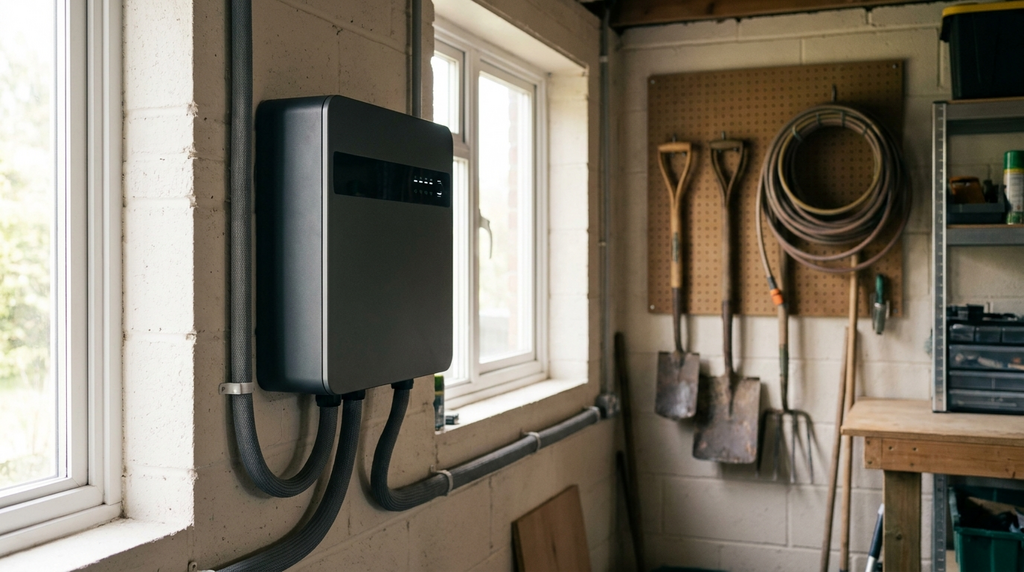
A solar battery stores excess electricity generated during the day for use in the evening. Without a battery, you typically use about 50% of your solar power directly. With a battery, that rises to around 80% (Energy Saving Trust, 2026). This means you buy less from the grid, which increases annual savings by £150 to £300 depending on system size and your household’s evening usage.

The trade-off is the upfront cost. A 5kWh battery costs around £1,500 to £2,500 installed, and a 13kWh battery costs £3,000 to £4,000 (MCS register, 2026). The additional savings mean the overall payback period may extend by 3 to 5 years compared to panels alone. However, a battery also provides backup power during grid outages and can make you less vulnerable to future price rises.

Solar battery grants and schemes in 2026

Frequently Asked Questions

A typical UK household saves between £200 and £640 a year, according to the Energy Saving Trust (2026). A 4-panel system saves about £200, while a 10-panel system can save up to £640.

Yes, over 25 years net savings range from £5,000 to £15,000 after installation costs (Energy Saving Trust, 2026). Savings depend on system size and how much power you use directly.

Self-consumption is the biggest factor. Without a battery, you use 40-60% of generated power; with a battery, it rises to 70-90% (Energy Saving Trust, 2026). Roof orientation also matters.

Yes, but less. Without a battery, typical savings are £200-£640 per year depending on system size (Ofgem, 2026). A battery can boost savings by increasing self-consumption.

With a battery, self-consumption rises to 70-90%, increasing annual savings by roughly 30-50% (Energy Saving Trust, 2026). Exact figures depend on system size and usage.

Yes, but less. North-facing roofs reduce generation by about 20-30% compared to south-facing (Energy Saving Trust, 2026). Expect lower savings, but still some benefit.

Get a Free Quote for Your Home

Compare quotes from trusted UK eco home installers. No obligation.

Get a Free Quote