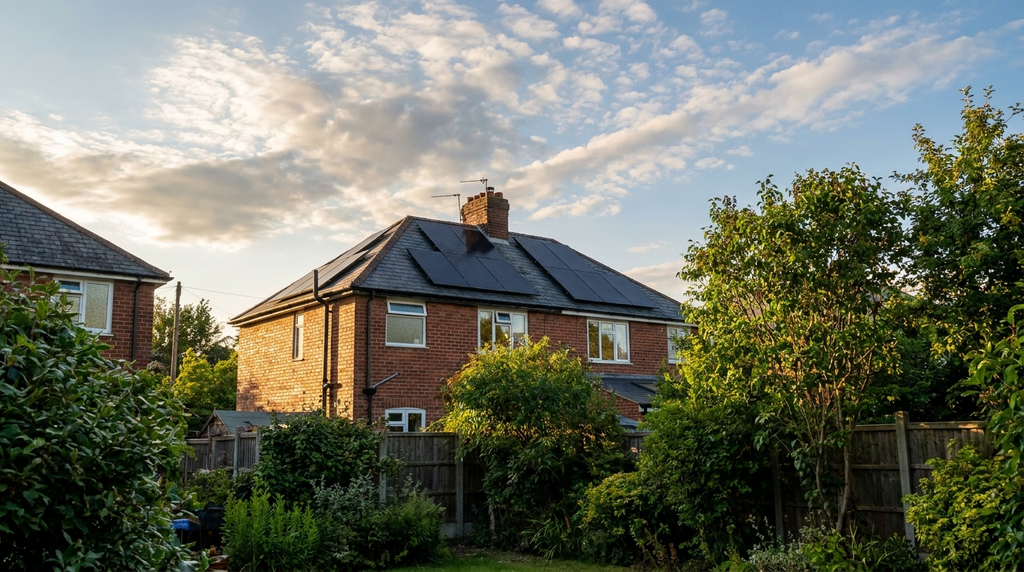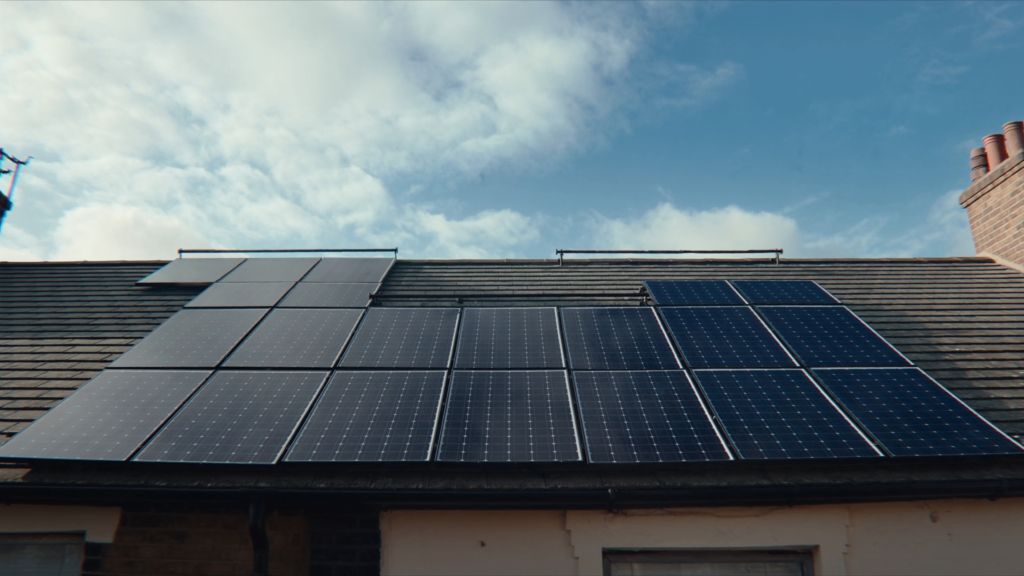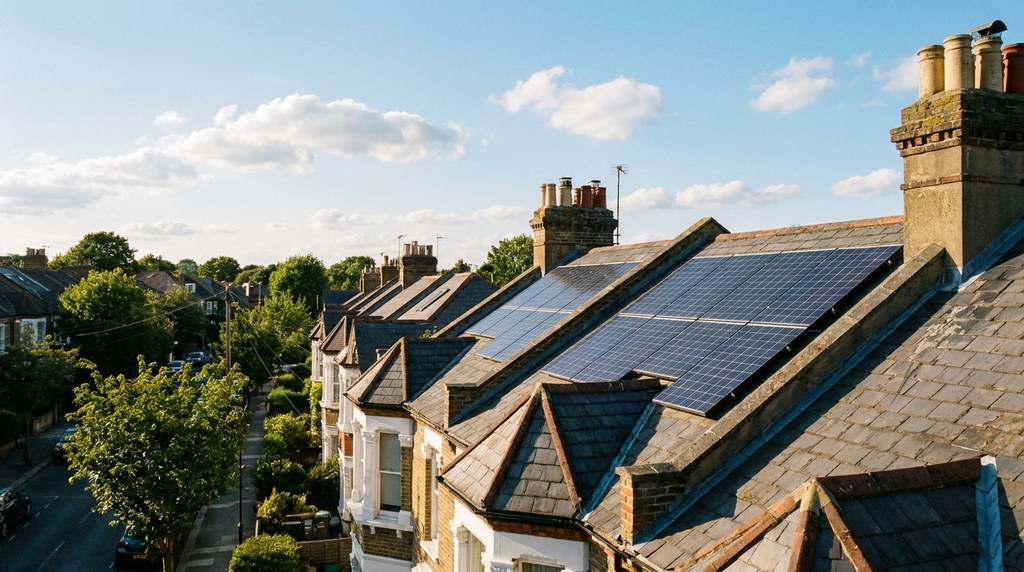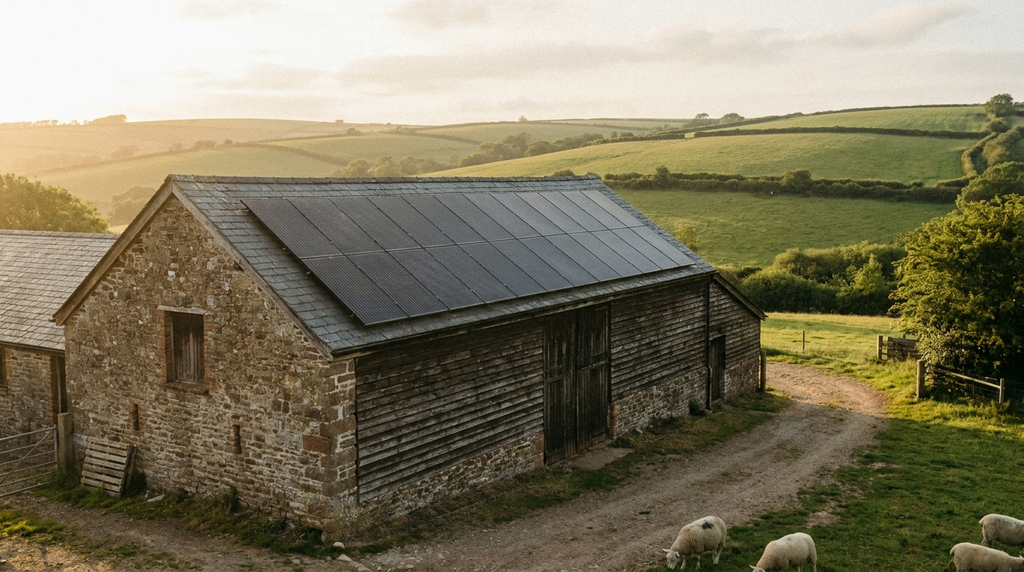
Solar panels convert sunlight into direct current (DC) electricity using photovoltaic cells
Solar panels generate electricity through a process that does not require direct heat or moving parts. The key component is the photovoltaic (PV) cell, which is typically made from layers of silicon, a semiconductor material. When photons from sunlight strike the cell, they transfer energy to electrons in the silicon, knocking them loose and creating a flow of electrical charge. This flow is direct current (DC) electricity, the same type produced by a battery (Energy Saving Trust, 2026).
Solar panels convert sunlight into direct current (DC) electricity using photovoltaic cells. An inverter changes this into alternating current (AC) for your home. Your property uses solar power first, with any excess exported to the grid.
- Photovoltaic cells convert sunlight into DC electricity without moving parts.
- Most modern panels achieve 18% to 22% efficiency.
- An inverter transforms DC into AC for home use and the grid.
- Microinverters let each panel work independently when shaded.
- Your home uses solar electricity first, reducing grid reliance.
- Solar panels convert sunlight into direct current (DC) electricity using photovoltaic cells
- An inverter transforms DC electricity into the alternating current (AC) your home uses
- Your home uses solar electricity first, then exports any surplus to the National Grid
- Quick numbers typical system output, panel count, and payback
- Eligibility for the Smart Export Guarantee (SEG) requires MCS-certified panels and a qualifying inverter
- To verify an installer, check their MCS certification, TrustMark registration, and Gas Safe or NICEIC/NAPIT registration as needed
- Solar panels work best on roofs facing south or south-west with a pitch between 30 and 40 degrees
A single PV cell generates only a small amount of power, so panels contain many cells wired together. Panels are grouped into an array on your roof. The total DC output depends on the panel size, efficiency, and the amount of sunlight hitting the surface. Most modern residential panels convert between 18% and 22% of incoming sunlight into electricity, with higher-efficiency panels costing more per watt.
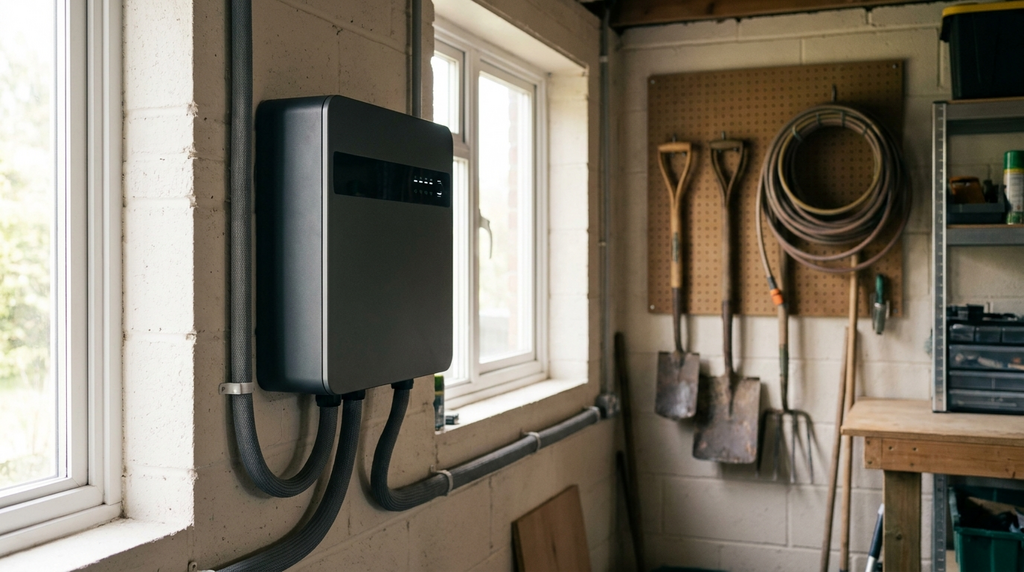
An inverter transforms DC electricity into the alternating current (AC) your home uses
The DC electricity produced by solar panels cannot be used directly by household appliances or fed into the UK grid. Every mains-powered device in your home, from your kettle to your television, runs on alternating current (AC). The National Grid also operates on AC. To make the solar electricity usable, a device called an inverter converts the DC output into AC at the correct voltage and frequency (Energy Saving Trust, 2026).
There are two common types of inverter for home solar systems. A string inverter is a single box, usually installed near your fuse box, that handles the output from all panels in a series. Microinverters are smaller units attached to each panel, allowing each panel to operate independently. Microinverters can improve performance if some panels are shaded during part of the day, but they typically cost more than a single string inverter.
Your home uses solar electricity first, then exports any surplus to the National Grid
Once the inverter produces AC electricity, it flows to your consumer unit (fuse box) and powers your home’s circuits. Your household appliances draw solar electricity before taking any power from the grid. This self-consumption is where the biggest savings come from, because every kilowatt-hour (kWh) of solar electricity you use directly replaces a kWh you would otherwise buy from your supplier at the full retail rate.
When your solar system generates more electricity than your home is using at that moment, the surplus automatically flows back to the National Grid through your electricity meter. Under the Smart Export Guarantee (SEG), your energy supplier must pay you for every kWh exported (Ofgem, 2026). The export rate is set by the supplier and is typically lower than the retail price you pay for imported electricity.
Quick numbers typical system output, panel count, and payback
| Metric | Typical figure | Source |
|---|---|---|
| Average system size | 3.5 kWp | MCS installer data |
| Typical annual output | 2,800–3,000 kWh | Energy Saving Trust, 2026 |
| Number of panels | 8–12 | MCS installer data |
| Estimated payback period | 10–15 years | Energy Saving Trust, 2026 |
| Typical installed cost | £5,000–£8,000 | Energy Saving Trust, 2026 |
The payback period depends heavily on how much of the generated electricity you use yourself. A household that is home during the day and runs appliances when the sun shines will see a faster return than one where most generation is exported at a low SEG rate. System output also varies by region, with southern England typically receiving more sunlight than northern Scotland.
Compare solar panel costs and savings across different UK regions
Eligibility for the Smart Export Guarantee (SEG) requires MCS-certified panels and a qualifying inverter
The Smart Export Guarantee is a government-backed scheme that requires licensed energy suppliers to pay households for the electricity they export to the grid. To qualify, your solar PV system must be installed by an installer certified under the Microgeneration Certification Scheme (MCS). The panels and inverter must also be MCS-certified products or meet the scheme’s technical requirements (Ofgem, 2026).
Not all suppliers offer SEG tariffs, and those that do set their own export rates. You are not required to stay with the supplier that installed your system. You can switch to any SEG-licensed supplier that offers a tariff in your area. The export rate is fixed by the supplier and can be as low as 1p per kWh or as high as 15p per kWh depending on the tariff and market conditions.
To verify an installer, check their MCS certification, TrustMark registration, and Gas Safe or NICEIC/NAPIT registration as needed
MCS certification is the primary quality standard for solar PV installations in the UK. It confirms the installer has been assessed against industry standards for design, installation, and commissioning. You can check an installer’s MCS certificate number on the MCS website (MCS, 2026). TrustMark registration provides additional consumer protection, including access to a dispute resolution service if something goes wrong (TrustMark, 2026).
For the electrical connection work, the installer should be registered with a competent person scheme such as NICEIC or NAPIT. If the work involves gas pipework or flues, the installer must be Gas Safe registered. Checking these registrations before you sign a contract helps ensure the work meets legal and insurance requirements.
How to choose a solar panel installer in the UK
Solar panels work best on roofs facing south or south-west with a pitch between 30 and 40 degrees
The amount of electricity a solar panel generates depends on how directly the sunlight hits its surface. In the UK, the sun is always in the southern half of the sky, so south-facing roofs receive the most intense sunlight over the course of a day. A roof pitch of 30 to 40 degrees is considered optimal because it matches the UK’s latitude and maximises the angle of incidence during spring and autumn, when daylight hours are moderate (Energy Saving Trust, 2026).
East- and west-facing roofs can still work well. A west-facing system will generate more electricity in the afternoon and early evening, which can be useful for households that use most of their power later in the day. Energy Saving Trust estimates that east- or west-facing panels produce about 80% of the output of a south-facing system of the same size. Flat roofs can also be used with angled mounting frames, though the additional structure adds cost and may affect planning rules.
Frequently Asked Questions
Solar panels use photovoltaic cells to convert sunlight into direct current (DC) electricity. An inverter then changes it to alternating current (AC) for your home. The Energy Saving Trust explains this process in detail.
Yes, solar panels still generate electricity in winter, though output is lower due to shorter days and less sunlight. The Energy Saving Trust notes that panels can still produce meaningful power on cloudy days, as they rely on daylight, not direct heat.
A typical 3-bedroom home needs around 8 to 12 panels, generating about 2.5 to 3.5 kW. The MCS recommends a system sized to match your annual electricity usage for best savings.
When batteries are full, excess solar electricity is exported to the National Grid. You may receive payments through the Smart Export Guarantee (SEG) for this exported energy, as set by Ofgem.
No, solar panels cannot power your home or feed the grid without an inverter. The inverter converts the DC electricity into AC, which is required by all household appliances and the UK grid, as confirmed by the Energy Saving Trust.