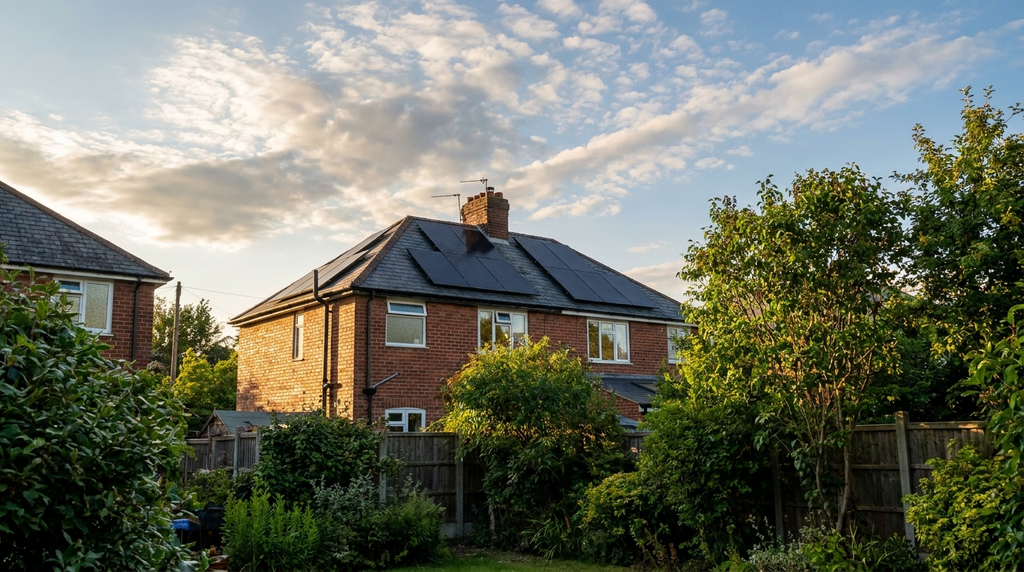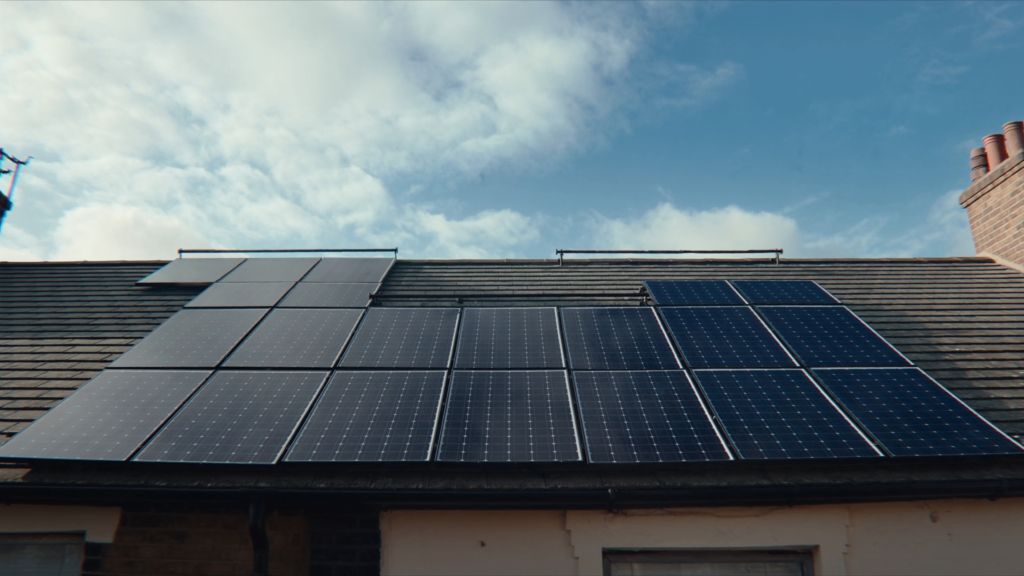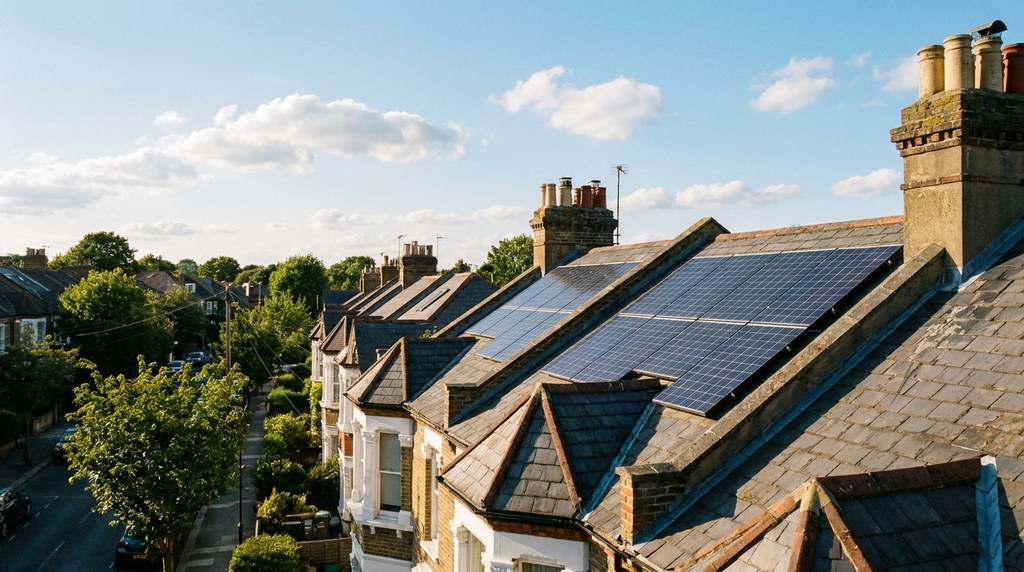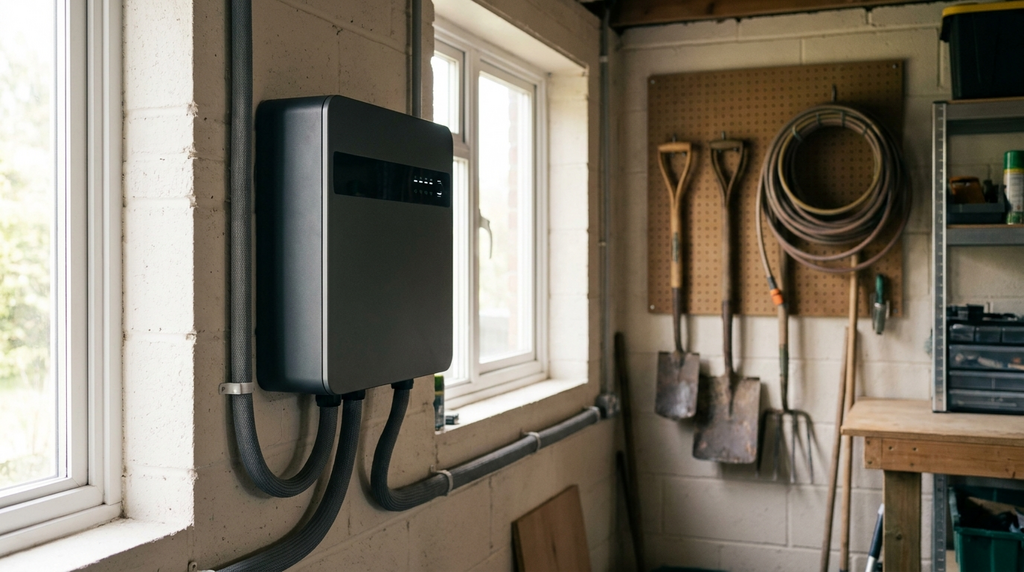
The number of solar panels you need depends on your household electricity usage, roof space, and budget, but a typical 3-bedroom home requires 8 to 12 panels (a 3–4.5 kWp system) to cover 40–60% of annual electricity use. The Energy Saving Trust states a standard 3.5 kWp system generates around 3,000 kWh per year (Energy Saving Trust, 2026).
- Average 3-bedroom UK home needs 8–12 panels (3–4.5 kWp).
- Use 2,900 kWh annual usage as baseline; adjust for your home.
- Each 375W panel needs 1.9 sq m of unshaded roof space.
The key variable is your annual electricity consumption. The average UK household uses about 2,900 kWh per year, according to Ofgem (Ofgem, 2026). If your usage is higher, you need more panels. Panels are typically rated at 350–450 watts each, so a 3 kWp system (8 panels at 375W) generates roughly 2,700 kWh annually. This applies to most homes with unshaded south-facing roofs. It does not apply if you have heavy shading or a north-facing roof, where output drops by 20–30%.
Calculate your panel count based on roof space
Standard solar panels measure about 1.7m by 1.0m, so each panel requires roughly 1.9 square metres of roof area. A typical 3 kWp system (8 panels) needs around 15 square metres of clear, unshaded roof. The Microgeneration Certification Scheme (MCS) recommends at least 10 square metres for a viable installation (MCS, 2026). If your roof is smaller, you can use higher-efficiency panels (e.g., 400W+), which produce more power per square metre but cost more. For a 4-bedroom home with higher usage (4,000 kWh/year), you may need 12–14 panels (4.5–5.0 kWp), requiring 22–27 square metres.
Match system size to your electricity bill
Your annual electricity consumption is the main driver. Check your latest bill for total kWh used in a year. A 3.5 kWp system (10 panels) generates roughly 3,000 kWh/year, covering about 60% of a typical 2,900 kWh household. For a home using 4,500 kWh/year, you need a 5.0 kWp system (14 panels) to achieve similar coverage. The Energy Saving Trust says a 4 kWp system can save a typical household £500–£700 annually on electricity bills (Energy Saving Trust, 2026). Oversizing your system may not be cost-effective unless you have battery storage or a heat pump.
Consider budget and available grants in 2026
Solar panel costs in 2026 range from £5,000 to £8,000 for a 3.5 kWp system, including installation. The UK government’s Smart Export Guarantee (SEG) pays you for excess electricity exported to the grid, typically 5–15p per kWh (GOV.UK, 2026). No upfront grants are available in 2026, but the 0% VAT rate on energy-saving materials remains in place (GOV.UK, 2026). A 3.5 kWp system pays back in 10–15 years, depending on usage and SEG rates. For most homes, 8–12 panels is the sweet spot between cost, roof space, and energy savings.
A worked example
A typical 1930s semi-detached home in Manchester using 3,200 kWh per year would need 10 solar panels rated at 375W each, forming a 3.75 kWp system costing roughly £6,500 before any support. After the 0% VAT reduction (in place until March 2027), the upfront cost drops to about £5,850. If your household qualifies for the ECO4 scheme, you could receive additional support worth up to £1,000 towards the installation. The Energy Saving Trust calculates that a system of this size would generate around 3,100 kWh annually, covering roughly 60% of your electricity use. With the Smart Export Guarantee paying about 6p per kWh for exported power, you could save £450 to £550 per year on your bills. Over 25 years, that adds up to roughly £11,250 in total savings after accounting for the initial outlay.
| Item | Figure |
|---|---|
| Upfront cost after grants | £5,850 |
| Yearly savings | £500 |
| Payback period | 12 years |
| 25-year lifetime savings | £11,250 |
What homeowners often get wrong
The most common mistake is assuming you need enough panels to cover 100% of your electricity use, which nearly always leads to oversizing and wasted money. Here are three frequent errors that cost UK homeowners hundreds of pounds.
- Targeting full self-sufficiency Many people think a solar system must match their total annual consumption, but grid electricity is still needed at night and in winter. A system covering 40–60% of your usage is far more cost-effective, with a payback period of 10–14 years rather than 18+ years for a full-cover system.
- Ignoring roof orientation and shading Homeowners often assume all panels produce the same output regardless of location, but a north-facing roof produces 20–30% less power than a south-facing one. Heavy shading from a chimney or tree can reduce generation by 30–50%, meaning you might need two extra panels just to match a standard system’s output.
- Forgetting about the Smart Export Guarantee Many installers fail to explain that you can earn money for surplus electricity exported to the grid, currently around 6p per kWh. Missing this means losing £50–£100 per year in potential income, which adds up to £1,250–£2,500 over a 25-year system lifetime.
Quick reference
- A typical 3-bedroom UK home needs 8 to 12 solar panels, forming a 3–4.5 kWp system, to cover 40–60% of annual electricity use.
- Each 375W solar panel requires about 1.9 square metres of unshaded roof space, so an 8-panel system needs roughly 15 square metres.
- You qualify for 0% VAT on solar panel installations until March 2027, and the ECO4 scheme offers additional support for low-income households.
- The average payback period for a solar panel system in the UK is 10 to 14 years, with total savings of £5,000 to £12,000 over 25 years.
- Installing a battery alongside solar panels can increase self-consumption from 30% to 70%, but adds £2,000–£4,500 to the upfront cost.
Frequently Asked Questions
A 3-bedroom house typically needs 8 to 12 panels (3–4.5 kWp system). The Energy Saving Trust says a 3.5 kWp system generates about 3,000 kWh per year.
Most UK homes need 8 to 14 panels to cover 40–60% of annual electricity use. Ofgem reports the average household uses 2,900 kWh per year.
You need 12 to 14 panels (4.5–5.0 kWp system) to generate around 4,000 kWh annually. The Microgeneration Certification Scheme recommends at least 10 sq m of roof space.